
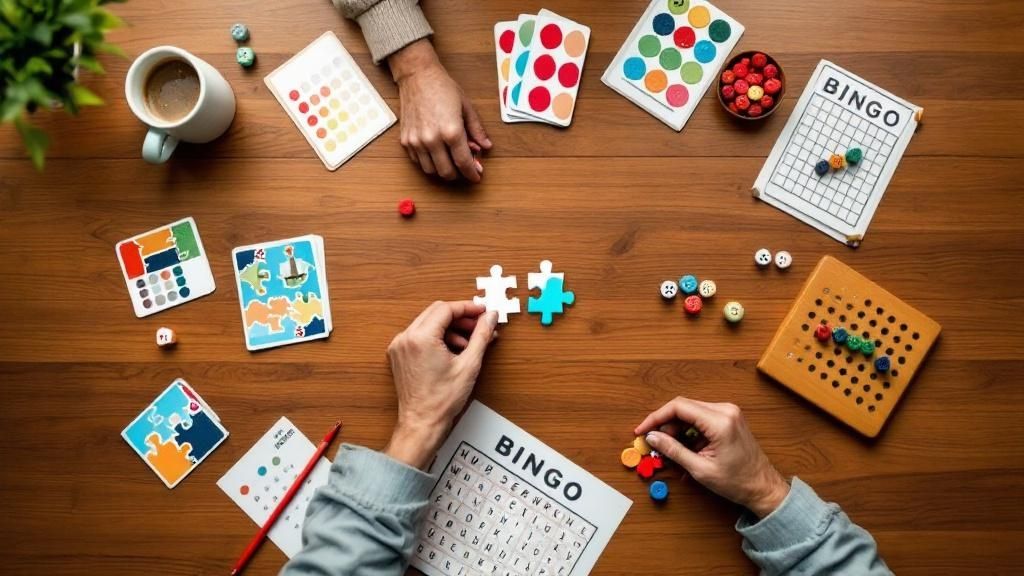
For families in Northern Virginia navigating the complexities of dementia, finding ways to connect and bring moments of joy to a loved one’s day is paramount. While challenges like memory loss and communication difficulties are real, meaningful engagement can significantly improve quality of life. The right elderly games for dementia are more than just a pastime; they are powerful tools that stimulate the mind, reduce anxiety, and strengthen bonds.
At Caring Senior Service – Arlington, we’ve seen firsthand how a simple game can spark joy, evoke memories, and help seniors reconnect with the people around them. This guide acknowledges the emotional and physical challenges families face and provides practical, hopeful ideas for games and activities tailored to support cognitive function and emotional well-being for seniors in Arlington, Fairfax, and Alexandria. We will explore practical setups, adaptation tips, and the unique benefits each game offers, empowering you to create positive, shared experiences.
How Games Benefit People with Dementia
Engaging in well-chosen activities is crucial for dementia care. According to the Alzheimer’s Association, mental stimulation can help maintain cognitive function and improve mood. Games offer a structured, enjoyable way to achieve this.
- Improve Memory and Cognitive Function: Games like puzzles and trivia gently exercise the brain, helping to maintain existing neural pathways.
- Encourage Movement and Coordination: Activities like a soft balloon toss or sorting objects help preserve fine and gross motor skills.
- Reduce Anxiety, Boredom, and Agitation: Meaningful engagement provides a constructive outlet for energy, reducing restlessness and creating a sense of calm.
- Foster Social Connection and Companionship: Playing a game together is a shared experience that strengthens bonds and combats feelings of isolation.
Categories of Dementia-Friendly Games
Here are several categories of games that are effective and adaptable for various stages of dementia.
A. Memory and Thinking Games
These games tap into long-term memories, which often remain more accessible than short-term memory for individuals with dementia. They use nostalgic items, photographs, and music to stimulate personal history, fostering conversation and connection. The goal is to create a positive, failure-free environment where individuals can share stories and feel validated.

- Picture Matching Cards: Use large cards with simple, high-contrast images of familiar objects, animals, or classic movie stars.
- Simple Puzzles: Choose puzzles with 12-50 large, easy-to-grip pieces featuring nostalgic scenes.
- “Name That Tune”: Play snippets of popular songs from their youth and encourage them to guess the title or sing along.
- Hobbies: If they enjoyed collecting, activities like identifying old coins can be excellent for reminiscence, sparking memories and conversations.
B. Sensory and Motor Games
Sensory stimulation activities engage the senses of touch, smell, sight, sound, and taste to provide comfort and non-verbal engagement. This approach is especially powerful for individuals in the moderate to advanced stages of dementia, as it can calm agitation and create positive experiences when verbal abilities decline.

- Sorting Objects: Provide a bowl of mixed items like large buttons, colorful pom-poms, or smooth stones to sort by color or texture.
- Clay Modeling or Painting: Offer non-toxic modeling clay or watercolors for a creative, tactile experience focused on the process, not the result.
- Balloon Toss or Soft Ball Catch: A gentle game of catch with a lightweight balloon or soft ball encourages movement and hand-eye coordination.
C. Social and Group Activities
Group activities provide vital social interaction, helping to combat the loneliness and isolation that can accompany dementia. These games are best when they are simple, familiar, and focused on participation rather than competition.
- Bingo with Large Print: Use bingo cards with large numbers or pictures of familiar objects to make the game accessible and fun.
- Trivia about Familiar Topics: Ask simple questions about old TV shows, famous people from their era, or local landmarks in Northern Virginia.
- Reminiscence Storytelling: Use prompt cards with open-ended questions like, “Tell me about the first car you drove,” or “What was your favorite holiday tradition?”
D. Technology-Based Games
Modern technology offers a new frontier for cognitive engagement. Tablets with large screens provide interactive, adaptable, and often personalized experiences through simplified interfaces and clear instructions. These are especially effective for early to mid-stage dementia.
- Easy Tablet Apps: Apps like MindMate, Lumosity, or even simple color-matching games provide stimulating, failure-free fun.
- Music-Based Memory Apps: Programs that play familiar songs can help with recall and mood elevation.
- Digital Painting: Creative apps allow for self-expression without the mess of traditional art supplies.
- Home Care Technology: Integrating these apps as part of a broader home care technology plan can create a more supportive and connected environment.
How to Choose the Right Game
Success with elderly games for dementia depends on thoughtful selection and adaptation.
- Match the Game to the Person: Consider their stage of dementia, physical mobility, and lifelong interests. A former gardener might enjoy arranging silk flowers, while a former accountant might like sorting coins.
- Keep it Failure-Free: The goal is enjoyment and engagement, not accuracy. Adapt the rules to ensure they can succeed. If they can’t find a puzzle piece, guide their hand gently.
- Rotate Activities: Variety prevents boredom and frustration. If one game isn’t working today, try something different and come back to it another time.
- Participate, Don’t Supervise: The experience should feel shared and collaborative. Sit alongside them and enjoy the activity together.
Caregiver Tips for Game Time
Creating the right environment is just as important as choosing the right game.
- Minimize Distractions: Turn off the TV and reduce background noise to help your loved one focus.
- Celebrate Small Wins: Acknowledge their effort and participation with smiles and positive reinforcement.
- Watch for Signs of Fatigue or Frustration: Keep sessions short (15-20 minutes) and end on a positive note before they become tired or overwhelmed.
- Integrate Play into Daily Routines: Frame activities as part of the day (“Let’s listen to some music while we fold laundry”) rather than as a formal “therapy” session.
Conclusion – Supporting Families Through Engagement
Navigating the journey of dementia care requires a toolkit filled with patience, compassion, and effective strategies for connection. The games and activities shared here are more than just ways to pass the time; they are powerful instruments for preserving dignity, sparking joy, and strengthening bonds. The true victory lies not in completing a puzzle or answering a question correctly, but in the shared laughter, the flicker of a memory, or a simple, peaceful moment of focus.
At Caring Senior Service of Arlington, we believe that meaningful engagement is as important as personal care. Through personalized activities, compassionate caregivers, and our GreatCare™ approach, we help families bring joy and connection back into everyday moments. Our specialized dementia care is designed to support not just the senior but the entire family, offering guidance and hands-on assistance. As part of our comprehensive dementia guide program, we empower families with the tools and support they need.
? If your loved one has dementia and you’re looking for support or respite, our team can help create a personalized care plan. Contact us today to learn more.
At Caring Senior Service of Arlington, we help seniors across Northern Virginia remain safe, healthy, and happy at home. Call us at (571) 202-6522 to schedule a free consultation today.