
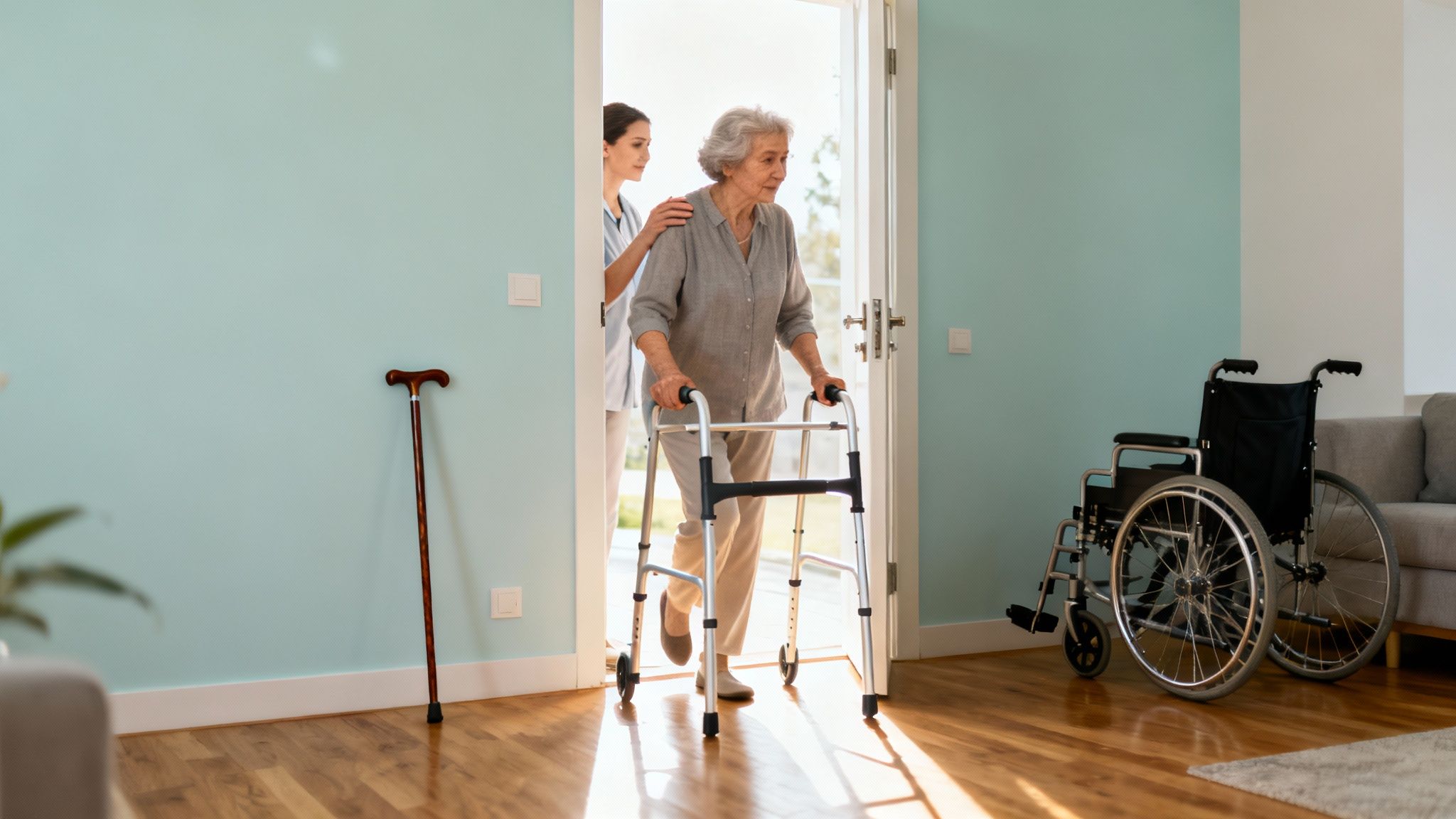
It often starts with a small, quiet observation. Maybe you’ve noticed a parent gripping furniture as they walk through a room or pausing at the top of the stairs with a bit of hesitation. For families all over Northern Virginia, from Arlington to Fairfax, these are the moments that spark concern. But what if we looked at mobility aids for elderly not as symbols of decline, but as powerful tools for staying independent, safe, and confident at home?
Empowering Seniors Through Greater Mobility
A mobility aid can be the very key that unlocks a safer, more active life. The right support—whether it’s a simple cane or a sturdy walker—can dramatically reduce the risk of falls, a major worry for anyone living on their own. Think of these aids as enablers, helping your loved one get back to their daily routines with a renewed sense of assurance.

This guide is for families in Arlington, Alexandria, and our neighboring communities. Our goal is to give you the knowledge you need to make the best decision for your loved one. We’ll walk through the different types of mobility aids, how to pick the right one, and even how to make small changes around the house for maximum safety.
Understanding the True Purpose of Mobility Aids
At its core, any mobility aid is designed to do two things: improve stability and reduce the physical effort it takes to get around. That simple function has a ripple effect, touching almost every part of a senior’s life.
- Increased Safety: By providing a stable base of support, these aids significantly lower the chance of a fall, which is a leading cause of injury among older adults.
- Greater Independence: When a senior feels steady on their feet, they’re far more likely to handle daily tasks themselves, from making a meal to walking out to the mailbox.
- Boosted Confidence: The fear of falling can be paralyzing, often leading people to become more sedentary. A reliable aid gives seniors the confidence they need to stay active and connected to their community.
For many, staying active also means getting out of the house for doctor’s appointments, errands, or social visits. This is where reliable senior transportation services can work hand-in-hand with mobility aids, ensuring every trip is safe and comfortable. At Caring Senior Service of Arlington, our approach is built on our GreatCare™ method, which focuses on providing Quality Caregivers, Customized Care Plans, and Active Involvement. We believe in proactive support that looks at every aspect of a senior’s well-being—not just physical help, but preserving the freedom and dignity that come from staying mobile and engaged with the world.
Finding the Right Mobility Support
Choosing a mobility aid is a lot like finding the right partner for a specific journey. It’s not about grabbing the most complex or high-tech device off the shelf, but about finding the one that perfectly matches a person’s unique needs and lifestyle. To make it simpler, think of each aid in terms of the job it does.
A cane acts as a “third point of contact”—much like placing a steadying hand on a railing. It’s perfect for someone with minor balance issues. A walker, on the other hand, is like a “portable handrail,” offering a constant frame of support for those who need more stability to feel confident on their feet.
For more significant mobility challenges, a wheelchair serves as reliable “personal transportation,” ensuring safe movement from room to room or during longer outings. And finally, for those who want to venture further into the community—maybe to visit friends in Vienna or enjoy a day out in Alexandria—a mobility scooter offers “extended freedom.”
Understanding these distinct roles is the first and most important step toward making a confident choice.
Canes: A Simple Solution for Stability
Canes are often the very first mobility aid a person considers, and for good reason. They are best suited for individuals who have mild instability, some weakness on one side of the body, or minor pain in a leg or hip. A cane helps redistribute weight and provides that crucial extra point of stability to prevent a stumble from turning into a fall.
There are a couple of main types to consider:
- Single-Point Canes: This is the classic, most common type, offering a single tip for support.
- Quad Canes: These have a base with four small feet, which provides a much wider and more stable foundation. They can also stand on their own, a convenient feature many seniors appreciate.
The real key to a cane’s effectiveness is getting the fit just right. When the user stands up straight, the top of the cane should reach the crease of their wrist. An ill-fitting cane can do more harm than good, causing poor posture and even increasing fall risk.
Before settling on any mobility aid, it’s critical to understand a person’s current stability. A great first step is to assess their fall risk through various balance assessment tests for elderly individuals, which are often conducted by a physical therapist or physician.
Walkers and Rollators: Providing a Frame of Support
When a cane just doesn’t offer enough stability, walkers and rollators step in. They provide a much wider base of support, requiring the user to either lift and place the device as they move or, in the case of a rollator, simply push it along.
A standard walker has four legs with no wheels. It offers the maximum amount of stability and is ideal for individuals with significant balance issues or those recovering from surgery. The trade-off is that the user must have enough upper body strength to lift the walker with each step.
A rollator, on the other hand, is essentially a walker with wheels, hand brakes, and often a built-in seat. This makes it an excellent choice for seniors who need support but also want to move more freely and cover greater distances without getting tired. They are perfect for navigating local spots like the farmers market in Falls Church or a community center in Annandale.
The global market for elderly walking aids is growing quickly, which really shows how essential these tools have become. By 2025, this market is projected to reach USD 2.996 billion. This growth is fueled by an aging population and the rising number of seniors living with conditions like arthritis and osteoporosis that impact mobility.
Wheelchairs and Scooters: For Comprehensive Mobility
For seniors with significant mobility limitations who cannot walk safely, even with a walker, wheelchairs and mobility scooters are essential tools for independence. They are not a last resort; they are a gateway to continued engagement with life.
A manual wheelchair requires the user or a caregiver to propel it, making it a good option for those who have upper-body strength or consistent assistance. They are also generally lighter and easier to transport.
Electric wheelchairs and mobility scooters are powered by batteries and controlled with a simple joystick or steering handle. They give seniors with limited strength the power to move independently, both inside their home and around their Northern Virginia neighborhood. These devices make it possible to attend family gatherings, go shopping, or simply enjoy a sunny day at a park in Great Falls without needing help.
Choosing between these options depends heavily on the individual’s physical capabilities, their home environment, and their lifestyle goals. The right mobility aid can be a truly life-changing decision, restoring confidence and preserving a loved one’s precious independence.
How to Select the Best Mobility Aid
Choosing the right mobility aids for elderly family members isn’t like picking something off a shelf. It’s a thoughtful process of matching a tool to your loved one’s specific needs, their home, and their personal goals. When you get it right, you’re handing them back a piece of their independence. But getting it wrong can accidentally create new safety risks.
The very first step, always, is to talk to a healthcare professional. A physical therapist or a trusted doctor, maybe at a local place like Virginia Hospital Center in Arlington, can give you a real clinical evaluation of your loved one’s mobility, strength, and balance. Think of their expert opinion as the foundation you’ll build everything else on.
Once you have that professional advice, you can start digging into the day-to-day realities that will point you to the perfect fit.
Assessing Individual Needs and Abilities
Before you even glance at a single device, take a close look at the person who will be using it. This is all about them. A few key questions can help you narrow down the sea of options:
- Upper Body Strength: Does your loved one have the strength to lift a standard walker with every step? If that sounds like a struggle, a rollator with wheels that just needs to be pushed might be a much better choice.
- Balance and Stability: How steady are they? Someone who gets a little dizzy now and then might only need a single-point cane for reassurance. But for an individual with more serious balance issues, the wide, stable base of a walker or rollator is essential.
- Cognitive Function: Can they remember how to use the device safely? For example, a rollator has hand brakes, and it’s critical to remember to squeeze them before sitting down. This is a huge safety point to consider.
- Endurance Levels: How far can they go before needing a break? If they love getting out but tire easily, a rollator with a built-in seat is a game-changer. It gives them a place to rest whenever they need it.
This simple decision tree can help visualize how different needs lead to different solutions.
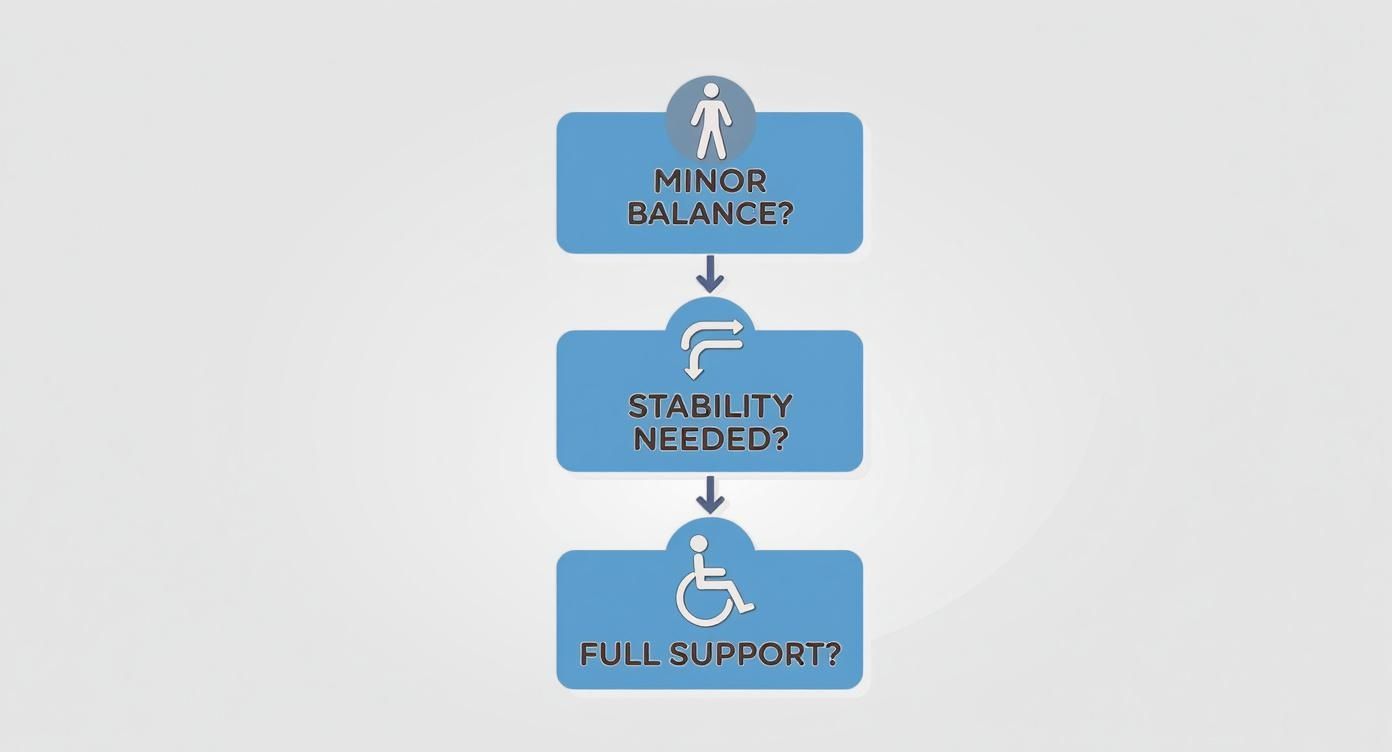
As you can see, it’s a clear progression. The path moves from needing just a little bit of support to requiring full stability, helping you pinpoint the right category of aid for your family member.
Considering the Living Environment
A mobility aid has to work in the real world—and for your loved one, that world is their home. The unique character of homes across Northern Virginia, from a historic Alexandria townhome with narrow hallways to a modern Fairfax house with an open floor plan, makes a huge difference.
Take a walk through their home, but this time with a measuring tape and a critical eye. Can a walker or wheelchair actually fit through the doorways and hallways? Look for those sneaky tripping hazards like loose rugs, extension cords, or clutter that could easily snag a wheel or a cane tip.
A critical, but often overlooked, factor is the flooring. Thick, high-pile carpeting can make it much more difficult to push a rollator or maneuver a wheelchair, creating unnecessary physical strain.
The growing demand for these devices isn’t just a local trend; it reflects a major demographic shift. By 2025, the global mobility aids market is expected to hit USD 7.3 billion, and it’s projected to nearly double to USD 13.2 billion by 2035. This boom is driven by our aging population and by impressive new technologies that are making these devices lighter, smarter, and easier to use. You can learn more about this trend from industry analysis by Future Market Insights.
To help you put all these pieces together, we’ve created a simple checklist.
Mobility Aid Selection Checklist
This table is designed to walk you through the key considerations, helping you match your loved one’s specific situation with the features of different mobility aids.
| Consideration | Questions to Ask | Aids to Consider |
|---|---|---|
| Balance Support | Do they need minimal, moderate, or maximum stability? Are falls a frequent concern? | Cane, Quad Cane, Hemi Walker, Walker, Rollator |
| Weight-Bearing | Can they put full weight on both legs? Do they need to offload pressure from one side? | Crutches, Knee Scooter, Walker |
| Upper Body Strength | Can they consistently lift a device? Or is pushing easier? | Walker (requires lifting), Rollator (requires pushing) |
| Endurance & Fatigue | Do they need to sit and rest frequently during walks or outings? | Rollator with a seat, Transport Chair |
| Home Environment | Are doorways and hallways wide enough? Are there stairs, thick carpets, or uneven surfaces? | Standard Walker (narrower), 3-Wheel Rollator (maneuverable), Wheelchair (needs space) |
| Cognitive Ability | Can they remember multi-step safety procedures, like using hand brakes? | Standard Cane or Walker (simpler), Rollator (requires brake use) |
| Transportation Needs | Does the aid need to be folded and stored in a car? How heavy is it? | Folding Cane, Lightweight Rollator, Transport Chair |
By thoughtfully answering these questions, you can move from a place of uncertainty to one of confidence, knowing you’re choosing a tool that truly enhances safety and freedom.
Ensuring a Proper Fit and Training
Finally, once you’ve picked a device, making sure it fits correctly is non-negotiable. An aid that’s too tall or too short can throw off posture, cause back pain, and make someone less stable—defeating the whole purpose. For a cane or walker, the rule of thumb is that the handgrips should be right at wrist level when the person is standing straight with their arms hanging at their sides.
Training is just as crucial. A caregiver from Caring Senior Service of Arlington can help your loved one practice using their new aid correctly, teaching them everything from how to navigate tight corners to how to sit and stand up safely. This kind of hands-on support is a key part of our GreatCare™ method. It helps build the confidence they need to fully embrace the freedom their new mobility aid can offer.
Adapting the Home for Safe Mobility
Bringing one of the many mobility aids for elderly into the home is a fantastic first step, but it’s only half the journey. For a walker, rollator, or wheelchair to really do its job, the home environment has to be ready for it. I like to think of the home as the track and the mobility aid as the race car—for the car to perform its best, the track needs to be clear and safe.
This is where a practical game plan for home modifications comes in, turning a familiar space into a safer, more accessible sanctuary. Many families I’ve worked with in Arlington and across Northern Virginia have seen how a few strategic adjustments can make a world of difference, boosting confidence and preventing accidents.
Creating Clear and Safe Pathways
The single most important home adaptation is creating unobstructed pathways. I can’t stress this enough: a clear path is a safe path, especially for someone navigating with a new piece of equipment.
Start by walking through the most-used routes in the house—from the bedroom to the bathroom, and from the living room to the kitchen. Keep an eye out for common obstacles that can easily become hazards.
- Remove Trip Hazards: Area rugs are a major culprit. While they add character, their edges can easily catch on a walker’s leg or a wheelchair’s wheel. It’s best to secure them with double-sided tape or, even better, remove them entirely.
- Manage Cords and Clutter: Electrical cords snaking across walkways are a huge tripping risk. Reroute them along walls or use cord covers to tack them down flat against the floor.
- Widen the Way: Furniture might need to be shifted around to create wider lanes. This is especially true for wheelchairs, which need more clearance. A clear path should be at least 36 inches wide to ensure comfortable passage.
These simple acts of “decluttering for safety” are fundamental. Sometimes, a fresh pair of eyes helps. A professional caregiver can often spot risks you might have overlooked, which is a key part of our services, especially during the critical transition after a hospital stay. A proper home setup is crucial for successful post-hospital discharge care and helps prevent readmission.
Enhancing Lighting and Visibility
Good lighting isn’t a luxury; it’s a non-negotiable for senior safety. Dimly lit hallways, staircases, and bathrooms can hide obstacles and make navigation tricky, which just increases the risk of a fall.
Think about the paths most traveled at night. Adding simple, inexpensive nightlights along the route from the bedroom to the bathroom can be one of the most effective safety measures you take. Swapping out old bulbs for brighter LEDs in overhead fixtures and lamps also makes a noticeable difference.
Making High-Risk Areas Safer
Certain rooms, like the bathroom and kitchen, throw unique challenges into the mix because of water and hard surfaces. Focusing your safety efforts here can prevent some of the most common and serious accidents in the home.
The bathroom is often cited as the most dangerous room in the house for seniors. The combination of slippery surfaces and the need to bend and lift makes it a high-risk zone for falls.
Here are a few targeted modifications for these key areas:
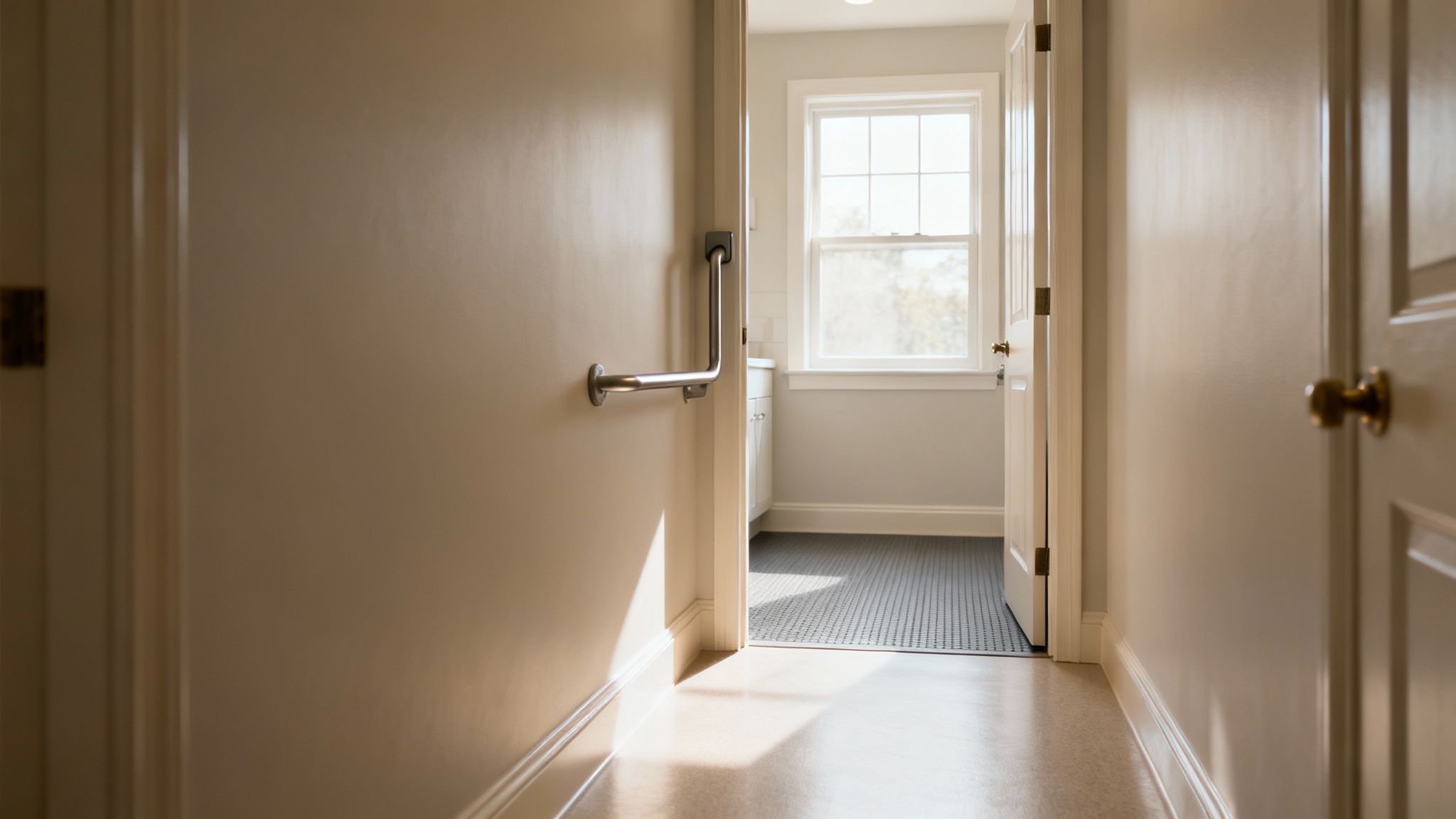
- Install Grab Bars: Place sturdy, professionally installed grab bars next to the toilet and inside the shower or tub. They provide crucial support when someone needs to sit, stand, or steady themselves.
- Use Non-Slip Mats: Add non-slip mats both inside the shower and on the bathroom floor to give feet a secure grip.
- Add a Shower Chair: A shower chair or bench allows a senior to sit while bathing. This simple change reduces fatigue and the risk of slipping on a wet surface.
- Organize the Kitchen: In the kitchen, move frequently used items—like plates, glasses, and pantry staples—to lower, easily accessible shelves. This cuts down on the need for reaching or using a step stool.
Beyond these physical aids, modern technology can add another layer of safety. It’s worth considering how recent innovations, like smart safety features and AI-powered wellness solutions for seniors, can contribute to a secure living environment.
At Caring Senior Service of Arlington, our caregivers are trained to perform thorough home safety assessments. We help families in places like Fairfax, McLean, and Vienna identify and fix these risks, ensuring your loved one can use their new mobility aid with complete confidence and peace of mind.
Innovations in Modern Mobility Aids
If you’re picturing the clunky, heavy walkers of a few decades ago, it’s time for an update. Today’s mobility aids for elderly loved ones are a world away from the simple devices of the past. Technology has turned them into lighter, smarter, and more intuitive tools that genuinely enhance a senior’s life. These aren’t just gadgets with extra bells and whistles; they’re designed to deliver real independence.
The market for these assistive devices is one of the most dynamic areas in healthcare right now. In 2024, the industry was valued at an impressive USD 32.9 billion, and it’s on track to hit USD 53.5 billion by 2033. That incredible growth, tracked by firms like IMARC Group, is a direct reflection of the amazing pace of development in tools that keep seniors safe and independent.
What does that mean for families in Arlington and across Northern Virginia? It means you have access to better, safer, and more thoughtful options than ever before.
Smarter and More Responsive Devices
Some of the most exciting progress is happening where mobility meets digital technology. These “smart” aids add a new layer of security that gives incredible peace of mind to both seniors and their families.
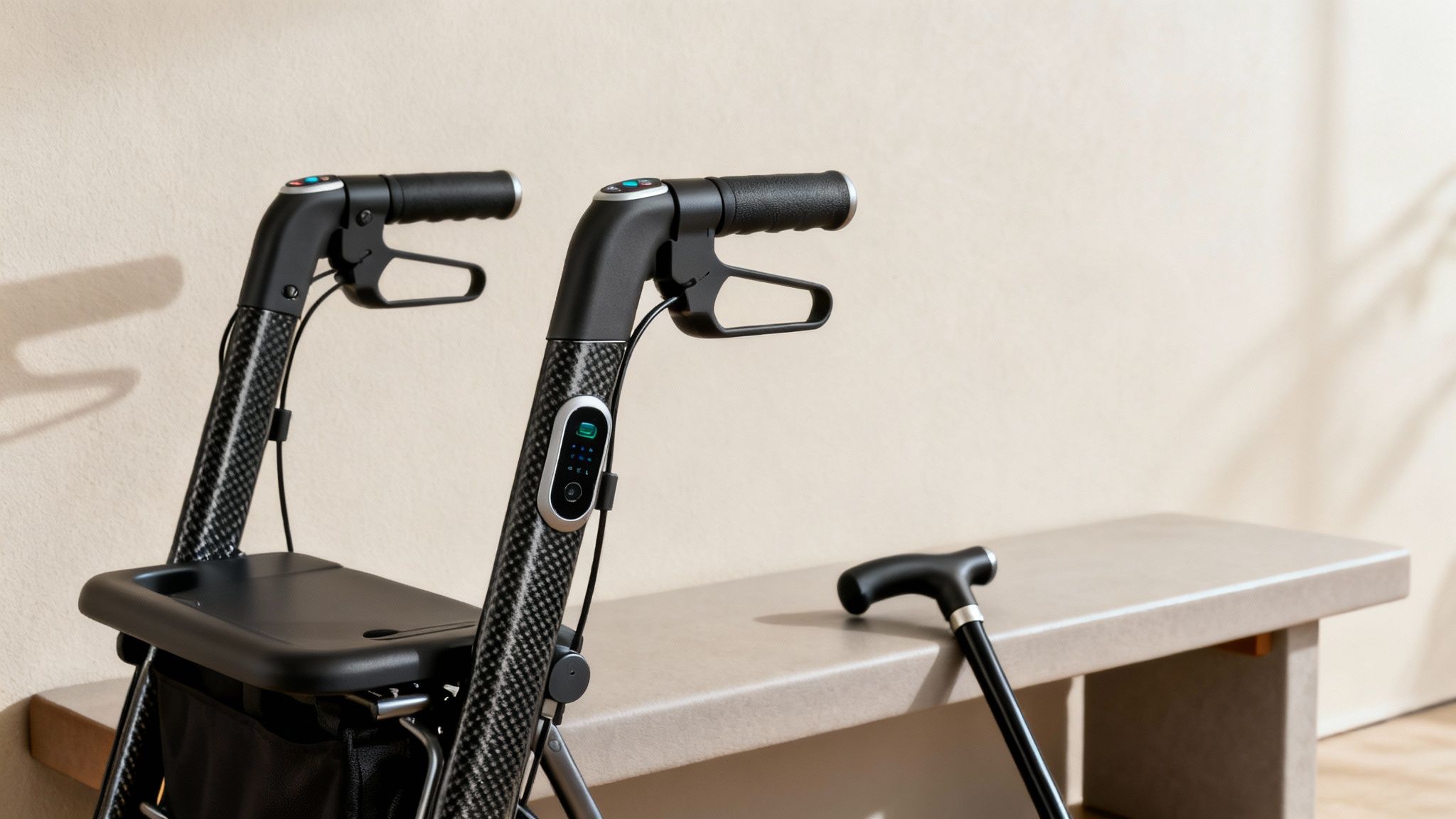
- Smart Canes: Can you imagine a cane that can call for help? Some modern canes now have built-in sensors that detect the sudden change in motion from a fall. They can automatically send an alert to a family member or caregiver, which is a game-changer for safety.
- GPS Tracking: For seniors with dementia or other memory concerns, certain mobility aids now come with discreet GPS trackers. This lets family members know their loved one is safe without taking away their sense of freedom.
- Intuitive Powered Chairs: Powered wheelchairs aren’t the bulky machines they once were. Modern joystick controls are so responsive that navigating tight corners at home or busy community spaces has become nearly effortless.
These tools are part of a much bigger picture in modern senior care. You can see how Caring Senior Service embraces similar advancements in our approach to home care technology.
Advanced Materials and Ergonomic Design
It’s not all about the high-tech features, either. The physical design of mobility aids has seen a quiet revolution of its own. The focus now is on making devices that are not just effective but also comfortable and easy for a senior to manage on their own.
A heavy, awkward mobility aid can create as many problems as it solves. Innovations in materials science are directly addressing this, making today’s devices significantly more user-friendly.
Take rollators, for example. What used to be heavy steel frames are now often built from ultra-lightweight carbon fiber. This simple change makes a world of difference when a senior needs to lift it into a car.
On top of that, you’ll find advanced braking systems that require less hand strength to operate and ergonomic grips that reduce strain on hands and wrists. It’s these thoughtful details that come together to empower seniors, giving them back their dignity and security.
How Professional Caregivers Support Mobility
A mobility aid is a fantastic tool, but its real power is unlocked when you pair it with the right human support. This is where a professional caregiver’s compassionate, hands-on approach makes a tangible difference. They turn a simple device into a comprehensive safety solution.
At Caring Senior Service of Arlington, this philosophy is the very heart of our GreatCare™ method. Our Quality Caregivers are trained to do more than just stand by; they actively help clients integrate mobility aids for elderly loved ones into daily life. This builds confidence and, most importantly, ensures the device is used correctly.
Active Support for Daily Routines
A caregiver’s job is to be a steady, reassuring presence that makes using a mobility aid feel both natural and safe. They’re there for those critical moments when the risk of a fall is highest, providing both the physical stability and the emotional encouragement needed to stay mobile.
This active involvement can look like many things throughout the day:
- Safe Transfers: Assisting a senior in moving safely from their bed to a wheelchair, or from a chair to a standing position with their walker.
- Posture and Gait Guidance: Gently reminding a loved one to stand up straight while using their walker, which is key to preventing back pain and making sure the device provides maximum stability.
- Constant Supervision: Offering a stable arm to hold during a walk around the neighborhood in McLean or simply being present to prevent a stumble in the kitchen.
This consistent partnership helps seniors build confidence and master their new device much faster than they ever could on their own.
A study from the Government Accountability Office found that many older adults struggle with mobility issues, and falls often happen in environments not designed for their needs. Professional caregivers help bridge this gap by adapting routines and providing direct assistance right there in the home.
Creating a Cohesive Safety System
Real mobility support is about more than just one person or one device. Through Customized Care Plans and Active Involvement, we ensure the entire system—the person, the aid, and the home environment—works together seamlessly.
Our caregivers are trained to perform ongoing home safety checks, clearing pathways and removing the kinds of trip hazards that could easily catch a walker or wheelchair.
Many of our services are designed to directly support mobility and independence. Professional caregivers can help with tasks that have become challenging, like bathing, dressing, and grooming. To see how this works, learn more about our personal care services in Arlington. By taking care of these essential activities, caregivers help a senior conserve energy, allowing them to stay more active and mobile throughout the rest of the day.
This combination of a well-chosen mobility aid, a safe home, and the expert support of a caregiver creates a powerful safety net. It allows seniors in Arlington, Fairfax, and across Northern Virginia to live not just more safely, but with far greater dignity and independence.
Common Questions About Mobility Aids
When you start looking into mobility aids for elderly family members, it’s natural to have a lot of questions. Over the years, we’ve heard similar concerns from families all over Northern Virginia as they navigate this new chapter. To help you find answers quickly, here are a few of the most common questions we get.
How Do I Know When My Parent Needs a Mobility Aid?
It often starts with small, easy-to-miss clues. You might notice them holding onto furniture or walls for extra support as they walk through a room. Maybe they seem a bit unsteady on their feet or have a tough time getting up from a chair.
If you spot these kinds of changes, especially after a fall or even a close call, it’s a clear sign. That’s the perfect time to talk to their doctor about whether a mobility aid could boost their safety and bring back some confidence at home.
Will Using a Walker Make My Loved One Weaker?
That’s a myth I hear all the time, but it’s actually the other way around. A properly fitted walker gives a senior the stability they need to keep moving around safely. That consistent activity is exactly what helps maintain their muscle strength and endurance.
Think of it this way: the walker makes movement possible when it would otherwise be too risky. It helps prevent the muscle loss that happens when someone becomes inactive out of fear of falling.
A walker isn’t a crutch that causes weakness; it’s a tool that enables the activity needed to maintain strength. Safe movement is always better than sedentary living.
Does Medicare Cover the Cost of Mobility Aids?
In many situations, yes. Medicare Part B can cover 80% of the cost for what’s called durable medical equipment (DME), which includes things like walkers, canes, and wheelchairs.
The main requirement is that the device has to be prescribed by their doctor as medically necessary for use inside the home. It’s also really important to make sure you get the equipment from a Medicare-enrolled supplier, otherwise, the coverage won’t apply.
How Can an In-Home Caregiver Help with a Mobility Aid?
A professional caregiver is a huge piece of the puzzle when it comes to safety and success. They don’t just help—they partner with your loved one to make the transition smooth and safe. They provide critical support by:
- Ensuring Proper Use: They make sure the device is being used correctly every single time, reinforcing what a physical therapist might have taught.
- Assisting with Transfers: They help your loved one move safely from the bed to a chair or stand up without risking a fall.
- Maintaining a Safe Home: They keep an eye out for trip hazards like loose rugs or clutter, making the home environment safer for navigating with the new aid.
- Providing Standby Assistance: Just having a steady presence nearby during walks or daily activities can prevent falls and build immense confidence.
This partnership is what really helps a senior in Arlington, Vienna, or Fairfax adapt to their new aid, turning it from a piece of equipment into a true tool for independence.
At Caring Senior Service of Arlington, we help seniors across Northern Virginia remain safe, healthy, and happy at home. Call us at (571) 202-6522 to schedule a free consultation today.