
When you realize a loved one needs more support than you can provide, you’re faced with one of the toughest decisions a family can make: home care or a nursing home? It’s a question that goes far beyond logistics. For families in Arlington, VA, and across Northern Virginia, it's about choosing between two very different paths while honoring your loved one’s wishes.
Home care brings personalized, one-on-one support into the familiar comfort of a loved one’s own home. On the other hand, a nursing home offers comprehensive, 24/7 medical supervision within a structured community setting.
Navigating the Senior Care Crossroads in Northern Virginia
For many families across Northern Virginia, from Arlington to Fairfax, the journey starts with small but significant changes. Maybe Mom has stopped cooking her famous Sunday dinners after a hospital stay at Inova Fairfax Hospital, or you’ve noticed Dad seems unsteady on his feet. These moments bring a wave of emotions—concern, uncertainty, and the pressing question of what to do next. This isn’t just about finding a practical solution; it’s about honoring a lifetime of independence while ensuring safety and well-being.
The reality is, more and more families are facing this. The population of adults aged 65 and older is projected to jump from 57.8 million in 2022 to nearly 89 million by 2060. And the overwhelming majority—around 75% of Americans over 50—want to 'age in place,' staying in their own homes for as long as possible. You can discover more insights about these senior care trends and what they mean for families like yours.
This guide is here to help you move beyond simple definitions. We’ll walk through a clear, compassionate comparison of home care vs nursing home to help your family make an informed choice that feels right for everyone involved.
Home Care vs Nursing Home At a Glance
Before we dive into the details, let's start with a high-level overview. Think of this as a quick cheat sheet to understand the fundamental differences between the two options.
| Factor | Home Care | Nursing Home |
|---|---|---|
| Location & Environment | In the senior's private residence, maintaining a familiar and comfortable setting. | A clinical, residential facility with structured routines and shared spaces. |
| Level of Care | Non-medical assistance with daily activities, companion care, and personal support. | 24/7 skilled nursing care, medical supervision, and rehabilitation services. |
| Independence & Autonomy | High. Seniors maintain their personal routines, privacy, and control over their daily lives. | Limited. Schedules for meals, activities, and care are structured by the facility. |
| Social Interaction | One-on-one companionship with a dedicated caregiver and continued connection with the local community. | Structured group activities and daily interaction with other residents and staff. |
| Cost Structure | Typically billed hourly, offering flexibility to match care hours to specific needs and budgets. | An all-inclusive monthly fee covering room, board, meals, and comprehensive medical care. |
This table gives you a starting point, but the best choice always depends on your unique situation. Now, let’s explore what these differences really mean for your loved one’s daily life.
When you're weighing home care vs. nursing home care, you have to look past the labels and really dig into what a typical day looks like in each setting. The choice you make will shape the daily routines, social interactions, and the entire rhythm of life for your loved one.
The Personalized Approach of Home Care
Home care is all about fitting into the individual’s existing life and schedule. It’s a service designed to support, not take over, a senior's established routines in their own home, whether that's in Vienna, McLean, or anywhere else in Northern Virginia.
At its core, home care provides non-medical support that’s tailored to very specific needs. A dedicated caregiver comes in to help with Activities of Daily Living (ADLs), making sure your loved one is safe and comfortable without the rigid structure of an institution. This one-on-one attention is what truly sets it apart.
At Caring Senior Service of Arlington, this is the entire philosophy behind our GreatCare™ method. Our quality caregivers are focused on creating a supportive environment that honors independence above all else.
Home care services usually include things like:
- Companion Care: This can be anything from working on hobbies and just having a good conversation to accompanying clients on errands or to appointments in Alexandria. It’s a powerful way to reduce social isolation.
- Personal Hygiene: Offering dignified and respectful assistance with bathing, dressing, grooming, and other personal tasks that might have become challenging.
- Meal Preparation: Planning and cooking nutritious meals that cater to specific dietary needs and, just as importantly, personal tastes. This is a huge part of senior health.
- Medication Reminders: Helping seniors stay on track with their medication schedules, just as their doctor prescribed.
The biggest advantage of home care is the one-to-one relationship between the caregiver and the senior. This personal dynamic builds trust and allows the care plan to adapt on a daily basis to the client's mood, health, and what they feel like doing that day.
This customized approach means that if your loved one in Falls Church enjoys their morning coffee while reading the paper, their caregiver is there to support that routine. There’s no preset schedule for waking up, eating, or socializing. The day is shaped by the senior, not by a facility.
The Structured Environment of a Nursing Home
A nursing home, on the other hand, offers a comprehensive and structured environment built for people who need a much higher level of medical supervision. These facilities, often called skilled nursing facilities, provide round-the-clock care from licensed medical professionals.
Life in a nursing home is organized. Meals, activities, and medical treatments happen at designated times. For residents with complex health issues or significant cognitive decline, this predictable routine can be incredibly beneficial.
Key Differences in Care Intensity
The real difference comes down to the intensity and type of care. Home care is focused on non-medical support and companionship. Nursing homes are equipped for intensive, skilled medical care.
A nursing home provides:
- 24/7 Skilled Nursing: Licensed nurses are always on-site to give medications, manage complex health conditions like diabetes or heart disease, and respond to any medical emergencies.
- Rehabilitation Services: You'll find on-site physical, occupational, and speech therapists who help residents recover from surgery, a stroke, or an injury.
- Structured Social Activities: A full calendar of planned events, from group exercise classes to social hours, gives residents plenty of opportunities to interact with each other.
For a senior in Alexandria who is recovering from major surgery or managing a chronic illness that needs constant monitoring, the medical infrastructure of a nursing home is essential. While the staff-to-resident ratio means care is shared among many residents, a team of professionals is always on hand. The focus is clinical, prioritizing medical stability and safety within a communal living space. This is a critical factor when weighing home care vs. nursing home for someone with acute medical needs.
Understanding the Financial Impact on Your Family
For most families I talk to in Northern Virginia, the discussion around home care vs. nursing home quickly lands on one crucial factor: the cost. It’s essential to get a handle on the financial side of things to make a sustainable, long-term decision that doesn't add even more stress to an already emotional journey. The two models are structured very differently, and the best fit really depends on your loved one’s specific needs and your family's budget.
The Flexible Cost Structure of Home Care
Home care is almost always billed on an hourly basis. This model offers incredible flexibility, which means you only pay for the exact services you need, precisely when you need them.
Think about a senior in Fairfax who is mostly independent but could use a hand a few hours a day with meals and getting ready. In this scenario, home care is often the more budget-friendly choice. You can easily scale the hours up or down as their needs evolve, giving you total control over the budget. This pay-as-you-go approach helps you avoid the high, fixed costs that come with a residential facility.
The All-Inclusive Model of Nursing Homes
Nursing homes, on the other hand, operate on an all-inclusive monthly fee. This one payment typically covers everything: room and board, 24/7 skilled nursing care, meals, utilities, and access to on-site medical and rehabilitation staff.
While the monthly sticker price is significantly higher than part-time home care, it is predictable. There are no surprise bills. The high costs are a reflection of the intensive, round-the-clock medical and non-medical support provided. These facilities concentrate on residents with chronic or complex health issues, which makes the care resource-heavy.
Key Takeaway: Home care's hourly rate offers financial flexibility and is often more affordable for non-intensive needs. A nursing home's all-inclusive fee provides comprehensive medical coverage at a higher, but fixed, monthly cost.
Exploring Payment Options in Northern Virginia
Figuring out how to pay for care is a critical next step. Families in Arlington, Alexandria, and the surrounding areas have several avenues they can explore, each with its own set of rules.
- Private Pay: This is the most common route, where families use personal savings, pensions, or other assets to cover care costs directly.
- Long-Term Care Insurance: Policies designed specifically to cover senior care can be a huge help. It's so important to review your policy carefully to understand what it covers, especially any waiting periods or limits on home care hours versus facility-based care.
- VA Benefits: For veterans who are eligible, programs like Aid & Attendance can provide a monthly stipend to help offset the cost of in-home care. We specialize in helping veterans in Northern Virginia access these valuable benefits.
For families trying to map out a realistic budget, understanding the local cost landscape is crucial. To help you plan, we've put together a guide that details the senior care cost in our area and how to manage it.
Ultimately, the financial part of the home care vs. nursing home debate comes down to a careful analysis of needs versus cost. Does your loved one require the constant medical oversight that justifies a nursing home's all-in price? Or does the personalized, flexible support of home care offer a more practical and affordable solution? By mapping out potential expenses and looking into every payment option, your family can make a financially sound choice that truly supports your loved one’s well-being.
Evaluating Quality of Life: Independence and Social Connection
Beyond the day-to-day logistics, the choice between home care vs. a nursing home gets to the heart of what makes life meaningful. This is where we talk about emotional well-being, independence, and social life—the personal factors that define a person's happiness and sense of self.
The desire to stay at home is incredibly powerful. The numbers don't lie: nearly 90% of seniors want to age in place, surrounded by their own memories and routines. It’s why around 12 million people in the U.S. receive home health care services annually. You can dig deeper into these home health findings and statistics.
Fostering Independence at Home
At its core, home care is built to preserve independence. For seniors living in familiar neighborhoods like Falls Church or Annandale, staying home means their personal routines remain sacred. It's the simple, yet profound, freedom to wake up on their own schedule, eat what they want when they want, and have friends drop by without a second thought.
This sense of autonomy is a pillar of our GreatCare™ method, especially our principle of Active Involvement. Our caregivers aren't just there to assist; they’re there to enable a fulfilling life. They encourage hobbies, drive clients to local senior centers, and help them keep up with neighbors. The goal is always to empower, not to take over.
Home care champions a senior's autonomy by adapting to their established life, rather than asking them to adapt to a new one. It preserves the small, personal rituals that define a person's day and sense of identity.
For example, a caregiver can help someone in Arlington continue their weekly bridge game or get outside to tend their garden. These aren't just pastimes—they're essential threads in the fabric of a person's life. By supporting these connections, home care actively pushes back against the isolation that can so easily creep in with age.
The Built-In Community of a Nursing Home
While home care is about nurturing existing social circles, nursing homes offer a completely different model: a built-in community. For a senior who may already feel isolated or whose mobility is limited, the structured social environment of a facility can be a huge plus.
Nursing homes provide a full calendar of scheduled activities, from group exercise and movie nights to communal dining. This constant peer interaction can be a powerful antidote to loneliness, sparking new friendships and fostering a sense of belonging. It removes the pressure of having to seek out social engagement on your own.
Comparing Social Dynamics and Trade-Offs
The choice really comes down to a trade-off between autonomy and a structured community. Neither one is inherently better; the right fit depends entirely on an individual’s personality, health, and what they need to feel connected.
Here’s a quick breakdown of how their social environments differ:
- Social Interaction Style: Home care is all about one-on-one companionship and connecting with the existing community. A nursing home provides group-based interaction with peers in a self-contained world.
- Scheduling and Spontaneity: With home care, social plans can be spontaneous and are guided by what the senior wants to do. In a nursing home, activities are scheduled and routine, which provides predictability.
- Preventing Isolation: Home care requires a proactive effort from family and the caregiver to keep the senior engaged. A nursing home’s structure automatically provides daily opportunities for peer contact.
For a senior who thrives on routine and enjoys being surrounded by people, a nursing home might be the perfect setting. On the other hand, for someone who cherishes their privacy and personal schedule, home care offers the independence they need to flourish. We’ve also gathered some great ideas for senior activities in our area to help you and your loved one stay engaged.
Prioritizing Safety and Medical Oversight in Northern VA
When you're weighing home care vs. a nursing home, safety and medical supervision almost always rise to the top of the list for families here in Northern Virginia. It’s a huge concern, and rightly so. The way each setting handles health risks and provides oversight is fundamentally different, and getting clear on those differences is key to making a choice you can feel good about.
This infographic breaks down the decision by focusing on the big-picture items: medical needs, cost, and social preferences.
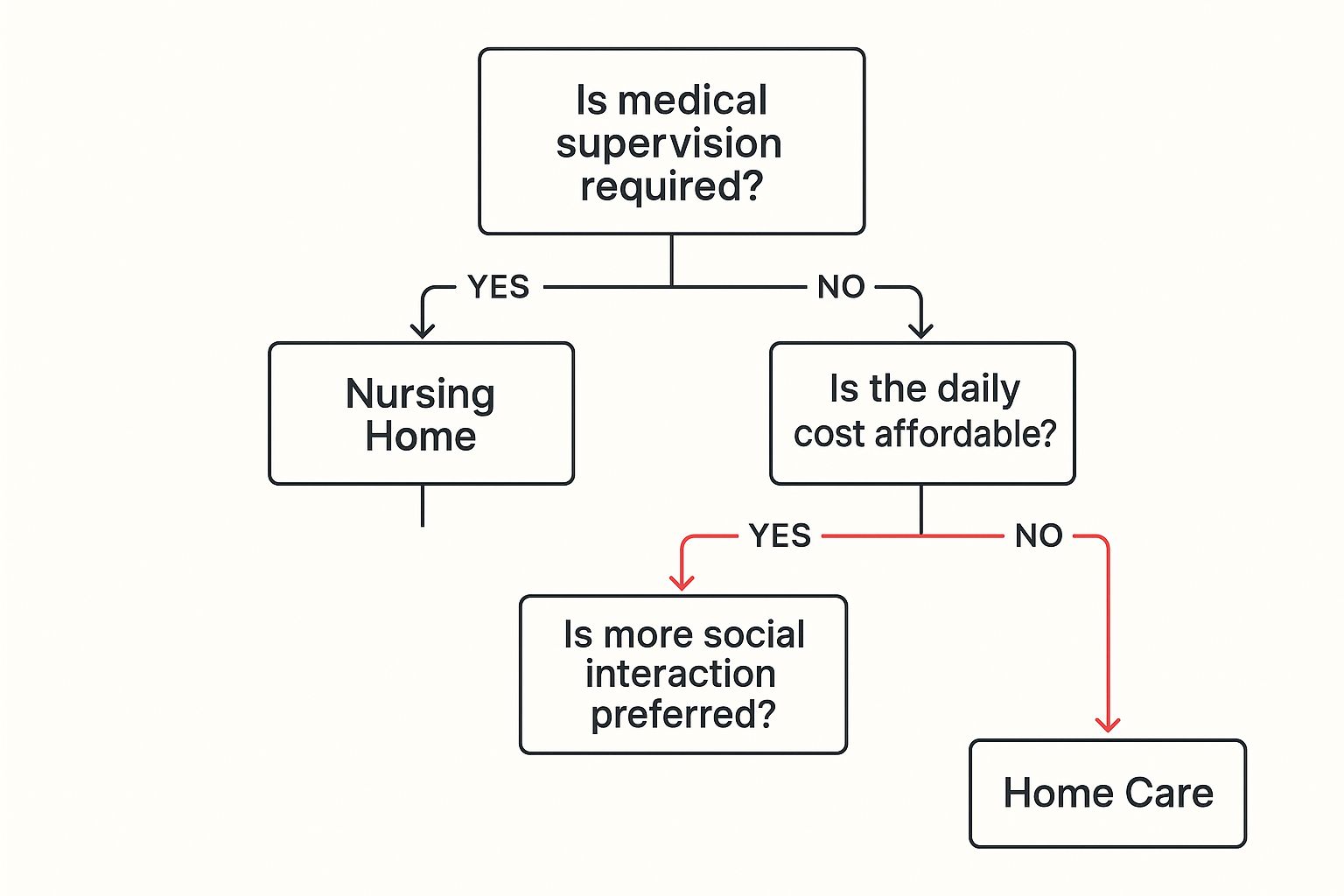
As you can see, the right path really hinges on whether your loved one requires round-the-clock medical attention or if they can thrive with personalized, non-medical support in the comfort of their own home.
The Clinical Safeguards of a Nursing Home
Nursing homes are, by design, clinical environments. They offer the highest level of regulated medical supervision you can get outside of a hospital. This structure is absolutely essential for seniors with complex, chronic conditions or for those recovering from a major medical event who need constant monitoring.
Here’s what that looks like in practice:
- 24/7 Skilled Nursing Staff: Licensed nurses are on-site around the clock. They're there to administer medications, manage IVs, treat wounds, and respond immediately to any medical emergency.
- On-Site Medical Professionals: It's not just nurses. Physicians, therapists, and other specialists are part of the care team, overseeing complex care plans and providing immediate interventions when needed.
- Regulated Environment: These facilities have to follow strict state and federal regulations that cover everything from staffing ratios to emergency protocols. This ensures a consistent baseline of clinical safety.
For a senior with advanced dementia or a debilitating chronic illness, this kind of constant medical oversight isn't just a preference—it's non-negotiable. It provides an immense amount of peace of mind for families.
Proactive Safety in the Home Environment
Home care takes a different but equally diligent approach to safety. Instead of creating a clinical setting, the focus is on modifying the familiar, comfortable home environment to make it as safe as possible. Then, you add the one-on-one support of a trained professional.
The core of home safety isn’t just about reacting to emergencies; it’s about proactively identifying and eliminating risks before they can cause harm. This is where a professional caregiver's trained eye becomes invaluable.
At Caring Senior Service of Arlington, making the home safe is a cornerstone of our GreatCare™ method. The first thing we do is a comprehensive home safety assessment to pinpoint potential hazards—things like poor lighting, tripping risks, or inaccessible bathrooms. From there, our Quality Caregivers, who serve families in communities like Springfield and Great Falls, are trained in proactive health monitoring and emergency protocols.
This dedicated oversight means a caregiver is there to notice subtle changes in a client’s condition, prevent falls before they happen, and make sure medication schedules are followed to the letter. This personalized attention is what turns the home into a truly secure haven. For some practical guidance, this home safety checklist for seniors from the National Council on Aging is a great resource.
Ultimately, the choice comes down to the type of safety your loved one needs most. Is it the constant, clinical oversight of a medical team in a nursing facility? Or is it the dedicated, one-on-one attention of a caregiver who can make their familiar home environment safer and more supportive? Thinking through that distinction is a critical step in the home care vs. nursing home decision.
Making a Confident Choice for Your Northern Virginia Family
The conversation around home care vs. nursing home care is about so much more than just services—it's about shaping the next chapter for someone you love. To make a confident decision, you have to move past a simple list of pros and cons and into a thoughtful conversation focused on your family’s unique situation. This process is about choosing a path that brings security, dignity, and true peace of mind.
A Step-by-Step Guide to Assessing Needs
To bring some clarity to this emotional journey, it helps to start by asking the right questions. I've found this simple framework helps families in Arlington, Alexandria, and across Northern Virginia focus on what really matters.
Step 1 Assess the Level of Medical Need
Let's start with a realistic look at your loved one's health. Do they mostly need a hand with daily activities like cooking and personal hygiene? Or are we talking about complex conditions that require 24/7 medical supervision from licensed nurses? The answer here is probably the biggest factor in your decision.
Step 2 Evaluate Independence and Social Preferences
Think about your loved one's personality. Do they thrive on their own routines and cherish the independence of being in their own home? Or would they feel safer and more engaged in a structured social environment with a built-in community? An honest talk about what makes them feel happy and connected is absolutely essential.
Step 3 Analyze the Financial Reality
It's time to review the family budget and look at all the payment options. Home care’s hourly model offers flexibility if the needs aren't intensive, while a nursing home’s all-in-one fee covers comprehensive medical oversight. For veterans, it’s also crucial to investigate financial support. You can learn more about how veteran benefits can help pay for home care on our website.
Partnering With Your Family Every Step of the Way
At Caring Senior Service of Arlington, we see this as a team effort. Our GreatCare™ method was built to provide a reliable support system that can adapt as your family’s needs change over time.
- Quality Caregivers: Our professionally trained caregivers offer compassionate, one-on-one support that always honors your loved one’s dignity.
- Customized Care Plans: We sit down with you to create a plan that addresses specific needs, whether that’s companion care in Fairfax or more hands-on personal care in Vienna.
- Active Involvement: We make sure you're always connected and informed. Transparency and constant communication are key to providing peace of mind.
Making the right choice is about matching the environment to the individual. It’s about ensuring your loved one feels safe, respected, and empowered, whether they are aging in place at home or receiving care in a specialized facility.
Ultimately, the choice between home care and a nursing home is a deeply personal one. By methodically working through these key areas—medical needs, personal preferences, and finances—you can move forward with confidence. You’re not just choosing a service; you're creating a supportive environment where your loved one can live with the highest possible quality of life. Our team is here to give you the guidance and support you need to navigate this journey.
Your Top Questions Answered: Home Care vs Nursing Home
When you start exploring senior care, it feels like a whole new world with its own language. It's completely normal to have questions. Here are the answers to some of the most common ones we hear from families in Arlington and across Northern Virginia as they weigh their options.
Can Home Care Provide the Same Level of Care as a Nursing Home?
This is probably the most important question to ask, and the answer comes down to one key difference: medical vs. non-medical care.
Home care is all about providing personalized, non-medical support. Think of it as having a trusted helper for daily activities, companionship, and safety supervision. It’s the perfect fit for seniors who are still largely independent but could use a hand with things like cooking, getting dressed, or remembering to take their medications.
A nursing home, on the other hand, is a medical facility. It's designed for people who need 24/7 skilled nursing care—the kind of round-the-clock attention that can only be provided by licensed healthcare professionals. This includes complex medical treatments, post-surgery rehabilitation, and intensive monitoring. They serve two very different purposes.
What Happens if a Loved One’s Needs Change?
Life isn’t static, and neither are a senior’s care needs. The good news is that home care is built to be flexible. At Caring Senior Service of Arlington, we’re constantly checking in and reassessing our clients' care plans. If more help is needed, we can easily adjust the hours or the types of services we provide.
Of course, there may come a time when a senior's medical needs become too complex for home care. If they require constant skilled nursing, a nursing home becomes the safer, more appropriate choice. This transition usually starts with an assessment from a doctor, followed by conversations with the family to find the right facility. Our team is here to support families through that process if and when the time comes.
The best senior care plan is one that can adapt. Starting with home care often allows a senior to stay in a comfortable environment for as long as possible, with the option to transition to a higher level of care only when it becomes medically necessary.
How Does the Role of Family Change with Each Option?
With in-home care, the family is usually at the center of the care team. You work right alongside the professional caregiver, sharing insights and making decisions together. This partnership is a core part of our GreatCare™ method, which keeps you connected and informed through Active Involvement.
When a loved one moves into a nursing home, the facility's staff takes over the day-to-day medical and personal care. The family’s role naturally shifts. You become their biggest advocate and a vital source of emotional support, making sure they’re getting the best attention and, most importantly, enjoying your visits.
At Caring Senior Service of Arlington, we help seniors across Northern Virginia remain safe, healthy, and happy at home. Call us at (571) 202-6522 to schedule a free consultation today.