

If you're juggling a demanding career, your own family's needs, and the constant responsibility of caring for an aging parent, you're not alone. This is a reality for countless families across Arlington. Home respite care acts as a lifeline, offering planned, temporary relief so you can catch your breath. It isn't about stepping away for good; it's about strategically stepping out to recharge so you can come back refreshed and ready to provide the best possible support for your loved one.
What Is Home Respite Care and Why Is It So Important?

Think of home respite care as a professional support system that comes right to your door in Arlington, VA. The real beauty of it is that your loved one gets to stay in the comfort and familiarity of their own home while receiving professional care. For family caregivers in places like Vienna, McLean, and Fairfax, this service is a relief valve, preventing the immense physical and emotional pressure that leads to burnout. An experienced, trained caregiver provides companionship and assistance, ensuring your loved one is safe and well-cared for.
And the need for this kind of support is only growing. As families stretch to balance all their commitments, the demand for reliable help at home is skyrocketing. Market analysis shows the global respite care market is projected to jump from USD 352.9 million in 2025 to USD 527.1 million by 2032. North America is leading the charge, with in-home respite holding the largest segment at a 42.1% market share in 2025—mostly because families want options that preserve a loved one's dignity at home.
Who Is Respite Care Really For?
Home respite care is incredibly flexible, designed to help a wide range of family caregivers. It provides crucial support in all sorts of situations, making sure both you and your senior loved one get the help you need.
- Adult Children: So many of us are trying to manage our parents' care on top of our own careers and kids. Respite care gives you the freedom to attend a school play, focus on a work deadline, or just take a personal day without feeling guilty or worried.
- Spouses: When you're caring for a partner with a chronic condition like dementia or Parkinson's, the challenges are unique. Taking regular breaks is absolutely essential for maintaining your own health and preserving your relationship beyond just being a caregiver.
- Families Managing Post-Surgery Recovery: After a hospital stay, a loved one often needs temporary, intensive support. Respite care allows the primary caregiver to rest and handle other household duties while a professional assists with the non-medical side of recovery, like meal prep and medication reminders.
A quick look at the advantages shows just how valuable this support can be for everyone involved.
Key Benefits of Home Respite Care for Family Caregivers
| Benefit for the Caregiver | Benefit for the Senior |
|---|---|
| Reduces Stress & Prevents Burnout: Gives you time to rest and recharge emotionally. | Professional Support: Access to trained caregivers for companionship and assistance. |
| Maintains Personal Life: Allows time for hobbies, errands, and social activities. | Social Interaction: Provides new companionship and a change of routine. |
| Improves Care Quality: A rested caregiver is a more patient and effective caregiver. | Enhanced Safety: A professional is on hand to assist and prevent accidents. |
| Peace of Mind: Knowing your loved one is safe and cared for by a professional. | Maintains Independence: Helps them stay in their familiar home environment longer. |
Ultimately, this service reinforces the goal of aging in place. It offers peace of mind to the entire family, knowing their loved one is in capable hands.
At its core, home respite care is a proactive strategy. It’s an acknowledgment that to care for someone else effectively, you must first care for yourself. Think of it as an investment in your own well-being, preventing burnout and strengthening family relationships for the long run.
By providing reliable, temporary support from a trained professional, it helps seniors in Arlington remain safe and comfortable in the familiar surroundings they know and love. For those new to this type of support, it's helpful to first understand the full scope of in-home non-medical senior care.
Exploring Different Types of Home Respite Services
Once you realize just how vital taking a break is, the next step is figuring out how home respite care can actually fit into your life. In Arlington, Vienna, and Falls Church, families have flexible options that go way beyond a one-size-fits-all approach, adapting to your specific schedule and needs. A tailored care plan ensures your loved one receives the right support at the right time.
Think of these services like tools in a toolbox. Sometimes you just need a small screwdriver for a quick five-minute job. Other times, you need the whole wrench set for a weekend project. Respite care works the same way, offering everything from a few hours of help to several days of continuous support.
Short-Term Hourly Care
This is the most common and flexible form of home respite care you’ll find. It’s built for those shorter, essential breaks that pop up during the week.
- When it's useful: It's perfect for when you need to run to the grocery store, get to your own doctor's appointment, or just sit down for lunch with a friend. For so many caregivers in Northern Virginia, this is the lifeline that lets them handle personal errands without a knot of worry in their stomach.
- Real-world scenario: Imagine you have a parent-teacher conference in Fairfax on a Tuesday afternoon. An experienced caregiver can come to your home for three or four hours, making sure your mother is safe, has some company, and gets her afternoon snack. You get complete peace of mind.
This type of care is booked by the hour, so it’s a scalable solution that fits neatly into the rhythm of your week.
Overnight and Weekend Respite
Let's be honest—sometimes a few hours just isn't enough to truly recharge. The weight of interrupted sleep and being constantly "on" takes a serious toll. That's where longer respite options become invaluable.
Overnight care brings in a professional caregiver to stay through the night, letting you get a full, uninterrupted night of sleep. This is a game-changer if your loved one is prone to wandering or needs help during the night.
Weekend or multi-day support is for those bigger breaks, like taking a short vacation or, just as importantly, recovering from an illness yourself. Knowing a skilled professional is managing things for a few days can be the difference between a true break and a trip spent worrying.
Respite care is all about matching the level of support to what your family actually needs. The goal isn't just to find a substitute; it's to create a seamless, stress-free break that truly restores your energy and focus.
Tailoring Services to Specific Needs
Beyond just the schedule, home respite care is also defined by the type of support provided. A high-quality plan is never generic. It's built around your loved one’s unique health and personal preferences, ensuring the care is not just present, but purposeful.
Here’s a breakdown of the most common service levels:
- Companion Care: This focuses on social and emotional well-being. A caregiver might play cards, go for a walk, prepare light meals, or provide a ride to a senior center in Alexandria. It’s all about engagement and keeping loneliness at bay.
- Personal Care: This involves hands-on assistance with activities of daily living (ADLs). A caregiver can help with bathing, dressing, grooming, and moving around safely. This level of support is crucial for seniors who need physical help to stay comfortable and safe at home. You can learn more about how a home health aide can assist with these personal tasks in our detailed guide.
- Specialized Dementia Care: Caring for someone with Alzheimer’s or another form of dementia requires a special skill set. Caregivers trained in dementia care know how to manage behavioral changes, redirect confusion, and create a calm, structured environment that helps reduce agitation.
By combining the right schedule with the right services, you can create a personalized home respite care plan. This ensures that while you're taking that well-deserved break, your loved one is receiving exactly the kind of support they need to thrive.
How to Arrange Home Respite Care in Arlington
Taking that first step to get professional support can feel overwhelming, but arranging home respite care is more straightforward than it seems. With a clear roadmap, you can confidently find a trusted partner to help your family. Think of this as your practical guide, designed to arm you with the right questions and a clear plan of action.
Start with a Thorough Needs Assessment
Before you even pick up the phone, take a little time to map out what your loved one—and you—truly need. This simple first step will make every conversation you have with a potential agency far more productive.
Think about these key areas:
- Timing and Frequency: Are you looking for a few hours twice a week to run errands and catch your breath? Or do you need overnight support so you can finally get a full night’s sleep? Maybe a full weekend break once a month is what you really need to recharge.
- Level of Care: What specific non-medical tasks does your loved one need help with? Get detailed here. List everything from companionship and making meals to hands-on help with bathing, getting dressed, and moving around safely.
- Specialized Requirements: Does your loved one have dementia, Parkinson’s, or need specific support after surgery? This information is absolutely critical for matching them with a caregiver who has the right training and experience.
Having these details ready will help any agency understand your situation quickly and accurately.
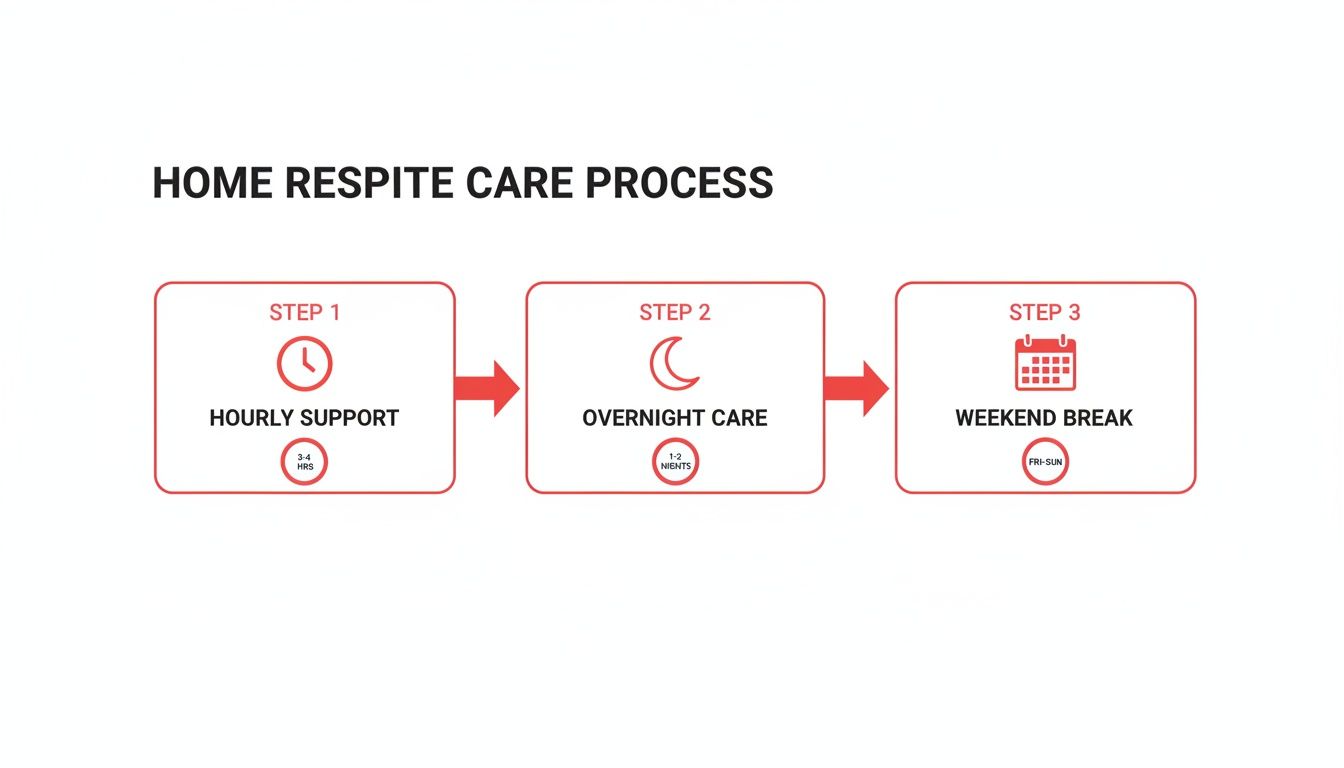
This visual breaks down how families can build a flexible schedule with hourly, overnight, or weekend support to prevent caregiver burnout.
Finding and Vetting a Reputable Local Agency
Once you know what you’re looking for, it’s time to find the right provider here in the Arlington area. A good home care agency becomes your partner, managing all the logistics so you can focus on what matters most—your family.
As you search, make sure to prioritize agencies that are clearly committed to quality and safety. Any professional agency should offer a free in-home consultation to talk about your needs, look at the home environment, and answer your questions without any pressure. This is your chance to get a real feel for their professionalism and approach.
A key sign of a quality provider is their process. They won’t just send anyone to your home. They will ask detailed questions, listen to your concerns, and explain exactly how they ensure a great match between caregiver and client.
Look for an agency that conducts a comprehensive 43-step home safety survey. This shows they’re being proactive about preventing falls and are genuinely invested in creating a secure environment for your loved one.
The Consultation and Care Plan Development
That initial consultation is where the foundation for successful care is laid. A care coordinator should sit down with you and your loved one to create a personalized service plan. This is much more than just a schedule; it’s a detailed blueprint that outlines every single aspect of non-medical care.
A solid care plan should include:
- Specific daily routines and activities.
- Dietary preferences and instructions for meals.
- Medication reminders (not administration).
- Emergency contact info and clear protocols.
- Notes on personality, hobbies, and social preferences.
This level of detail ensures continuity of care and helps the caregiver provide support that feels personal and respectful right from day one. To get a better sense of what this process looks like, you can learn more about how to start home care services with a professional agency.
The Caregiver Matching and Introduction Process
Finding the right caregiver is arguably the most important step. A top-tier agency doesn’t just match based on skills; they also consider personality, communication style, and even shared interests. This focus on compatibility is what can turn a professional relationship into a truly supportive bond.
Before care starts, the agency should set up a personal introduction between the caregiver, your loved one, and your family. This meeting is crucial for building trust and making sure everyone feels comfortable. It’s the perfect time to review the care plan together and establish a positive connection from the get-go.
It’s also important to understand how communication works. A professional agency will have a clear rule: all scheduling changes, concerns, or adjustments to the care plan must go through the office, not directly with the caregiver. This protects everyone and ensures service is always consistent and well-documented. This systematic approach—from assessment to introduction—is what provides the peace of mind every family caregiver deserves.
Understanding the Costs and Financial Resources
When you decide it's time to get support, one of the first questions that pops into your head is usually, "How much is this going to cost?" It’s a completely natural and practical concern. Understanding the financial side of home respite care is a critical step, so let's break down what you can expect here in the Northern Virginia market.
In Arlington, Fairfax, and the surrounding communities, most professional home care agencies bill for services by the hour. This model gives you a ton of flexibility, since you only pay for the time you actually need—whether that’s a four-hour block to run errands or a full weekend of support.
Typical Hourly Rates in Northern Virginia
To help you budget, it helps to have a real number in mind. While rates can vary, a pretty standard rate for high-quality, non-medical home care in our area is around $38 per hour. That fee isn’t just for the caregiver’s time; it also covers their wages, insurance, and the agency's background support, which includes essential things like scheduling, background checks, and ongoing supervision.
Knowing this baseline makes it much easier to calculate potential weekly or monthly costs. For instance, if you schedule eight hours of care per week, that becomes a predictable and manageable part of your family’s budget.
Beyond Private Pay: Exploring Other Funding Options
While a lot of families pay for respite care out of pocket, it’s definitely not the only way. There are several other resources that might be available to help with the costs, and it’s always worth your time to see if you qualify.
- Long-Term Care Insurance: Many long-term care policies include benefits specifically for respite care. If you or your loved one has a policy, pull it out and look for the "elimination period" (the waiting time before benefits start) and the daily benefit amount. Your best bet is to call the insurance provider directly to confirm that home respite care is a covered service and to get the details on how to submit claims.
- Veterans' Benefits: Veterans and their surviving spouses may be eligible for benefits through the Department of Veterans Affairs. Programs like the VA Aid & Attendance pension can provide a monthly financial benefit that can be used for in-home care, including respite. This is a powerful resource that many families in Arlington don't realize they have access to.
Navigating these financial avenues can feel complicated, but you don't have to figure it all out on your own. A good local agency can often point you toward the right resources or help you understand what kind of paperwork you'll need for insurance or VA claims.
The demand for flexible, in-home support is growing for a simple reason: it works. The market was valued at USD 342.86 million in 2025 and is projected to hit USD 504.02 million by 2032, with home-based respite leading the charge. It provides personalized care right in the comfort of home, which is so important for emotional well-being and is a lifeline for the 5.1 million Medicaid enrollees who often depend on it. You can read the full research about the respite care market to see the trends for yourself.
Understanding both the direct costs and the financial help available empowers you to create a plan that works for the long haul. For a more detailed breakdown, you might find our guide on the average cost of home care in Arlington helpful. It will give you the complete picture you need to make the best decision for your family.
Finding the Right Home Care Provider in Arlington
Choosing an agency to provide home respite care isn't just about hiring help; it's about finding a trustworthy partner for your family's caregiving journey. This is one of the most important decisions you'll make.
To find the right fit, you need to ask detailed questions that go beyond the glossy brochures. A high-quality provider will welcome your questions and be completely transparent about their processes, standards, and qualifications. This framework will help you vet potential providers in Arlington and understand what separates an adequate service from an exceptional one.
Your peace of mind depends on knowing your loved one is safe, respected, and in capable hands. Let's dig into what you need to ask.
Questions About Caregiver Qualifications and Training
The person coming into your home is the heart of the service. Understanding their qualifications is non-negotiable, so don't hesitate to ask direct questions about who the agency hires and how they prepare their team.
First, ask about their hiring process. Are caregivers employees or independent contractors? This is a critical distinction. Employees are typically covered by the agency's insurance and workers' compensation, which protects your family from liability. Inquire about their background checks—they should be comprehensive, covering criminal and driving records, and be conducted regularly.
Next, get specific about their training and skills.
- Initial and Ongoing Training: What kind of training do caregivers receive before their first assignment? Do they get ongoing education, especially for conditions like dementia or Parkinson's?
- Experience Level: What is the typical experience level of their caregivers? Can you request someone with experience relevant to your loved one’s specific needs?
- Licensing and Insurance: Is the agency licensed to operate in Virginia? Are all caregivers fully bonded and insured?
These questions confirm the agency’s commitment to professionalism and safety, ensuring the person providing care is both skilled and trustworthy.
Questions About Care Planning and Client Matching
A one-size-fits-all approach simply doesn't work for in-home care. A personalized plan and a thoughtful caregiver match are the hallmarks of a truly client-centered agency.
Ask how they develop the initial service plan. Is it created with input from you, your loved one, and even their healthcare providers? A detailed, individualized plan should document everything from daily routines and meal preferences to specific non-medical tasks and emergency protocols.
A great agency doesn't just fill a shift; they make a match. They should be able to articulate how they pair a caregiver’s skills, experience, and personality with your loved one's needs and temperament. This careful matching process is often the key to a successful long-term care relationship.
You should also inquire about what happens on the very first day. Will a supervisor or care manager come to the home to personally introduce the caregiver and review the plan together? This single step is crucial for establishing clear communication and comfort right from the start.
Questions About Agency Operations and Communication
Understanding the agency’s backend operations is just as important as knowing the caregiver's qualifications. This is all about reliability, safety, and how they handle the unexpected.
Start with availability. Does the office have someone available 24/7 to handle urgent calls or scheduling changes? You need to know you can reach a real person—a decision-maker, not just an answering service—in an emergency. Also, find out their protocol for when a scheduled caregiver is sick or unavailable. A reliable agency will have a solid system in place to provide a qualified substitute without missing a beat.
Finally, ask about oversight and how they keep you in the loop.
- Supervisory Visits: Does the agency conduct regular, unannounced supervisory visits to ensure the care plan is being followed correctly and to check in with your loved one?
- Family Communication: How does the agency keep you informed? Do they offer a family portal or schedule regular check-in calls to provide updates on your loved one’s well-being?
Asking these critical questions will empower you to find a high-quality home respite care provider in Arlington who is truly dedicated to your family's safety and peace of mind.
To make this easier, we've put together a checklist you can use when speaking with different agencies.
Provider Vetting Checklist: Key Questions to Ask
Comparing home care agencies can feel overwhelming. Use this table as a quick reference during your calls or meetings to ensure you're getting all the information you need to make a confident choice for your family.
| Area to Investigate | Key Question | What to Listen For |
|---|---|---|
| Hiring & Screening | Are your caregivers W-2 employees or 1099 contractors? What does your background check include? | W-2 employees are preferred for liability protection. Look for comprehensive criminal, driving, and reference checks. |
| Training & Skills | What initial and ongoing training do you provide for conditions like dementia or mobility support? | A commitment to continuous education, not just a one-time orientation. Specific training for complex conditions is a plus. |
| Care Planning | Who is involved in creating the initial care plan, and how often is it updated? | Collaborative process involving the family, client, and agency. Plans should be reviewed and updated regularly or as needs change. |
| Client Matching | How do you match a caregiver’s personality and skills with my loved one’s needs? | A thoughtful process that considers more than just scheduling availability. Look for a focus on compatibility and relationship-building. |
| Emergency Support | Do you have a 24/7 on-call manager? What is your backup plan if our caregiver calls out sick? | A dedicated staff member (not an answering service) should be available 24/7. A clear, reliable process for substitute caregivers. |
| Oversight & QA | Do you conduct supervisory visits? How do you monitor care quality? | Regular, unannounced visits from a supervisor show a commitment to quality. Client feedback surveys are also a good sign. |
| Communication | How will you keep our family updated on my loved one’s care and condition? | Look for tools like a family portal, regular phone calls, or detailed caregiver notes that keep everyone informed. |
| Licensing & Insurance | Is your agency licensed, bonded, and insured in Virginia? | “Yes” is the only acceptable answer. Ask for proof if you have any doubts. |
Taking the time to ask these questions upfront will save you stress down the road and help you find a partner you can truly rely on.
How Respite Care Strengthens Your Entire Family

It’s easy to get lost in the logistics of caregiving. The endless list of duties—managing medication reminders, preparing meals, helping with mobility—can start to feel like the only thing that matters. But underneath that constant strain, the relationship that sparked this journey can slowly start to wear away.
This is where home respite care offers its most powerful benefit. It’s not about just getting a break from the work. It’s about creating the space to be a son, a daughter, or a spouse again, instead of just a caregiver.
When you can step away from the constant physical demands, you get the chance to step back into the heart of your relationship.
A Story of Rediscovery
I’ve seen this happen time and time again. Think of a daughter in Arlington who spent every single weekend managing her mother’s household. She paid the bills, coordinated doctor's appointments, and ran all the errands. Soon, their conversations became purely transactional, revolving around health updates and to-do lists.
The warmth they once shared was getting buried under the weight of her responsibilities.
She finally arranged for a few hours of respite care each Saturday, and it changed everything. A professional caregiver took over the tasks, freeing the daughter to simply sit with her mom, share stories, and laugh together over a cup of tea. She rediscovered her mother, not as a patient to be managed, but as the person she’s always loved.
Preventing caregiver burnout isn't a luxury; it's an essential strategy for providing loving, sustainable support. The emotional toll of full-time caregiving is significant, and taking planned breaks is one of the most effective ways to protect your own well-being.
This story is incredibly common. Respite care allows families to shift their focus from the mechanics of care back to the meaning of their connection. It reduces stress, prevents resentment, and lets love be the primary dynamic in the relationship once more.
If you're starting to see some of these warning signs in your own life, it’s worth reading more about the common signs of caregiver burnout and taking action.
Investing in home respite care is an investment in your family’s emotional health. It’s a way to make sure you can keep giving support from a place of love and patience for years to come.
Frequently Asked Questions About Respite Care
When families in Arlington first start thinking about home respite care, a lot of questions come up. It's completely normal. Here are some clear, straightforward answers to the things we hear most often.
How Much Notice Do You Need for Care?
Ideally, giving us a week or two lets us find the absolute best caregiver match and ensure everything starts off smoothly. But we know life doesn’t always stick to a schedule. Unexpected needs are part of caregiving. That's why we can often arrange support with just 24 to 48 hours notice in urgent situations, so your loved one is never left without help.
What Happens If Our Caregiver Is Sick or Unavailable?
This is a fantastic question and it highlights a huge benefit of working with a professional agency. If your regular caregiver has an emergency or calls in sick, you are never left scrambling. Our office team immediately coordinates a qualified, fully-vetted substitute who is brought up to speed on your loved one’s specific care plan. The goal is always seamless and uninterrupted service.
Can Respite Care Help Someone with Advanced Dementia?
Absolutely. A high-quality home respite care provider will have caregivers who are specifically trained in dementia care. They know how to manage behavioral changes, create a calm and reassuring environment, and use activities that help reduce agitation. This specialized support ensures your family member receives safe, compassionate care, even when their cognitive needs are complex.
For many families, specialized dementia respite care isn't just a break—it's an essential lifeline. It brings peace of mind, knowing your loved one is with a professional who genuinely understands their unique challenges.
Does Medicare or Medicaid Cover Respite Care?
This is a common point of confusion, so let's clear it up. Traditional Medicare does not usually cover non-medical home respite care because its focus is on skilled nursing or short-term recovery after a hospital stay. However, some Medicare Advantage plans are starting to offer limited benefits.
Medicaid, on the other hand, often does provide coverage for respite care through state-specific waiver programs. The best first step is to check your specific insurance policy or get in touch with your local Area Agency on Aging for the most accurate information for your situation.
Would it help to see what an individualized at-home plan might look like for your dad—timing, safety tweaks, and caregiver match? Caring Senior Service of Arlington helps seniors across Northern Virginia remain safe, healthy, and at home. Call (571) 202-6522 or visit us at 1950 Old Gallows Rd, Ste #550 for a free consult—our office coordinates scheduling 24/7. Learn more about our approach at https://caringseniorservice.com/arlington.