
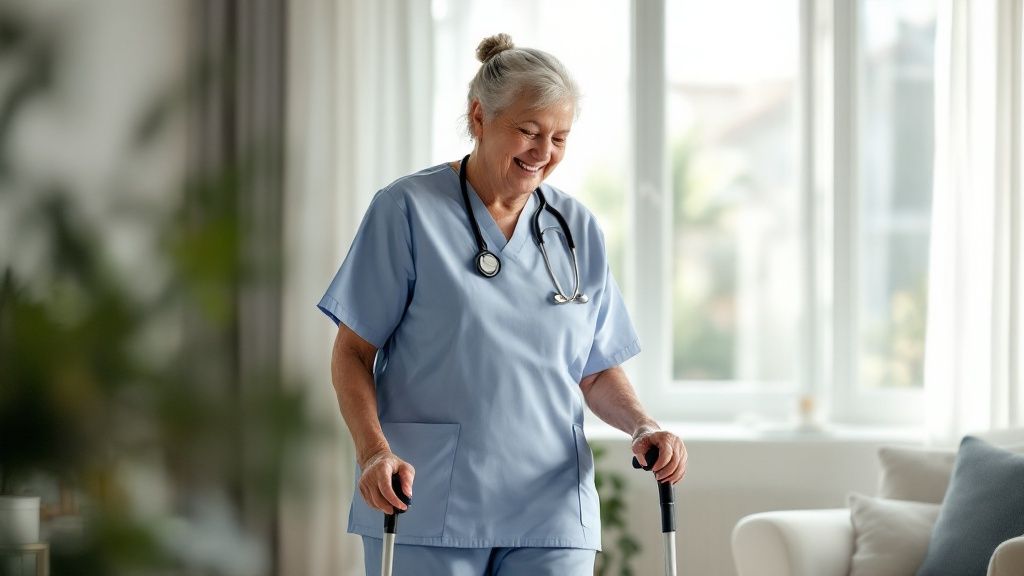
A Home Health Aide (HHA) is a trained professional who provides hands-on personal care and basic health-related services right in a client's home, usually under the watchful eye of a registered nurse. Wondering what is home health aide support and how it differs from other care? An HHA is a step beyond a simple companion. They have the specific skills needed to help with more complex needs, making them absolutely essential for someone in Arlington, VA, recovering from an illness, managing a chronic condition, or simply needing a higher level of support to age in place safely. This professional support can be a lifeline for families seeking quality senior care in Arlington.
The Bridge Between Medical Needs and Home Comfort
When a senior returns home from a hospital stay at a facility like Virginia Hospital Center in Arlington or Inova Fairfax Hospital, families often face a new and daunting reality. Suddenly, your loved one might need more than just a friendly face; they require skilled help that most family members aren't equipped to provide. This is exactly where a home health aide comes in, serving as a vital link between the clinical care they just received and the familiar comfort of their own home.
Think about an Arlington family whose mom is recovering from surgery. They need someone who can not only assist with bathing and getting dressed but also knows how to monitor vital signs, help with prescribed exercises, and spot any changes in her condition. An HHA provides this critical level of observant, hands-on care. At Caring Senior Service of Arlington, our GreatCare™ method ensures that every caregiver is not only qualified but also perfectly matched to your family’s needs through our rigorous selection process, providing everyone with peace of mind.
Core Functions of a Home Health Aide
An HHA’s role is incredibly multifaceted, blending compassionate personal care with essential health monitoring. Their duties are all about supporting a client's well-being while promoting a safe recovery and as much independence as possible.
The key responsibilities generally fall into a few main categories:
-
Personal Care Assistance: This involves helping with activities of daily living (ADLs) like bathing, grooming, dressing, and using the toilet, always with dignity and respect.
-
Health Monitoring: An HHA is trained to check vital signs like blood pressure and temperature, keep an eye on symptoms, and report any concerning changes to a supervising nurse or the family.
-
Mobility Support: This is crucial for preventing falls. They assist with transferring from a bed to a chair, walking, and performing exercises prescribed by a physical therapist to help maintain strength.
To give you a clearer picture, here’s a quick breakdown of what an HHA typically handles.
Home Health Aide Key Responsibilities at a Glance
This table offers a quick summary of the core duties an HHA performs, helping families in Arlington and Fairfax understand the scope of their skilled services.
| Care Category | Example Tasks |
|---|---|
| Personal Care (ADLs) | Assisting with bathing, dressing, grooming, and toileting. |
| Health Monitoring | Taking blood pressure, temperature, and pulse; observing for changes in condition. |
| Mobility & Transfers | Helping clients move from bed to chair, walk safely, and perform prescribed exercises. |
| Medication Reminders | Ensuring clients take their medications on schedule as prescribed. |
| Light Housekeeping | Tidying up living spaces, doing laundry, and preparing light meals. |
| Companionship | Providing emotional support, conversation, and engaging in activities. |
As you can see, their support is both practical and personal, covering a wide range of needs that contribute to a safer, healthier home environment.
This infographic breaks down the core components of a Home Health Aide's role.
As the visual shows, the combination of specific responsibilities, required qualifications, and tangible benefits makes HHAs a cornerstone of effective in-home care. They don't just check tasks off a list; they deliver a holistic support system that empowers seniors to thrive where they feel most comfortable. Their presence ensures continuity of care and provides immense peace of mind for families across Northern Virginia.
A Day in the Life of a Home Health Aide
So, what does a home health aide actually do all day? While every client’s needs are different, a typical day is a blend of clinical observation, compassionate personal assistance, and light household support. Many families notice changes in a loved one’s health or safety but don’t know what steps to take; understanding an HHA's role can clarify the solution.
It’s so much more than just a checklist of tasks. The real job is to actively contribute to a senior's health, safety, and overall quality of life. For families in Vienna and Alexandria, understanding this daily routine gives a much clearer picture of the immense value an HHA brings into the home.
The day often starts by helping a client begin their morning with dignity and confidence. From there, it’s a carefully balanced schedule of health-related duties and personal support, ensuring every need is met with professionalism and a human touch.
Health Monitoring and Management
One of the most critical roles an HHA plays is being the eyes and ears for the rest of the healthcare team. This isn't just about routine checks; it’s about being an observant, proactive partner in a senior’s care, spotting small issues before they become big problems.
An HHA’s health-focused tasks usually include:
-
Checking Vital Signs: Regularly taking and recording things like blood pressure, temperature, pulse, and respiration rates to keep a close watch on the client’s condition.
-
Medication Reminders: Making sure the client takes their prescribed medications at the right times and in the correct doses.
-
Observing Changes: Carefully noting any shifts in a client’s physical or mental state—from a change in appetite to a new symptom—and immediately reporting them to a supervising nurse or the family.
This consistent monitoring is a game-changer for preventing hospital readmissions, a major concern for seniors managing chronic conditions. By catching potential issues early, an HHA plays a direct role in keeping your loved one stable and healthy at home.
Personal Care with Compassion
Another core part of an HHA's day is providing hands-on assistance with Activities of Daily Living (ADLs). These are the fundamental self-care tasks that can become a real challenge due to age, illness, or recovery from surgery. This kind of support is always delivered with the utmost respect for a client's privacy and dignity.
The goal isn’t just to get tasks done. It’s to empower seniors, helping them maintain their independence and feel comfortable in their own skin. This compassionate approach turns daily routines into opportunities for positive human connection.
Personal care duties include helping with bathing, grooming, dressing, and mobility. For a senior in Vienna recovering from a fall, this might mean steadying them as they walk or helping them safely get out of bed and into a chair. This hands-on support is what allows so many seniors to continue living at home safely.
Household Support for Well-Being
Finally, an HHA provides light household support that is directly tied to the client’s health and safety. This isn’t about deep cleaning the house; it's about maintaining a safe, healthy, and comfortable living environment.
This could mean preparing nutritious meals that follow specific dietary guidelines, like a low-sodium diet for a client with heart issues. It might also include doing a load of laundry or tidying up living spaces to clear walkways and prevent trip hazards.
The impact of this work is massive. The U.S. home healthcare sector was valued at USD 102.5 billion in 2020, and patient satisfaction hit 89.2%, which shows just how vital these services are for millions of families. Discover more insights about home healthcare statistics on Market.us. This blend of health, personal, and household support creates a holistic safety net that makes a profound difference, every single day.
The Qualifications That Define a Great HHA
When you invite a caregiver into your home, trust is everything. For families in Falls Church and McLean, understanding what qualifies a home health aide (HHA) is the first step toward building that confidence. A great HHA is defined by a powerful combination of formal training and innate personal qualities, ensuring they are not just certified, but truly prepared to provide compassionate care.
Professional caregivers aren't just kind individuals who are good with people. They're skilled professionals who have met specific educational and regulatory standards. This foundation of knowledge is non-negotiable for ensuring your loved one's safety and well-being.
Formal Training and Certification
Before an HHA can ever step into a client's home, they must complete a state-approved training program. This isn't optional—it's the bedrock of their ability to provide safe and effective care. This formal education covers essential skills that set them apart from other types of caregivers.
The core curriculum typically includes:
-
Basic Medical Knowledge: This covers the essentials of anatomy, physiology, and understanding common chronic conditions that many seniors face.
-
Patient Care Procedures: Aides learn the proper, dignified techniques for assisting with personal hygiene, mobility, and other activities of daily living.
-
Safety and Emergency Protocols: From first aid and CPR to knowing exactly how to respond in a medical emergency, this training is absolutely critical.
After finishing their training, aides must pass a competency exam to become certified. This certification isn't just a piece of paper; it's a testament to their skills and a baseline requirement for any reputable home care agency. At Caring Senior Service of Arlington, our commitment to Quality Caregivers means we ensure every caregiver not only meets but exceeds these standards through rigorous screening and continuous education.
The Soft Skills That Make a Difference
While technical skills are crucial, the true heart of exceptional care lies in an HHA’s personal qualities. These soft skills are what transform a competent aide into a compassionate partner for your loved one.
Trust is built not just on what a caregiver knows, but on who they are. Reliability, patience, and genuine empathy are the pillars of a strong caregiver-client relationship.
These essential traits are just as important as any certification:
-
Compassion and Empathy: The ability to genuinely connect with a client's feelings and see the world from their perspective.
-
Patience and Reliability: Remaining calm, steady, and dependable, especially when a client is facing health challenges or cognitive decline.
-
Strong Communication Skills: This means listening actively and communicating clearly with both the client and their family members.
These qualities ensure that care is delivered with dignity and respect. A big part of this is engaging in meaningful conversations and activities, and you can explore some great ideas in our article on senior activities.
This blend of professional training and personal warmth is what defines a truly great HHA, offering families in Northern Virginia complete peace of mind.
How Home Health Aides Make Aging in Place Possible
For most older adults, the idea of leaving their home is heartbreaking. It’s so much more than just a building; it’s a lifetime of memories, a source of comfort, and a symbol of their independence. This powerful desire to age in place is something nearly every senior hopes for, and a professional home health aide is often the key to making that wish a safe, sustainable reality.
This isn’t just about convenience. The emotional and clinical benefits are profound. When seniors receive care in a familiar environment, they naturally experience less stress and anxiety, which almost always leads to better health outcomes.
A Story of Independence in Fairfax
Think about a senior in Fairfax, recently sent home from the hospital after a bad fall. His family was terrified he could no longer live by himself, but he was adamant about not leaving the home he’d lived in for 40 years. They were stuck, torn between respecting his wishes and worrying about his safety.
Bringing in a home health aide was the solution that bridged that gap. The aide provided essential, hands-on support that went far beyond what his family could realistically offer.
-
Mobility Assistance: She worked with him on the physical therapy exercises his doctor prescribed, helping him regain strength and, just as importantly, confidence.
-
Health Monitoring: By checking his vital signs every day, she provided a layer of professional oversight that caught a minor issue before it had a chance to become a major one.
-
Personal Care Support: Gentle assistance with daily tasks like showering and dressing allowed him to maintain his dignity while preventing the risk of another fall.
This consistent support was the crucial piece that allowed him to stay independent in his cherished home. Instead of facing the trauma of moving, he was able to recover surrounded by his own things and memories, all while getting the skilled care he needed. It's a perfect example of how targeted personal care services make aging in place not just a dream, but a reality.
The Clinical and Emotional Advantages
The preference for home-based care isn't just a feeling; it's backed by strong evidence. In the U.S., about 86% of all home health care patients are 65 or older, and study after study shows that nearly 90% of seniors would choose to receive care at home if they could.
What's more, patients who get home health care after a hospital stay often show more improvement and have much lower readmission rates. This really highlights the clinical effectiveness of having a home health aide. You can dig deeper into these compelling home health findings if you're curious.
By enabling seniors to live safely and happily at home, we not only honor their wishes but also support their overall health. This familiar setting preserves community connections, reduces the stress associated with institutional care, and ultimately reinforces our mission to help seniors thrive.
Why the Need for HHAs Is Growing in Our Communities
The role of the home health aide has never felt more essential, especially right here in Northern Virginia. We're seeing a few major trends converge that are driving a real surge in demand for skilled, in-home clinical care. For families in communities like Annandale and Great Falls, understanding these shifts makes it clear why an HHA is such a forward-thinking choice.
One of the biggest drivers is a simple fact of life: our population is aging. As the baby boomer generation moves into its senior years, the need for supportive care is naturally on the rise. This isn’t just a local trend; it's a nationwide shift that is fundamentally reshaping how we think about healthcare.
The Demographic Shift in Northern Virginia
By 2030, we'll hit a major milestone when one in five Americans will be 65 or older. What's more, the vast majority of this growing senior population wants to age in place, surrounded by the comfort and familiarity of their own homes. This preference creates an undeniable need for professionals who can bring quality care out of the hospital and into the living room.
This is exactly where the home health aide becomes so critical. They provide the hands-on support that allows older adults to keep their independence and manage their health where they feel most comfortable. It’s an approach seniors prefer, and it's quickly becoming a cornerstone of modern healthcare. Of course, understanding the financial side of this choice is also important, as we break down in our guide on the true cost of senior care.
The Rise of Modern In-Home Care Models
It's not just demographics. Healthcare itself is changing, with new and effective care models emerging that lean heavily on the skills of professionals like HHAs. One of the most significant is the "Hospital-at-Home" (HaH) model, now offered by hundreds of hospitals across the country.
This approach allows patients who would normally be hospitalized to receive acute-level care in the comfort of their own homes—a system that simply couldn't work without skilled aides on the ground. This trend alone is fueling incredible growth in the field.
Employment for home health and personal care aides is projected to grow by 21% from 2023 to 2033, a rate far outpacing the average for all other jobs.
This boom isn't just a statistic; it reflects a clear and powerful move toward decentralized, patient-first care. As you can learn more about U.S. home care industry stats, it's obvious that the home health aide is at the very heart of the future of compassionate, effective healthcare.
Finding the Right Home Health Aide in Arlington
When it’s time to find a home health aide, the whole process can feel a little daunting. The goal isn’t just to hire someone with the right qualifications; it's about finding a compassionate professional who truly connects with your loved one. Starting this journey with a clear plan makes all the difference for families here in Arlington and across Northern Virginia.
The very first step is to sit down and really think through your loved one's specific needs. Do they require skilled help with mobility and health monitoring? Or is the main priority assistance with personal care and making sure they have nutritious meals? Having a clear list of what you’re looking for will guide your search and help you ask the right questions from the get-go.
Agency vs. Private Hire: What to Consider
One of the first big decisions you’ll face is whether to hire an HHA on your own or work through a reputable agency. While hiring privately might seem more direct, going through an established agency like Caring Senior Service of Arlington provides critical protections and, frankly, a lot of peace of mind.
An agency does all the heavy lifting for you, including:
-
Thorough Vetting: We run rigorous background checks, verify every certification, and follow up on professional references. You can trust that the person coming into your home is qualified and trustworthy.
-
Liability and Insurance: Our caregivers are fully insured and bonded. This protects your family from any liability, which is a huge weight off your shoulders.
-
Backup Care: What happens if your regular aide gets sick or has an emergency? We’ve got it covered. We ensure a qualified replacement is always available so your loved one's care is never interrupted.
-
Ongoing Supervision: Our professional team oversees all care to maintain the absolute highest standards of quality. Our commitment to Active Involvement means we don’t just place a caregiver and walk away.
These safeguards are absolutely essential for ensuring a safe, reliable, and professional care experience from start to finish.
Questions to Ask During a Consultation
When you speak with a potential provider, having your questions ready is key. This is your chance to make sure their services line up perfectly with what your family needs and expects. You’ll want to ask about caregiver training, how they handle emergencies, and what their process is for creating a truly Customized Care Plan.
Your goal is to find a partner in care—someone who communicates clearly, understands your concerns, and is dedicated to your loved one’s well-being. A thorough consultation helps build that essential foundation of trust.
Taking the time to understand the different senior care options available in Arlington can also give you valuable context. Making an informed choice empowers you to find the perfect home health aide and secure your family’s peace of mind.
At Caring Senior Service of Arlington, we help seniors across Northern Virginia remain safe, healthy, and happy at home. Call us at (571) 202-6522 to schedule a free consultation today.