
Hospital discharge home care can make the transition from a hospital or rehabilitation facility easier for seniors and their families. Perhaps your mother is being discharged tomorrow, or your father is returning home after several weeks in rehabilitation. It’s a moment of relief, but it can also bring unexpected questions.
Who will help them get out of bed, prepare meals, take a shower, or get to follow-up appointments? What happens when family members need to return to work?
For families facing these concerns, hospital discharge home care can provide valuable assistance during the transition home.
At Caring Senior Service of Southwest Florida, we understand how overwhelming this transition can feel. We help families arrange compassionate, personalized in-home care in Fort Myers, Cape Coral, Naples, Bonita Springs, Estero, and North Fort Myers.
Here are seven important steps to consider before your loved one returns home from a hospital or rehabilitation facility.
1. Understand the Discharge Plan Before Leaving
Before your loved one leaves the hospital or rehabilitation facility, make sure you understand what assistance will be needed at home.
Talk with the discharge planner, social worker, or healthcare team about your loved one’s current abilities and any limitations.
Consider asking:
- Can my loved one walk and transfer safely?
- Will they need assistance with bathing, dressing, or toileting?
- Are there any activity restrictions?
- What medications or treatments have changed?
- Are physical therapy, occupational therapy, or nursing services recommended?
- What symptoms should prompt us to contact a healthcare professional?
The more you understand before discharge, the better prepared your family can be.
Medicare offers an official discharge planning checklist to help patients and caregivers prepare for the transition home.
2. Make Sure the Home Is Safe and Ready
After a hospital stay, even familiar surroundings can present new challenges.
A senior who was previously independent may return home feeling weak, unsteady, or uncomfortable moving around.
Before discharge, consider preparing the home by removing loose rugs, clearing walkways, improving lighting, and ensuring frequently used items are easily accessible.
If your loved one uses a walker or wheelchair, check that there is enough room to move safely.
The healthcare team may also recommend equipment such as grab bars, a shower chair, raised toilet seat, or other mobility aids.
A safer home environment can make everyday activities more manageable during recovery.
Caring Senior Service can help families identify everyday safety concerns and arrange assistance with mobility and daily routines within the caregiver’s training and care plan.
3. Arrange Help With Personal Care and Daily Activities
One of the biggest surprises families experience after discharge is how much help their loved one may need.
Someone who could previously dress independently or prepare meals may temporarily require assistance with even simple tasks.
Professional in-home caregivers can help with bathing, dressing, toileting, meal preparation, light housekeeping, companionship, and appropriate mobility assistance.
At Caring Senior Service, we develop personalized care plans based on each senior’s needs, abilities, and preferences.
Our goal is to support independence while helping older adults feel safe and comfortable at home.
Learn more about our hospital discharge home care services.
4. Organize Medications and Follow Discharge Instructions
Hospital stays often involve changes in medication schedules, treatment plans, or daily routines.
Before leaving the facility, ask the healthcare team to review the updated medication list with the patient and family. Make sure you understand which medications have been started, stopped, or changed.
Families should also know whom to contact if they have questions about prescriptions or possible side effects.
Non-medical home caregivers can provide medication reminders, but they do not replace nurses, pharmacists, or physicians who manage medications and clinical treatment.
A clear discharge plan and appropriate follow-up with healthcare professionals are essential.
5. Plan Transportation and Follow-Up Appointments
Recovery frequently involves follow-up appointments with primary care physicians, specialists, physical therapists, or other healthcare professionals.
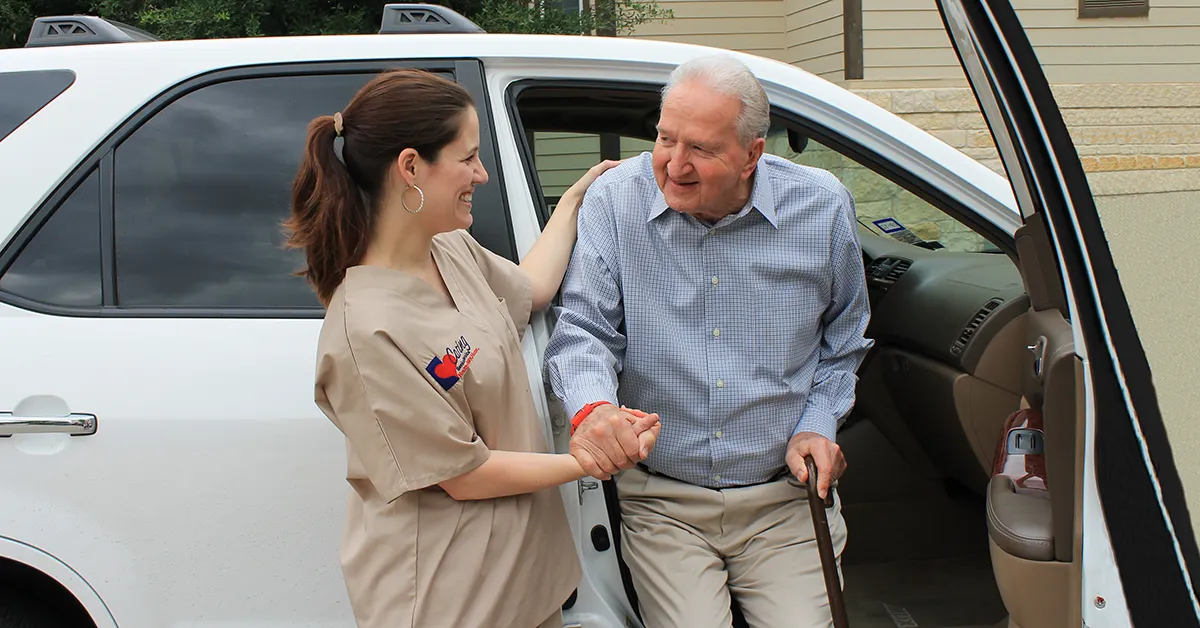
Transportation can become challenging when a senior no longer feels comfortable driving or needs assistance entering and exiting a vehicle.
Caring Senior Service caregivers can provide transportation assistance for appropriate appointments and errands, based on the individual’s mobility needs and care arrangements.
Caregivers can also help families keep track of appointment schedules and everyday routines.
When reliable transportation is arranged in advance, families have one less concern to manage during an already stressful transition.
6. Prepare for the First Few Days at Home
The first several days after discharge can be especially demanding.
Your loved one may need more help than expected with getting dressed, moving safely around the home, preparing meals, or using the bathroom.
Family members often try to handle everything themselves while balancing work, children, and other responsibilities.
Planning support before discharge can help prevent last-minute scrambling.
Ask yourself whether someone will be available to assist with everyday activities, who will help with meals, and who will be contacted if your loved one’s needs change.
For families who cannot be present throughout the day, professional caregivers can provide dependable assistance and companionship during scheduled visits.
Caregivers should report concerning changes promptly to the designated family contact. Medical concerns must be directed to the appropriate healthcare professional, and emergencies require emergency services.
7. Arrange Professional Home Care Before Discharge
One of the most helpful steps a family can take is to begin exploring care options before their loved one comes home.
You don’t necessarily need to wait until discharge day.
Contacting a home care agency early provides time to discuss care needs, develop a personalized plan, and arrange caregiver support.
At Caring Senior Service of Southwest Florida, we understand that discharge plans can sometimes change unexpectedly.
Our team works to arrange care promptly, including short-notice starts when caregiver availability and the individual’s needs allow.
We offer flexible scheduling and personalized assistance designed around each family’s situation.
Whether your loved one needs help for a short period following hospitalization or ongoing support at home, our team can discuss suitable care options.
How Caring Senior Service Supports the Transition Home
Returning home should be a positive experience, but seniors and their families may need additional support to make the transition manageable.
Our caregivers provide compassionate, non-medical assistance with everyday activities, helping older adults maintain their dignity and comfort.
Through our GreatCare® approach, we emphasize caregiver quality, individualized care planning, regular supervisory visits, and ongoing family communication.
We believe families deserve to know that their loved ones are receiving attentive care, even when they cannot be there in person.
Our services can complement medically necessary home health services, including nursing or physical therapy, when these are arranged separately through appropriate healthcare providers.
Hospital Discharge Resources in Lee and Collier Counties
Families in Southwest Florida have access to several major hospital systems and rehabilitation facilities. Whether your loved one is returning home after surgery, an illness, a fall, or a rehabilitation stay, planning ahead can help make the transition easier.
Hospital Discharge Planning in Lee County
Lee County residents receive hospital care through several facilities operated by Lee Health, including Gulf Coast Medical Center, HealthPark Medical Center, Lee Memorial Hospital, and Cape Coral Hospital.
HCA Florida Lehigh Hospital also serves patients in the Lehigh Acres area.
Before discharge, families should speak with the hospital’s case manager, social worker, or discharge planning team to understand the patient’s needs at home.
Important questions include whether the patient requires help with mobility, bathing, dressing, meals, transportation, or follow-up appointments.
For families in Fort Myers, Cape Coral, North Fort Myers, Bonita Springs, and Estero, arranging in-home assistance before discharge can help ease the transition.
Hospital Discharge Planning in Collier County
Collier County families may receive hospital care through Naples Comprehensive Health (NCH), including NCH Baker Hospital and NCH North Hospital.
Physicians Regional Healthcare System also serves the Naples community through facilities including Physicians Regional Medical Center – Pine Ridge and Physicians Regional Medical Center – Collier Boulevard.
When a senior is preparing to return home, families should review the discharge plan carefully and confirm whether additional assistance will be needed with personal care, mobility, meals, and everyday activities.
Families in Naples and surrounding Collier County communities can begin exploring non-medical home care before their loved one’s scheduled discharge.
Additional Support for Southwest Florida Families
The Area Agency on Aging for Southwest Florida provides information about aging services, community resources, and caregiver support programs.
Families should also ask their hospital discharge team about any recommended home health services, rehabilitation therapies, or medical equipment.
These medically directed services are different from non-medical home care and may be needed alongside caregiver assistance.
How Caring Senior Service Supports Families After Discharge
Our local team understands that hospital and rehabilitation discharge plans can change quickly. Families in Lee and Collier counties may need to arrange personal care, mobility assistance, and caregiver schedules with little advance notice. We work closely with families to understand their loved one’s needs, develop a personalized care plan, and arrange caregiver support as promptly as availability allows.
Some seniors need temporary assistance following surgery or hospitalization, while others may require ongoing help with daily activities.
Our caregivers can provide personal care, mobility assistance, meal preparation, medication reminders, companionship, and transportation to follow-up appointments.
If your loved one is preparing to leave a hospital or rehabilitation facility in Lee or Collier County, contact Caring Senior Service of Southwest Florida to discuss your care needs.
Call 239-448-3433 to learn how we can help make the transition home more comfortable.
Frequently Asked Questions About Hospital Discharge Home Care
How soon can home care begin after hospital discharge?
Caring Senior Service can often help families arrange care on short notice. Start times depend on caregiver availability, the individual’s care needs, and completion of the necessary care arrangements.
Contacting our team before discharge is the best way to explore scheduling options.
What is the difference between home health care and non-medical home care?
Home health care generally provides medically necessary services such as skilled nursing or therapy under a healthcare professional’s direction.
Non-medical home care focuses on assistance with everyday activities such as bathing, dressing, mobility, meal preparation, companionship, and medication reminders.
Some seniors benefit from both types of services.
Does Medicare cover home care after hospitalization?
Medicare may cover certain medically necessary home health services for eligible individuals.
However, Original Medicare generally does not cover personal care or homemaker services when those are the only services needed.
Private-pay arrangements and some long-term care insurance policies may help families arrange non-medical home care, depending on coverage.
Families can learn more through Medicare’s official home health coverage information.
Can we arrange temporary care while our loved one regains independence?
Yes. Some families need short-term help following a hospital or rehabilitation stay, while others benefit from continuing assistance.
Our team can discuss a personalized schedule based on your loved one’s needs.
How much does post-hospital home care cost?
Caring Senior Service offers straightforward hourly pricing and flexible care arrangements.
We take time to understand your loved one’s needs and explain available services before care begins.
Visit our home care pricing page or contact our team for a personalized quote.
Need Home Care After a Hospital or Rehab Discharge in Southwest Florida?
If your parent or loved one is preparing to return home, you don’t have to manage every detail alone.
Caring Senior Service of Southwest Florida is here to help families plan for compassionate, dependable in-home assistance.
Whether discharge is approaching or your loved one has already returned home and needs additional support, our team is ready to discuss your options.
Contact Caring Senior Service of Southwest Florida today to discuss your loved one’s needs and arrange a personalized care assessment.
Call 239-448-3433.
When Family Can’t Be There, We Can.