
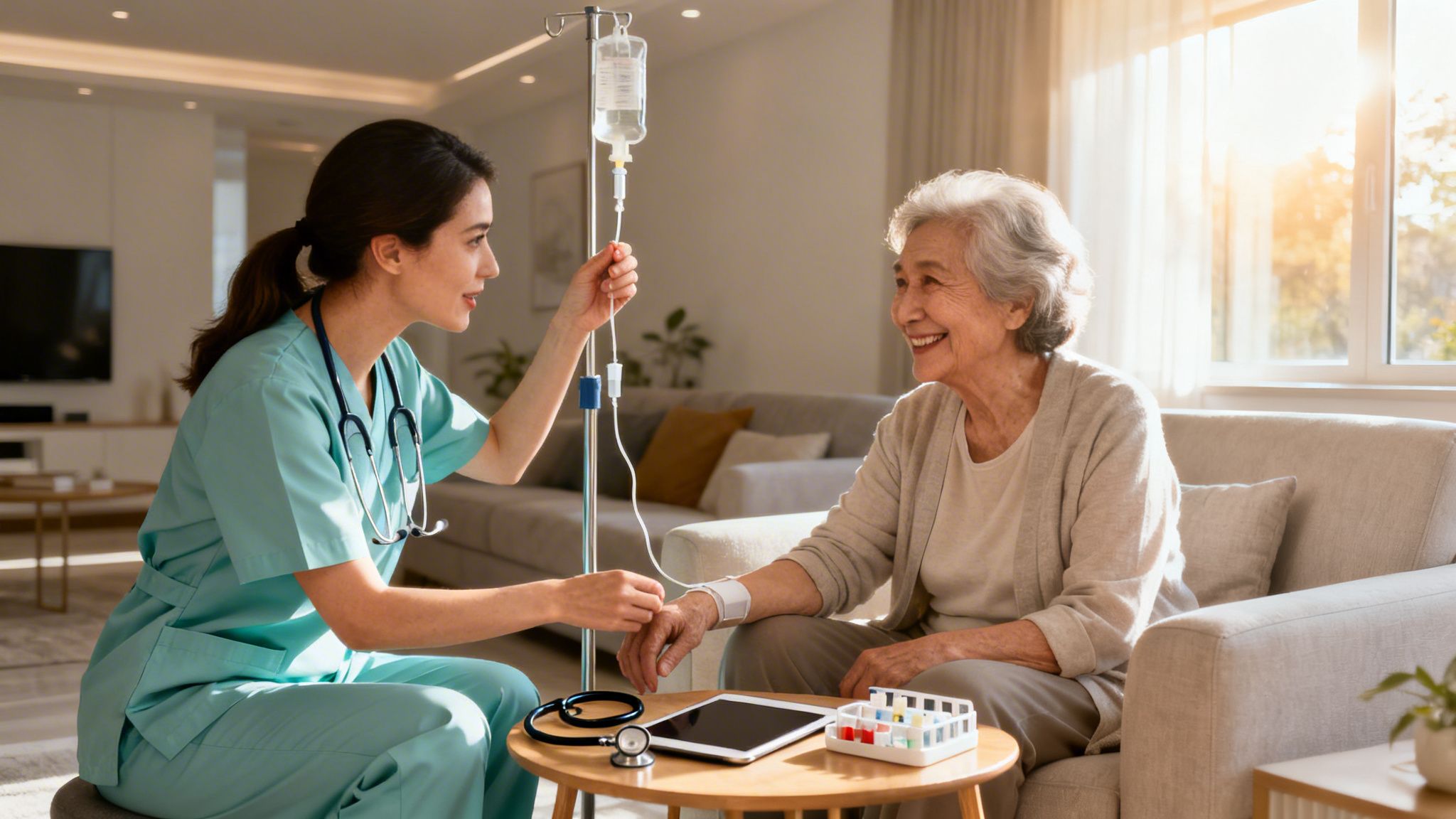
When a loved one is dealing with a serious health issue, the idea of managing their medical needs at home can feel overwhelming for Arlington families. This is exactly where in-home nursing care comes in. It’s medical care, prescribed by a doctor, for conditions that absolutely require the hands-on skills of a licensed professional, bringing the services of a clinic right to your front door.
This type of care is fundamentally different from the non-medical support many people are familiar with, which focuses on daily living activities. A non-medical caregiver is invaluable for helping with things like bathing, making meals, or simply providing companionship. A home nurse, on the other hand, performs clinical tasks.
When Is Nursing Care the Right Choice?
Figuring out if your family member needs this level of care usually comes down to their specific medical requirements. It's typically the right choice when their condition demands more than just basic supervision or personal help.
For seniors in the Arlington area, these are some of the most common situations:
- Recovering After a Hospital Stay: Following a discharge from Virginia Hospital Center or Inova Fairfax Hospital, a nurse can manage wound care, keep a close eye on recovery, and help prevent serious complications.
- Managing a Chronic Illness: Seniors living with conditions like diabetes, COPD, or heart disease often need a professional to handle insulin injections, manage oxygen therapy, or monitor vital signs.
- Administering Complex Medications: This isn't just about reminders. It includes services like IV therapy, injections, or overseeing a complicated medication schedule that requires clinical judgment.
- Caring for Advanced Wounds: Surgical wounds or pressure sores that need sterile dressing changes and careful monitoring for infection demand a skilled nurse's attention.
In-home nursing care bridges the critical gap between the hospital and home. It delivers the clinical expertise needed to manage health conditions safely, which reduces the risk of trips back to the emergency room and empowers seniors to heal in the comfort of their own space.
A Growing Need for Skilled Support
The demand for these services is growing, and for good reason. Skilled nursing is a powerhouse in the home health market, and it's projected to capture a 34.2% market share in 2025.
This growth is fueled by the critical, hands-on care that nurses provide—from IV therapy and wound care to managing complex medication regimens. These services are proven to reduce hospital readmissions and improve medication adherence, making them an indispensable part of modern senior care in Arlington, VA.
To help you see the difference clearly, here's a quick breakdown:
Quick Guide to In-Home Nursing vs. Non-Medical Care
This table is designed to help families quickly understand the key differences between the clinical services of in-home nursing and the supportive services offered by non-medical care providers.
| Service Aspect | In-Home Nursing Care (Clinical) | Non-Medical Home Care (Supportive) |
|---|---|---|
| Primary Goal | Manage medical conditions, treat illness, or assist with post-surgical recovery. | Provide assistance with daily activities, companionship, and safety supervision. |
| Who Provides It? | Licensed professionals like Registered Nurses (RNs) or Licensed Practical Nurses (LPNs). | Trained, background-checked caregivers or Certified Nursing Assistants (CNAs). |
| Typical Services | Wound care, IV therapy, medication administration, injections, vital signs monitoring. | Bathing, dressing, meal prep, light housekeeping, transportation, companionship. |
| Requirement | Must be prescribed by a doctor as part of a formal care plan. | Can be arranged directly by the family at any time, with or without a doctor’s order. |
Understanding this distinction is crucial for building a complete care plan.
Ultimately, choosing in-home nursing care is about making sure your family member gets professional medical attention without having to give up the comfort and dignity of being at home. While our primary focus at Caring Senior Service is non-medical support, knowing the difference between a skilled nurse and a home health aide is vital to getting your loved one the right help at the right time.
Comparing In-Home Nursing, Home Health, and Assisted Living
If you’re exploring senior care options in Northern Virginia, you might feel like you’re trying to learn a new language. Terms like “in-home nursing,” “home health,” and “assisted living” often get tossed around interchangeably, but they represent entirely different kinds of support. The right choice hinges on your loved one’s unique needs—medically, socially, and personally.
The best place to start is with one simple question: is skilled medical care required?

As you can see, the need for medical care is the fork in the road. It’s what separates skilled nursing from other types of senior support. Let’s break down each option to see what this looks like in the real world.
Distinguishing Between the Options
Getting a handle on these three main categories will help you find the best fit for your family member.
1. In-Home Nursing (Skilled Medical Care)
This is the most specialized of the at-home services. Think of in-home nursing care as the clinical, hands-on treatment you’d get in a hospital, but delivered in the comfort of home. It’s provided by a licensed nurse (an RN or LPN) and must be prescribed by a doctor for a specific, often short-term, medical reason.
- A Real-World Example: A senior in Fairfax is sent home from the hospital after hip surgery. An in-home nurse visits a few times a week to change the surgical dressing, manage their pain medication, and watch for any signs of infection.
2. Home Health Care (The Broader Term)
“Home health” is an umbrella term. It includes in-home nursing, but it also covers other professional services like physical, occupational, or speech therapy. Just like in-home nursing, it’s ordered by a doctor and is designed to help a patient recover from an illness or injury. The goal is rehabilitation—helping them get their independence back at home.
- A Real-World Example: After a stroke, an Alexandria resident gets visits from a nurse to oversee medications, a physical therapist to work on their mobility, and an occupational therapist to help them relearn daily tasks like getting dressed.
3. Assisted Living (Residential Community)
Unlike the first two, assisted living isn’t a service that comes to your home; it’s a new home. A senior moves into a residential community that provides housing, meals, and non-medical help with activities of daily living (ADLs). While some communities have nurses on staff, their role is usually general oversight, not direct, hands-on clinical care.
- A Real-World Example: An older adult in McLean is medically stable but feels lonely and struggles with cooking and cleaning. They move into an assisted living community for the social life and daily support.
The core difference comes down to location and purpose. In-home nursing brings targeted medical care into a person’s current home to help them recover. Assisted living, on the other hand, provides a new home focused on community and non-medical support.
Making the Financial Decision
Each of these care models comes with a different price tag and payment method.
In-home nursing and home health are often covered by Medicare for a limited time, but only if they are deemed medically necessary by a doctor. Assisted living, however, is almost always paid for out of pocket. As you weigh the financial impact of long-term care, it can be useful to look into strategies for protecting assets from nursing home costs.
Ultimately, the best choice comes back to the primary need. Is the main challenge a medical issue that requires a licensed clinician? Or is it a need for safety, companionship, and a little help with daily routines? If you’re still weighing the pros and cons of staying at home versus moving, our guide on home care vs. nursing home dives even deeper. Answering that fundamental question will point you in the right direction.
What In-Home Nursing Professionals Actually Do
So, what does in-home nursing care look like day-to-day? It’s about bringing skilled, clinical expertise right into a senior’s Arlington home—the kind of care you’d normally only expect to find in a hospital. These aren’t just helpful tasks; they’re the clinical backbone of a senior’s health plan.

Every service a home nurse provides is based on a physician’s orders and is carefully designed to meet specific medical needs. Think of it in a few key areas, all focused on getting better and avoiding setbacks.
Post-Surgical and Wound Care Management
One of the most common reasons families seek in-home nursing is to help a loved one recover after a hospital stay. A nurse’s role here is absolutely crucial for a safe and speedy healing process.
- Wound Dressing Changes: Using sterile techniques, a nurse cleans wounds and changes dressings. This is vital for preventing infections that could easily land a senior back in the hospital.
- Drain Management: Some surgeries require drains to remove excess fluid. A nurse is trained to properly empty, manage, and eventually remove them according to the surgeon’s specific instructions.
- Monitoring for Complications: Nurses are the first line of defense. They’re trained to spot the early warning signs of infection, blood clots, or other post-op issues before they become emergencies.
This level of professional oversight is what makes the transition from a facility like Virginia Hospital Center back to a home in Falls Church or McLean as smooth and safe as it can be.
Chronic Disease Management and Monitoring
For seniors living with ongoing health conditions, a home nurse is like a clinical coach. They help manage the illness and teach the senior how to stay in control, which is essential for maintaining stability and quality of life.
Here’s what that often involves:
- Diabetes Care: This covers everything from blood sugar monitoring and insulin injections to educating the entire family on diet and how to manage symptoms.
- Cardiopulmonary Support: For conditions like COPD or congestive heart failure, a nurse can manage oxygen therapy, monitor breathing, and help patients recognize warning signs that require a doctor’s immediate attention.
- Vital Signs Monitoring: Regularly tracking blood pressure, heart rate, and oxygen levels provides the critical data a physician needs to make informed decisions about the care plan.
The need for this kind of professional support is growing fast. The global market for senior in-home care is expected to nearly double, jumping from USD 1,422.6 million in 2025 to USD 2,695.7 million by 2035. Nursing care is set to lead this growth, making up a dominant 25.9% share of the market. With research showing that around 70% of adults turning 65 will need some form of long-term care, the role of in-home nursing has never been more important.
Advanced Medication Management
When a senior’s medication routine becomes too complicated for simple reminders, a nurse steps in to guarantee clinical accuracy and safety. This is a world away from just prompting someone to take a pill; it’s a skilled medical task.
A licensed nurse doesn’t just remind; they administer. They are qualified to manage intravenous (IV) therapies, give injections, and oversee complex medication schedules that require precise timing and clinical judgment, preventing dangerous errors.
This service is especially critical for seniors on multiple prescriptions, where the risk of a bad drug interaction is high. While our non-medical services include helpful medication reminders, the actual administration of medications—especially injections or IVs—must be handled by a licensed nurse. This clear division of labor ensures your loved one gets the right level of support for every need, creating a complete and safe care environment.
The True Benefits of Choosing Skilled Nursing Care at Home
Deciding on the right care for a loved one is one of the toughest choices a family can make. While care facilities offer a structured environment, there are powerful, tangible benefits to bringing skilled medical care right into the home. The advantages of in-home nursing care aren’t just about comfort—they create a setting that actively promotes faster, safer, and more positive healing.
The most obvious difference is the one-on-one attention. In a busy hospital or nursing facility, a nurse’s time is split between many patients. At home, that care is completely focused. This means a nurse can spot subtle changes in a patient’s condition immediately, manage complex medical plans with precision, and offer undivided support that’s just not possible in a group setting.
Better Clinical Outcomes in a Familiar Setting
Healing isn’t purely a physical process; it’s deeply connected to our environment and state of mind. Being in a familiar, comfortable space naturally reduces stress and anxiety, which can have a direct and positive impact on recovery.
You can see the difference in measurable clinical advantages:
- Faster Recovery: People often get better more quickly at home. Surrounded by their own things and able to stick to some semblance of a normal routine, their morale gets a boost, encouraging them to take an active part in their own recovery.
- Lower Infection Risk: Hospitals and long-term care facilities can be breeding grounds for healthcare-associated infections (HAIs). Receiving care at home drastically cuts down the exposure to these dangerous pathogens, making it a much safer place for someone with a weakened immune system.
- Improved Mental Well-being: There’s a certain magic in sleeping in your own bed, eating food from your own kitchen, and having family and pets nearby. This stability is a powerful anchor against the depression and confusion that can creep in during a health crisis, leading to a much better overall quality of life.
Empowering Families Through Partnership
Another huge benefit is how it brings the family into the care circle. When a nurse comes into the home, they don’t just treat the patient—they often teach the family. Loved ones learn how to help with daily care, what warning signs to look for, and feel more confident and in control. This partnership turns a stressful situation into a collaborative effort, providing incredible peace of mind for everyone.
This model is proving its worth across the country. An impressive 91% of clients report high satisfaction with their home health services. That satisfaction is backed by a staggering 424 million home health visits in 2020 alone. With the U.S. home health market valued at $100.95 billion in 2024 and expected to climb, the shift toward clinical care at home is more than just a trend—it’s the future.
Creating a Safe and Supportive Home Base
Ultimately, the goal of in-home nursing care is to make home the best possible place to heal and live with dignity. It allows seniors to hold onto their independence and routines while still getting the critical medical oversight they need. One of the best ways to support this goal is by making the home itself safer, for instance, through an aging in place bathroom remodel to reduce risks in one of the most hazardous rooms.
By combining professional clinical care with the emotional security of home, skilled nursing provides a holistic solution. It addresses the patient’s medical needs while nurturing their spirit, proving that the best place to get better is often the place you know best.
How to Choose the Right In Home Nursing Agency in Arlington
Choosing an agency for in home nursing care is a significant decision. You’re not just hiring a service; you’re inviting someone into your home to care for a person you love. It demands careful thought and due diligence to find the right fit for your family.
To make a confident choice, you need to ask the right questions and know what quality looks like. A great agency will stand out from the rest.
Think of this process like you’re hiring someone for the most important job in the world—because you are. You need to check their credentials, understand how they operate, and feel certain they can handle any situation with skill and compassion.
Verifying Credentials and Staff Qualifications
First things first: you have to confirm the agency is legitimate and its staff is qualified. This is the absolute baseline for safe, effective care for your loved one in Arlington.
Start with these non-negotiable questions:
- Licensing and Certification: “Is your agency licensed by the Virginia Department of Health and certified by Medicare?” This confirms they meet state and federal standards for patient safety and care.
- Staff Screening: “What does your background screening process for nurses include?” A thorough process isn’t just a quick check. It should involve criminal background checks, license verification, and reference checks to ensure only trustworthy professionals enter your home.
- Ongoing Training: “How do you ensure your clinical staff stays current with their skills and medical knowledge?” The best agencies invest in continuous education to keep their nursing team’s skills sharp.
Understanding Their Clinical Processes
Once you’ve confirmed the basics, it’s time to dig into how the agency actually works day-to-day. Their procedures reveal everything about their commitment to quality, communication, and patient-centered care.
An agency’s care planning process is a window into their philosophy. A truly patient-first approach involves you, your loved one, and the physician in creating a dynamic plan that is reviewed and updated regularly as needs change.
A well-run agency will have clear, thoughtful answers. Look for a provider who can explain their protocols for both routine care and the unexpected. What’s their plan for emergencies? For families new to this, knowing what to ask can be tough. Our guide on caregiver interview questions can give you more detailed ideas on what to look for.
Agency Vetting Checklist Questions for Arlington Families
To help you stay organized, here is a checklist of essential questions to ask any in-home nursing agency you’re considering in the Arlington, Fairfax, or Alexandria area. Their answers will give you a clear picture of their standards and whether they’re the right partner for your family.
| Category | Key Question to Ask | Why It Matters |
|---|---|---|
| Licensing | Can you provide proof of state licensure and Medicare certification? | This verifies they meet mandatory health and safety regulations. |
| Care Planning | How is the initial plan of care developed, and who is involved? | It should be a collaborative process involving the patient, family, and physician. |
| Staffing | What is your process for matching a nurse to a patient’s specific needs? | A good match considers clinical skills, personality, and patient preferences. |
| Emergencies | What are your protocols for medical emergencies or after-hours issues? | There should be a clear plan and a 24/7 on-call line for urgent clinical questions. |
| Communication | How will the nurse communicate updates to our family and the doctor? | Look for regular, scheduled updates and a clear point of contact at the agency. |
| Oversight | Do you conduct supervisory visits to ensure care quality over time? | This shows the agency is actively managing care and not just placing staff. |
Taking the time to ask these questions upfront will save you stress down the road. It ensures you find a reliable, high-quality agency that you can trust to care for your loved one with professionalism and heart.
Creating a Holistic Care Plan at Home
When a doctor recommends in-home nursing care, it’s easy for life to suddenly shrink down to a world of medical tasks—medication schedules, wound care, and monitoring vital signs. But a good recovery and, more importantly, a high quality of life, depend on so much more than just clinical skill.
True well-being is built on a foundation of daily comfort, safety, and emotional support. This is where the partnership between a skilled nurse and a non-medical caregiver becomes absolutely essential. While the nurse handles the complex medical needs, the caregiver looks after the equally important aspects of daily living. It’s this combination that creates a complete support system, nurturing both body and spirit.

The Two Halves of Complete Home Care
Think of it like building a bridge. The skilled nurse is the engineer, laying down the steel girders—the critical medical structure that ensures a safe crossing over a health crisis. The non-medical caregiver then builds the smooth, safe road surface, making the day-to-day journey comfortable and secure.
-
The Nurse’s Role (The Structure): A nurse focuses on specific, doctor-ordered tasks. This could be administering IV medications, changing complex wound dressings, or managing a ventilator. Their visits are usually shorter and targeted to these clinical needs.
-
The Caregiver’s Role (The Surface): A caregiver provides the consistent, ongoing support that makes home a safe and pleasant place to be. This includes help with personal care, preparing nutritious meals, and offering companionship to ward off loneliness.
Without both pieces, the care plan is incomplete. Medical treatments are far more effective when a person is well-nourished, living in a clean and hazard-free home, and feeling emotionally supported.
A complete care plan recognizes that healing is not just a medical event but a human experience. By integrating skilled nursing with compassionate daily support, families in Arlington can ensure their loved one is not just treated, but truly cared for.
A Day in the Life with Integrated Care
Let’s walk through a typical day for a senior in Arlington who is recovering from surgery.
Morning (9:00 AM): The Skilled Nurse Visit
A licensed nurse from a home health agency arrives, her focus purely clinical. She checks the surgical incision for any signs of infection, expertly changes the dressing, and adjusts the pain medication pump according to the doctor’s latest orders. Her visit lasts about 45 minutes before she updates the patient’s medical chart and heads out.
Late Morning (10:00 AM): The Caregiver’s Support Begins
Shortly after the nurse leaves, a non-medical caregiver from Caring Senior Service arrives. Her role is to support the patient’s overall well-being throughout the day. She helps the senior with a safe, comfortable bath, prepares a healthy lunch that aligns with their dietary needs, and tidies up the kitchen.
Afternoon (1:00 PM): Safety and Companionship
The caregiver makes sure the home is safe by checking walkways for trip hazards—a critical task our 43-step home safety survey is designed to address. The rest of the afternoon might be spent playing a card game, looking through old photo albums, or simply providing a comforting presence. That companionship is vital for mental and emotional health during a long recovery.
This seamless collaboration ensures the senior’s medical needs are expertly met while their daily comfort, nutrition, and safety are fully supported. That’s the core of a truly complete care plan at home.
Common Questions About In-Home Nursing Care
When you’re looking into in-home nursing care for the first time, a lot of practical questions come up. Getting clear, straightforward answers is the best way to feel confident about the decisions you’re making for your family. Here are a few of the most common questions we hear from families in Arlington.
Does Medicare Cover In-Home Nursing Care in Virginia?
Yes, it can. Medicare Part A and/or Part B may cover part-time skilled nursing care, but there are a few important conditions. The care must be ordered by a doctor to treat a specific illness or injury, and it has to be provided by a Medicare-certified home health agency.
It’s important to remember that Medicare typically doesn’t cover 24-hour care at home or any non-medical personal care, like help with bathing or meals. Our article exploring the costs of home care offers more detail on how families typically handle the financial side of things.
What Is the Difference Between an RN and an LPN in Home Care?
While both are licensed nursing professionals, they have slightly different roles on a home care team. Think of the Registered Nurse (RN) as the team leader. They have a broader scope of practice that includes creating the official plan of care, conducting in-depth patient assessments, and handling more complex medical treatments.
A Licensed Practical Nurse (LPN) works under the RN’s supervision. They are often the ones handling day-to-day clinical tasks like giving medications, changing wound dressings, checking vital signs, and reporting any changes back to the RN. Both are absolutely essential for a well-rounded nursing team.
How Soon Can In-Home Nursing Care Start After a Hospital Discharge?
Things can move pretty quickly. In most situations, care can be arranged to begin within 24 to 48 hours after a hospital discharge. The hospital’s discharge planner or social worker is your best resource in this process.
They can work directly with a home health agency serving Arlington to make sure the transition is as smooth as possible. This coordination ensures all the doctor’s orders and the plan of care are ready to go before the nurse even walks through the door.
The goal is to create a seamless transition from hospital to home, preventing gaps in clinical oversight that could lead to setbacks or readmission.
Can I Combine In-Home Nursing with Non-Medical Care?
Absolutely. In fact, this is usually the best way to create a complete support system for a senior at home. It’s like having a full safety net.
A skilled nurse can manage the clinical needs—like injections or wound care—during their scheduled visits. At the same time, a non-medical caregiver can provide the day-to-day support that makes life safer and more comfortable, like helping with bathing, cooking healthy meals, or just being there for companionship. This integrated approach ensures both medical needs and overall quality of life are taken care of.
Would it help to see what an individualized at-home plan might look like for your dad—timing, safety tweaks, and caregiver match? Caring Senior Service of Arlington helps seniors across Northern Virginia remain safe, healthy, and at home. Call (571) 202-6522 or visit us at 1950 Old Gallows Rd, Ste #550 for a free consult—our office coordinates scheduling 24/7. Learn more about how we can help at https://caringseniorservice.com/arlington.