

When a loved one starts showing signs of memory loss, one of the first and most confusing questions families in Arlington face is, what is the difference between dementia and alzheimer’s? It’s a crucial first step toward understanding what’s happening and finding the right support.
The simplest way we explain it to families is this: think of dementia as a general category, like “illness.” Alzheimer’s, on the other hand, is a specific disease that falls under that category, just like “the flu” is a specific type of illness.
Understanding the Umbrella Concept

For many families here in Arlington, VA, the terms “dementia” and “Alzheimer’s” are often used interchangeably, and that’s completely understandable. It’s a common point of confusion. But getting a handle on their relationship is key to having productive conversations with doctors and, ultimately, making informed care decisions for your loved one.
Dementia itself is not a single, specific disease. It’s a broad, umbrella term that covers a wide range of medical conditions that all share a common thread: a decline in cognitive function severe enough to interfere with a person’s daily life and independence.
Key Characteristics of Dementia
Think of dementia as a collection of symptoms. For a doctor to make a dementia diagnosis, a person has to show a significant decline in at least two of these core mental functions:
- Memory
- Communication and language
- Ability to focus and pay attention
- Reasoning and judgment
- Visual perception
Alzheimer’s disease is by far the most common cause of dementia, accounting for 60% to 70% of all cases. You can read more about the specifics of what is Alzheimer’s disease on our blog, but in short, it’s a progressive brain disorder that slowly destroys memory and thinking skills.
But it’s not the only cause. Other conditions like Vascular dementia, Lewy Body dementia, and Frontotemporal disorders can also cause dementia symptoms. Each of these affects the brain in different ways and requires a different approach to care. An accurate diagnosis is the foundation of a truly effective and personalized care plan, supported by quality caregivers who understand these nuances.
To make this even clearer, here’s a quick comparison:
Dementia vs Alzheimer’s At a Glance
| Characteristic | Dementia | Alzheimer’s Disease |
|---|---|---|
| Definition | A general term for a group of symptoms affecting memory, thinking, and social abilities. | A specific, progressive brain disease that is the most common cause of dementia. |
| Scope | An umbrella term that includes Alzheimer’s and other conditions. | A specific disease that falls under the dementia umbrella. |
| Cause | Can be caused by various diseases and conditions that damage brain cells. | Caused by the buildup of plaques and tangles in the brain, leading to cell death. |
| Reversibility | Some forms can be reversible if caused by treatable conditions (e.g., vitamin deficiencies, thyroid problems). | Irreversible and progressive; symptoms worsen over time. |
Knowing that dementia is the syndrome and Alzheimer's is a specific cause helps Arlington families seek the right support. It allows you to ask more specific questions, find the right specialists, and set realistic expectations for the journey ahead.
The Growing Need for Dementia Care in Our Community
When a loved one receives a dementia diagnosis, the world can suddenly feel very small and isolating. But if you’re a family in Northern Virginia navigating this new reality, please know you are not alone. While every family’s journey is deeply personal, this is a widespread health challenge affecting millions of families just like yours, from Arlington and Falls Church to Alexandria.
The sheer scale of this issue is immense. Worldwide, more than 55 million people are living with Alzheimer's and other dementias right now. That number isn’t staying put, either. Experts believe it will nearly double every 20 years, reaching 78 million by 2030 and a staggering 139 million by 2050.
Here in the United States, the numbers are just as sobering. An estimated 6.9 to 7.2 million Americans aged 65 and older are currently living with Alzheimer's dementia. If we don’t see major medical breakthroughs, that figure could climb to nearly 13.8 million by 2060.
What These Numbers Mean for Arlington Families
These aren't just statistics on a page; they represent our neighbors, friends, and family members right here in our community. This growing need highlights a critical demand for specialized, compassionate support systems in Arlington County. It’s a clear sign that families need to start planning proactively, because managing dementia requires a thoughtful, structured, and reliable approach.
The rising prevalence of dementia is a call to action. It shows why professional in-home care is shifting from a luxury to an essential resource for managing this complex condition. For families in Arlington, the first step is often the most important: understanding what you're facing and accessing comprehensive caregiving resources to build a solid foundation for the road ahead.
Facing this challenge is about building a support network. The goal isn’t just to manage symptoms—it’s to create a safe, stable, and dignified environment where your loved one can continue to live at home for as long as possible.
The Value of Specialized In-Home Support
As more people are diagnosed with dementia, the strain on family caregivers grows. Providing this kind of care is incredibly demanding, and trying to do it all alone often leads to burnout. This is where professional help isn’t just a relief; it’s a necessity.
A structured care plan, brought to life by experienced caregivers, can make all the difference. It focuses on the unique needs of someone living with dementia and typically includes:
- Establishing consistent daily routines to help reduce confusion and anxiety.
- Ensuring a safe home environment through careful assessments and practical modifications.
- Providing companionship and engaging activities that support cognitive function and bring joy.
- Offering respite for family caregivers, giving them time to recharge and protect their own well-being.
By taking the time to understand the differences between dementia and Alzheimer's and recognizing the growing need for specialized care, you can move from a place of uncertainty to one of empowered action. You can take control of the situation and ensure your loved one gets the dedicated, compassionate support they truly deserve.
Recognizing Key Differences in Symptoms and Progression
While knowing dementia is the umbrella and Alzheimer's is a specific disease is a great start, the real question for families is: how do you tell the difference in daily life? The answer lies in paying close attention to the first symptoms and how the condition unfolds over time.
Each type of dementia leaves its own unique footprint.
Alzheimer’s disease typically begins with a very specific, classic sign: trouble with short-term memory. Your mom might forget a conversation you had just this morning, or ask the same question repeatedly. This happens because the disease often first attacks the parts of the brain responsible for forming new memories.
However, other dementias present very differently, which can be confusing if you’re only looking for memory loss. Understanding these distinctions is vital when you discuss your concerns with doctors at facilities like Virginia Hospital Center or Inova Fairfax Hospital.
Early Warning Signs of Different Dementias
It's crucial to look beyond just forgetfulness. The initial symptoms can offer important clues about the underlying cause of dementia.
- Vascular Dementia: This type often doesn’t start gradually. Instead, symptoms can appear suddenly after a stroke or a series of mini-strokes (TIAs). The decline might look like a "step-down" pattern, where abilities remain stable for a while and then drop noticeably after another vascular event. Judgment and decision-making might be affected before memory.
- Lewy Body Dementia (LBD): LBD is known for its unpredictable fluctuations. A person might seem clear and alert one moment and confused or drowsy the next. Two of the most distinct early signs are vivid visual hallucinations (seeing things that aren't there) and physical symptoms that mimic Parkinson's disease, such as tremors, stiffness, or trouble walking.
- Frontotemporal Dementia (FTD): This form of dementia often strikes younger individuals (under 65) and primarily impacts personality and behavior first. A loved one might become unusually impulsive, lose empathy, or display inappropriate social behaviors long before any significant memory problems arise.
To help clarify these differences, here’s a quick comparison of the symptoms that often appear first.
Comparing Symptoms of Common Dementia Types
| Symptom Type | Alzheimer's Disease | Vascular Dementia | Lewy Body Dementia |
|---|---|---|---|
| Cognitive | Short-term memory loss, difficulty finding words. | Problems with decision-making, planning, and judgment. | Fluctuating attention and alertness. |
| Physical | Typically no physical symptoms in early stages. | Can have physical symptoms related to stroke (e.g., weakness on one side). | Parkinson's-like symptoms: shuffling walk, tremors, stiffness. |
| Behavioral | Apathy, withdrawal from social activities. | Mood changes, often related to awareness of deficits. | Vivid visual hallucinations, acting out dreams. |
This table shows why a detailed log of behaviors is so helpful for diagnosis. What seems like a personality quirk could be a critical piece of the puzzle. For instance, sudden suspicion or distrust can sometimes emerge, and learning if paranoia is a symptom of dementia can provide families with necessary context and coping strategies.
This infographic really brings home the widespread impact of dementia, from a global scale down to its personal effect on families in our Arlington community.
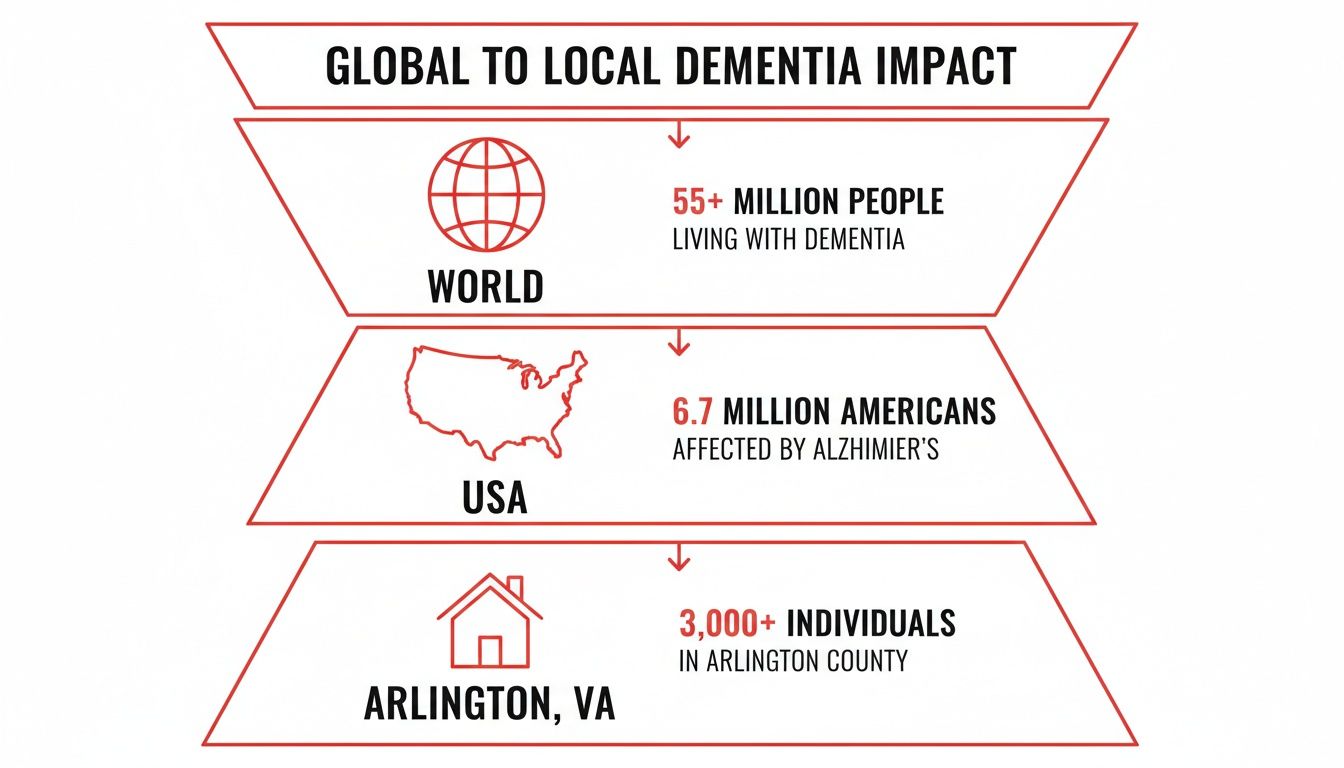
The visualization underscores that while dementia is a global health crisis, its true impact is felt right here at home, requiring local, personalized support. Recognizing the specific type of dementia your loved one is facing is the first step toward creating a care plan that truly addresses their unique needs and challenges.
Navigating the Diagnostic Journey in Arlington
For families in Arlington, the path to understanding what’s happening with a loved one can feel incredibly overwhelming. If you’re seeing changes that make you suspect dementia, the very first step is to schedule a comprehensive medical evaluation.
It’s important to know that there isn’t a single, simple “dementia test.” Instead, specialists use a collection of different assessments to build a complete picture of your loved one’s cognitive health. This careful, multi-step process is designed to be thorough, ruling out other possible causes for the symptoms you’re noticing.
What to Expect From a Diagnostic Evaluation
The journey to getting a diagnosis is really a process of gathering clues from multiple sources. A specialist, like a neurologist or a geriatrician, will guide you and your loved one through several key steps to put the puzzle together.
Your first appointment will almost certainly start with a detailed conversation about your loved one’s medical history. The doctor needs to know about past illnesses, any medications they’re currently taking, and whether there’s a family history of dementia or Alzheimer’s.
Next up are a series of cognitive and neurological exams. These aren’t about “passing” or “failing.” Think of them as tools to measure different thinking skills, including:
- Memory and recall
- Problem-solving abilities
- Language skills and communication
- Attention and concentration
Preparing for Your Appointment
To help the medical team make the most accurate assessment, it’s incredibly helpful if you come prepared. Your observations as a family member are invaluable. You see the day-to-day reality in a way a doctor can’t during a short visit.
Keeping a simple journal of specific symptoms—noting when they started, how often they occur, and how they impact daily life—can provide doctors with crucial context that a brief office visit might not reveal.
Bringing this log can make the diagnostic process smoother and more efficient. It also helps to be aware of the early signs of memory loss that go beyond simple forgetfulness.
Physicians will also likely order blood tests to check for things like vitamin deficiencies or thyroid issues, which are treatable conditions that can sometimes mimic dementia symptoms. In some cases, brain imaging like an MRI or CT scan might be recommended to look for strokes, tumors, or other physical changes in the brain.
Part of this journey also involves planning for the future. Getting legal documents in order, like a Durable Power of Attorney, is an essential step. This entire process empowers you to be a strong advocate, ensuring your loved one gets a timely and accurate diagnosis—which is the cornerstone of any effective care plan.
Adapting Daily Routines With Practical In-Home Care

Once a diagnosis is in place, the question of “what is the difference between dementia and Alzheimer’s?” starts to feel less important. The real focus shifts from definitions to the day-to-day actions that create a safe, supportive, and calm home environment. This is where a little thoughtful planning can make an enormous difference in your loved one’s quality of life.
The key is building predictability and structure into each day. For someone living with dementia, a consistent routine reduces anxiety and confusion because it minimizes surprises and helps them anticipate what comes next. This doesn’t mean a rigid, minute-by-minute schedule, but a familiar and comforting flow to the day.
Creating a Supportive Daily Structure
A well-designed daily plan breaks down tasks into simple, manageable steps that foster a sense of purpose and independence. The goal isn’t to force your loved one to adapt to their old environment, but to adapt the environment to their current abilities.
- Simplify Morning Routines: Lay out clothes in the order they should be put on. Break down personal care tasks, like brushing teeth, into clear, one-step instructions.
- Schedule Quiet Time: Afternoons can be especially challenging due to “sundowning.” Planning for calm activities like listening to music or looking through photo albums can reduce agitation.
- Incorporate Gentle Activity: Simple, familiar tasks like folding laundry, watering plants, or sorting silverware can provide a powerful sense of accomplishment.
Making these adjustments is a core part of effective in-home non-medical senior care. It’s how you can turn a potentially chaotic day into a manageable and positive experience for everyone.
Enhancing Home Safety and Communication
A person with dementia may no longer recognize potential hazards in their own home. Creating a safe space is one of the most loving and practical things a family can do. It involves looking at the home with fresh eyes to identify risks before they lead to an accident.
Our approach is built on a comprehensive 43-step home safety assessment that addresses common risks room by room. You’d be surprised how much impact simple changes can have.
A safe environment is the foundation of compassionate dementia care. It allows for greater independence by removing hidden dangers, which in turn reduces caregiver anxiety and helps preserve a loved one’s dignity.
A few key areas to focus on include securing rugs to prevent falls, improving lighting in hallways and bathrooms, and ensuring door locks are easy to operate or have safety features.
Communication also needs to adapt. Frustration often comes from misunderstanding. It’s so important to speak clearly, make eye contact, and use simple, direct sentences. Instead of asking a big, open-ended question like, “What do you want for lunch?”—which requires both memory and decision-making—try offering a simple choice: “Would you like a sandwich or soup for lunch?”
A trained and carefully matched caregiver becomes an essential partner in this process. They not only assist with personal care and companionship but are skilled in these specific communication techniques. With a thoughtful, tailored plan, a challenging diagnosis can be transformed into a manageable daily life filled with moments of connection and security.
Understanding the True Cost of Dementia Care
When a loved one is diagnosed with dementia, the emotional weight is often the first thing families feel. But beyond the heartbreak of watching someone change, there’s a significant financial cost that can ripple through an entire family. For many in Arlington, the reality of paying for care and the incredible personal sacrifice made by unpaid family caregivers become major sources of stress.
This isn’t about causing alarm. It’s about being honest about the pressures families are up against so we can find a path forward that works for everyone.
The economic burden on families and our healthcare system is already huge, and it’s growing. Projections show that health and long-term care costs for people living with dementia will hit $384 billion in 2025 and climb to nearly $1 trillion by 2050.
The human cost is just as staggering. Almost 12 million Americans, including so many here in Northern Virginia, are providing unpaid care for a loved one. This places an unbelievable amount of emotional and physical strain on spouses, adult children, and other relatives. The Alzheimer’s Association provides a closer look at the scale of the disease and its nationwide impact.
The Hidden Costs for Family Caregivers
Those big numbers only tell part of the story. When you’re the one providing care day in and day out, the personal costs start to add up in ways that are rarely discussed.
- Lost Wages: We’ve seen countless adult children have to cut back their work hours or even leave their jobs entirely. This doesn’t just hurt their current income; it can seriously damage their own retirement savings down the road.
- Physical and Emotional Health: The constant stress of caregiving is a recipe for burnout. It often leads to depression, anxiety, and other health issues, which means more medical bills for the caregiver.
- Out-of-Pocket Expenses: Families frequently end up paying for things like medical supplies, walkers, grab bars, and other home modifications that insurance just won’t cover.
For so many families, providing care is an act of deep love. But that love shouldn’t come at the cost of your own financial security or well-being. Recognizing when you need support is a true sign of strength, not weakness.
A Sustainable Path Forward
This is where professional in-home care can make a world of difference. It’s a practical and often more affordable alternative to moving a loved one into a facility. More importantly, it provides essential respite for family members.
Getting professional help allows you to step back from being a full-time, exhausted caregiver and simply be a loving spouse, son, or daughter again. This kind of support helps honor your loved one’s wish to stay home while also protecting your own health and peace of mind. To get a better sense of how these expenses break down, you can explore our guide on the typical cost of home care right here in our area.
Your Top Questions About Dementia and Alzheimer’s
Once families in Arlington start to grasp the differences between dementia and Alzheimer’s, the practical questions usually follow. These are some of the most common concerns we hear, along with straightforward answers.
Can Dementia Be Reversed or Cured?
For most forms of dementia, including Alzheimer’s disease, the answer right now is no. The damage to brain cells is progressive and, unfortunately, permanent. There is currently no cure.
However, and this is a big “however,” it’s crucial to know that some medical issues can mimic dementia. Things like vitamin deficiencies, thyroid problems, or even side effects from medication can cause serious cognitive symptoms. If you catch those underlying issues early, treating them can often reverse the memory loss.
For progressive diseases like Alzheimer’s, the focus is on management. Certain medications and therapies can help manage symptoms and, in some cases, temporarily slow down the rate of decline.
Is Memory Loss Always a Sign of Dementia?
Absolutely not. We all have moments where we forget where we put our keys or can’t quite recall a name. It’s a completely normal part of aging to experience some minor memory changes.
The real difference comes down to the impact on daily life. Normal aging might mean forgetting an appointment but remembering it later. Dementia involves a cognitive decline—in memory, reasoning, and other skills—so significant that it interferes with a person’s ability to live independently.
If you have any nagging concerns about your own memory or a loved one’s, the best thing you can do is talk to a doctor.
When Should We Consider Professional In-Home Care?
This is rarely a decision that happens overnight. It’s more of a gradual realization that you’ve reached a tipping point. The signs often look like this:
- You’re feeling overwhelmed. Caregiver stress and burnout are real and can sneak up on you.
- Safety becomes a constant worry. You find yourself anxious about your loved one being alone, even for short periods.
- Daily tasks are getting harder. Personal care, like bathing or dressing, has become a struggle for them or for you.
- They seem more withdrawn. You notice a decline in their social life, hobbies, or general well-being.
Bringing in a professional caregiver isn’t a sign of failure—it’s a step toward providing essential support. It improves safety and quality of life for your loved one and gives you the respite you desperately need.
Would it help to see what an individualized at-home plan might look like for your mom—timing, safety tweaks, and a caregiver match? Caring Senior Service of Arlington helps seniors across Northern Virginia remain safe, healthy, and at home. Call (571) 202-6522 or visit us at 1950 Old Gallows Rd, Ste #550 for a free consult—our office coordinates scheduling 24/7. Find out more at https://caringseniorservice.com/arlington.