
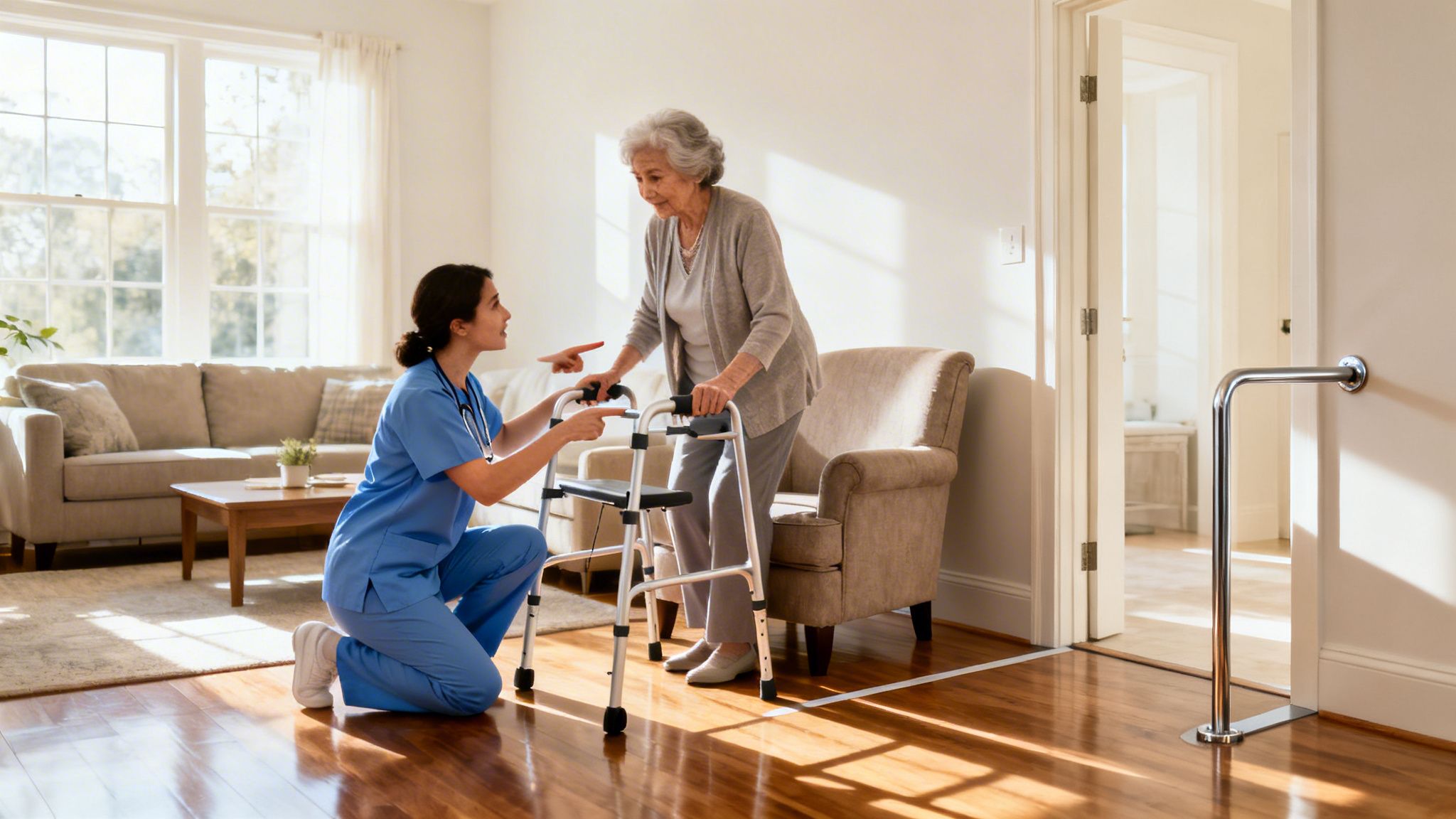
For families across Northern Virginia, from Arlington to Fairfax, the thought of an aging parent falling is a constant worry. It’s more than just the fear of an injury; it’s a direct threat to their independence, confidence, and ability to stay in their cherished home. A single fall can trigger a cascade of hospital visits, declining mobility, and a real loss of self-assurance.
This is exactly where professional nursing interventions for risk for falls make a difference. These aren’t just simple suggestions to “be careful.” They are evidence-based strategies that involve a systematic process of identifying, analyzing, and actively managing the specific factors that put someone at risk. A tailored plan, supervised by experienced caregivers, is key to restoring safety and peace of mind.
The Scope Of The Problem in Our Community
The statistics on senior falls are startling. Falls are a massive global issue, with the World Health Organization reporting that they claim 684,000 lives annually. This makes them the second leading cause of unintentional injury deaths around the world.
Closer to home, the CDC reports that more than one in four older adults in the U.S. falls each year. And once someone falls, their chance of falling again doubles. This isn’t just a national number; it’s a reality playing out in our Arlington and Fairfax County communities. A simple trip over a rug in a Falls Church home or a moment of dizziness in a McLean apartment can change everything.
A proactive fall prevention plan isn’t about limiting a senior’s freedom. It’s about building a secure foundation that empowers them to live more freely and confidently in their own home.
Moving From Fear To Action
The first step toward preventing falls is understanding why they happen. A professional approach looks at the whole person and their environment, considering factors that families might easily overlook.
We break it down into three key areas:
- Intrinsic Factors: These are personal health issues. Think chronic conditions like Parkinson’s or arthritis, vision and hearing problems, trouble with gait and balance, or even side effects from medications.
- Extrinsic Factors: These are the hazards in the home itself. Things like poor lighting in a Vienna townhome, loose carpets in an Alexandria condo, a lack of grab bars in the bathroom, and general clutter are all common culprits.
- Behavioral Factors: This includes a person’s habits and mindset. Risk-taking behaviors, a history of previous falls, and even the “fear of falling” itself can ironically lead to inactivity and muscle weakness, which only increases the risk.
By methodically looking at each of these areas, what feels like an overwhelming problem becomes a series of manageable, actionable steps. This process turns family anxiety into a confident, collaborative plan that truly protects your loved one and preserves their quality of life.
Before diving into specific interventions, it’s helpful to see how these pieces fit together. A solid, home-based fall prevention plan, like the ones our experienced caregivers implement for families, is always comprehensive. It addresses the person, their environment, and their daily routines.
Core Components Of A Home-Based Fall Prevention Plan
| Intervention Category | Primary Goal | Example Action |
|---|---|---|
| Comprehensive Assessment | Identify individual risk factors and baseline function. | Administering the TUG (Timed Up and Go) test to assess mobility and balance. |
| Environmental Modification | Remove or reduce home hazards that cause trips and slips. | Installing grab bars in the bathroom and ensuring clear, well-lit pathways. |
| Mobility & ADL Support | Improve safety during daily activities like walking and bathing. | Teaching the “sit-to-stand” technique using leg strength, not just armrests. |
| Medication Review | Identify medications that may increase fall risk (e.g., dizziness). | Collaborating with a pharmacist to review all prescriptions and OTC drugs. |
| Exercise & Strengthening | Build strength, balance, and endurance to improve stability. | Recommending a Tai Chi program or simple, seated leg-strengthening exercises. |
| Caregiver & Patient Education | Empower the individual and their family with knowledge. | Explaining how to safely get up from the floor after a fall before one occurs. |
This table gives you a snapshot of our multi-pronged approach. By tackling the problem from every angle, we can create a robust safety net that significantly reduces the likelihood of a fall. It’s about being proactive, not reactive.
Starting With A Comprehensive Fall Risk Assessment
Effective nursing interventions for risk for falls never start with random suggestions. They begin with a deep, methodical look at the whole picture. Real fall prevention is like detective work—the clues are often hiding in plain sight within a senior’s daily life, health history, and home. Guesswork simply won’t cut it when a loved one’s safety is on the line.
A professional assessment is far more than a quick scan for clutter. It’s a systematic evaluation designed to uncover the subtle, interconnected factors that build up to create a high fall risk. A trained eye is crucial here, as it can connect the dots between a new medication and a slight wobble, or between poor kitchen lighting and a recent close call.
This flowchart shows the basic flow of a professional fall prevention strategy.
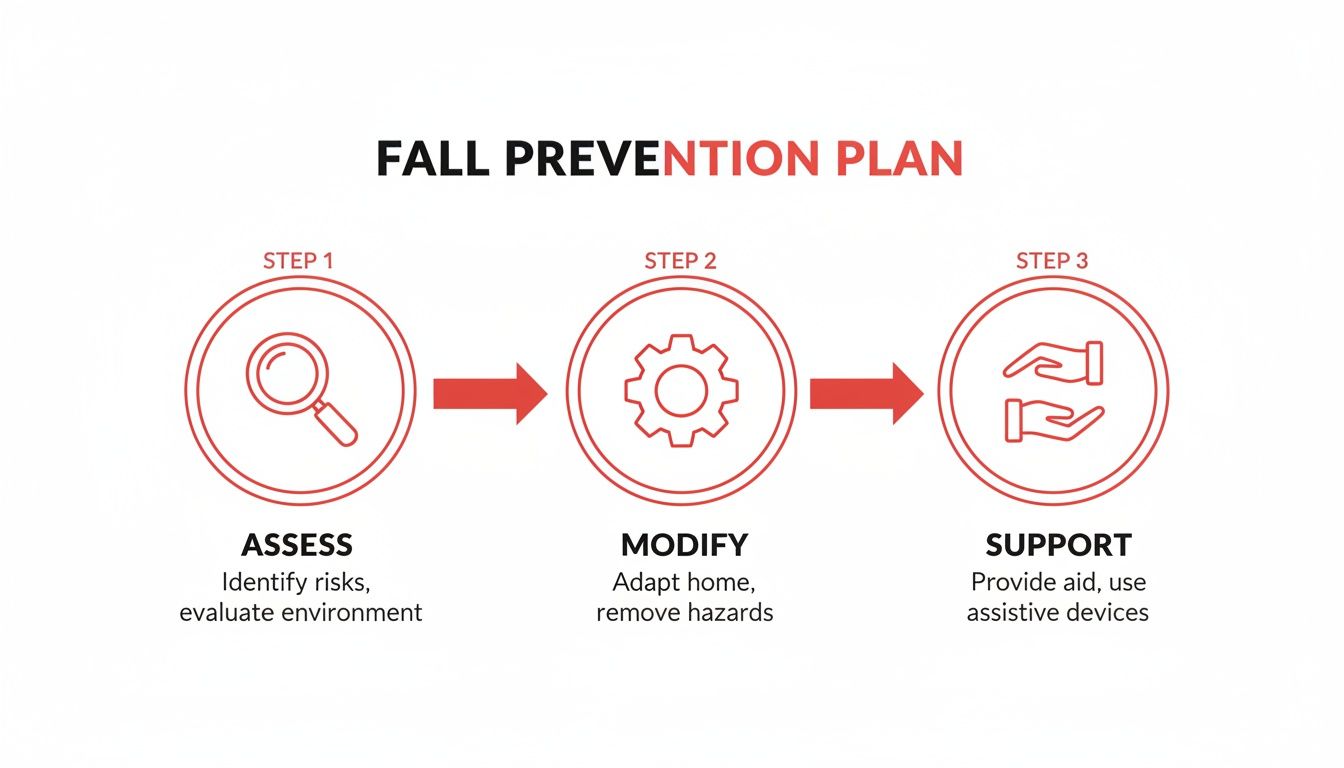
As you can see, effective care isn’t a one-time fix. It’s a continuous cycle of assessing what’s happening, making smart changes, and providing consistent, reliable support.
Looking at Personal Health Factors
The first layer of any solid assessment is the individual’s health. We have to look closely at the intrinsic factors—the things going on inside their body—that can compromise stability.
- Gait and Balance: How does your loved one walk? Do they shuffle? Do they seem unsteady or struggle with turns? Simple, practical tests like the “Timed Up and Go” test, which times how long it takes to stand up from a chair and walk ten feet, give us concrete data about their mobility.
- Medical Conditions: Chronic illnesses play a huge role. Things like Parkinson’s disease, arthritis, diabetes (which can cause neuropathy), and vision problems are all major contributors to fall risk.
- Medication Review: This is one of the most critical and easily overlooked steps. So many common prescriptions—including blood pressure meds, sedatives, and even some antidepressants—can cause dizziness, drowsiness, or orthostatic hypotension (that sudden drop in blood pressure when you stand up). A thorough review can pinpoint these potential culprits.
A senior in Arlington might start a new blood pressure medication and suddenly feel lightheaded when getting out of bed. Without a proper assessment, the family might not connect the dots between the new prescription and the increased fall risk.
Evaluating Behavioral and Cognitive Risks
How a person thinks and behaves is just as important as their physical condition. A truly comprehensive assessment explores the habits and psychological factors that can lead to a fall.
A fear of falling, for instance, can quickly become a self-fulfilling prophecy. After a fall, a senior might become overly cautious and reduce their activity levels. This leads directly to muscle weakness and deconditioning, which, ironically, makes them more likely to fall again. The assessment is designed to spot this dangerous cycle so we can break it with confidence-building exercises and support.
We also look at simple daily habits. Does your mother rush to answer the phone every time it rings? Does your father insist on carrying the laundry basket, the mail, and his coffee all at once? These small behaviors add up to create significant risks over time.
Assessing The Home Environment in Detail
Finally, we turn a critical eye to the physical space. A professional home safety survey, like our detailed 43-step process, examines every single room for hidden dangers. You can get a better sense of what this involves by checking out our guide to a professional home safety assessment for seniors. This goes way beyond just spotting a few loose rugs.
Key Environmental Checks:
- Lighting: Are hallways, staircases, and bathrooms brightly lit? Are there light switches at both the top and bottom of the stairs? Nightlights are absolutely essential for preventing nighttime falls.
- Floors: We’re on the lookout for uneven surfaces, slippery tile, and, of course, unsecured throw rugs. Even the little threshold between a carpeted room and a hardwood floor can be a serious trip hazard.
- Bathroom: This is a high-risk zone. We check for missing grab bars, low toilet seats, and slippery tub or shower surfaces.
- Stairs: Are the handrails secure on both sides? Are the steps in good repair and completely free of clutter?
By combining these three pillars—personal health, behavior, and environment—a clear, actionable picture of fall risk emerges. This detailed assessment is the foundation for everything that comes next, ensuring the safety plan we create is perfectly matched to your loved one’s specific needs and their unique home.
Creating A Safer Home Environment
Once a thorough assessment identifies the risks, it’s time to shift into action. The goal is to transform the home into a safer space, but this isn’t about turning a beloved, familiar house into a sterile clinic. Instead, we’re making smart, targeted adjustments that tackle hazards while making sure the space still feels like home.
Many of the most effective changes are actually quite simple and don’t cost a lot, but their impact on a senior’s daily safety is huge. We want to create an environment that supports independence, not one that’s full of obstacles.
High-Risk Zones: The Living Room And Bedroom
It’s ironic, but the very rooms where seniors spend most of their time often hide the biggest dangers. First thing’s first: clear pathways are non-negotiable. This means tackling clutter, securing electrical cords along the walls, and maybe even moving some furniture to open up walking areas.
Pay special attention to the seating in the living room. Chairs and sofas need to be at a height that lets a senior sit and stand without a huge amount of effort. I’ve seen a wobbly, low-slung armchair be just as much of a fall risk as a slippery floor.
The bedroom needs a similar eagle eye.
- Bed Height: The ideal height is one where the senior’s feet can rest flat on the floor when they’re sitting on the edge of the bed. If it’s too high or too low, getting in and out becomes a risky maneuver.
- Night Lighting: A simple nightlight and a lamp that’s easy to reach from the bed are absolute must-haves. Those nighttime trips to the bathroom are a peak time for falls.
- Clear Path: Make sure the path from the bed to the door—and especially to the bathroom—is completely clear of shoes, clothes, or anything else.
It’s often the small, consistent things that make the biggest difference. Research backs this up. One study found that 73% of nurse managers reported locking bed wheels was a consistent safety practice, but only 15% said the same for more involved interventions like scheduled toileting. This shows just how critical those straightforward environmental tweaks are for families managing care at home.
Mastering The Bathroom
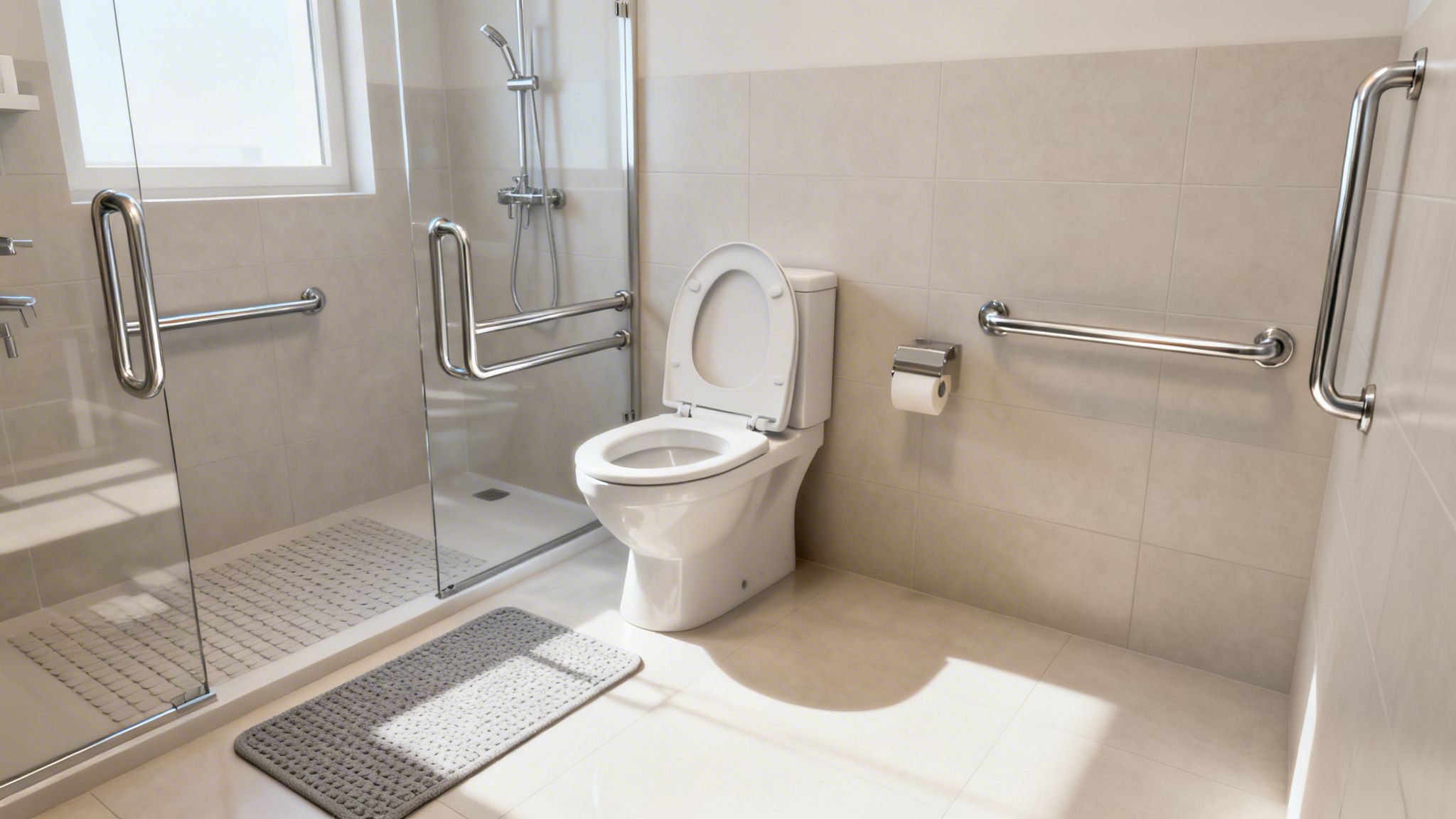
If there’s one room to focus on, it’s the bathroom. The combination of hard surfaces and water makes it the most hazardous spot in the entire house.
Here are the key modifications that matter most:
- Grab Bars: And I don’t mean towel racks. You need professionally installed grab bars next to the toilet and inside the shower to provide real, sturdy support.
- Non-Slip Surfaces: Put non-slip mats both inside and outside the tub or shower. A shower chair or transfer bench is another game-changer, giving them a stable place to sit while bathing.
- Raised Toilet Seat: Adding a raised seat, especially one with armrests, can drastically reduce the strain and risk involved in sitting down and standing back up.
Stairs And Hallways
Stairs and hallways are transition zones, and that’s where falls love to happen. Good lighting is your first line of defense—these areas should be bright, with light switches at both the top and bottom of the stairs. Handrails need to be sturdy and secure, ideally on both sides of the staircase. Part of making a home safe means checking that structural elements are up to code; for instance, understanding UK stairs handrail height regulations is vital for reducing fall risks.
Any loose carpet on the stairs is a major red flag and needs to be tacked down or removed immediately. For a more exhaustive list of modifications, take a look at our guide on the essential home safety checklist for seniors.
Correct Use Of Assistive Devices
Walkers and canes are fantastic tools, but only if they’re the right type, adjusted to the right height, and used correctly. A trained, experienced caregiver can check that the device is a good fit and offer gentle reminders on how to use it properly. For example, a cane should always be held on the stronger side of the body, and a walker should be pushed forward a step before they step into it.
When these devices are used correctly and consistently, they build confidence and provide genuine stability. With these targeted environmental and equipment-based interventions, a home can stop being a place of potential risk and become a true sanctuary of safety and independence.
Building Strength And Confidence To Prevent Falls
Once the home is a safer space, the next layer of protection is all about the person. Real fall prevention goes far beyond just modifying the environment; it’s about building physical strength, encouraging safe movement, and helping restore the confidence that a fall—or even just the fear of one—can so easily take away.
These personal nursing interventions for risk for falls are designed to empower your loved one from the inside out, helping them feel stronger and more secure in their own home.
Start With a Medication Review
One of the most powerful things we can do is take a close look at all their medications. It’s surprising how many common prescriptions, from blood pressure drugs to sleep aids, come with side effects like dizziness, drowsiness, or orthostatic hypotension—that sudden drop in blood pressure when you stand up.
A trained professional can coordinate with a pharmacist or doctor to flag medications that might be increasing fall risk. The goal isn’t to stop essential treatments. It’s about exploring alternatives, adjusting dosages, or even changing the timing of a medication to minimize those dangerous side effects. This simple review can be one of the most effective ways to stop a fall before it even happens.
Encourage Safe Movement And Mobility
How a senior moves through their day is critical. A skilled caregiver provides much more than just an extra set of hands; they offer the gentle coaching and support needed to make every movement as safe as possible.
This includes teaching proper transfer techniques—how to safely get in and out of a bed, chair, or car. The key is to use leg strength, keep a stable base, and move with intention.
For those who use walkers or canes, consistent and correct use is everything. I’ve seen firsthand how an improperly used device can become a hazard itself. Our guide on mobility aids for the elderly offers more detail on making sure these tools provide support, not another problem.
Gentle Exercise for Strength And Balance
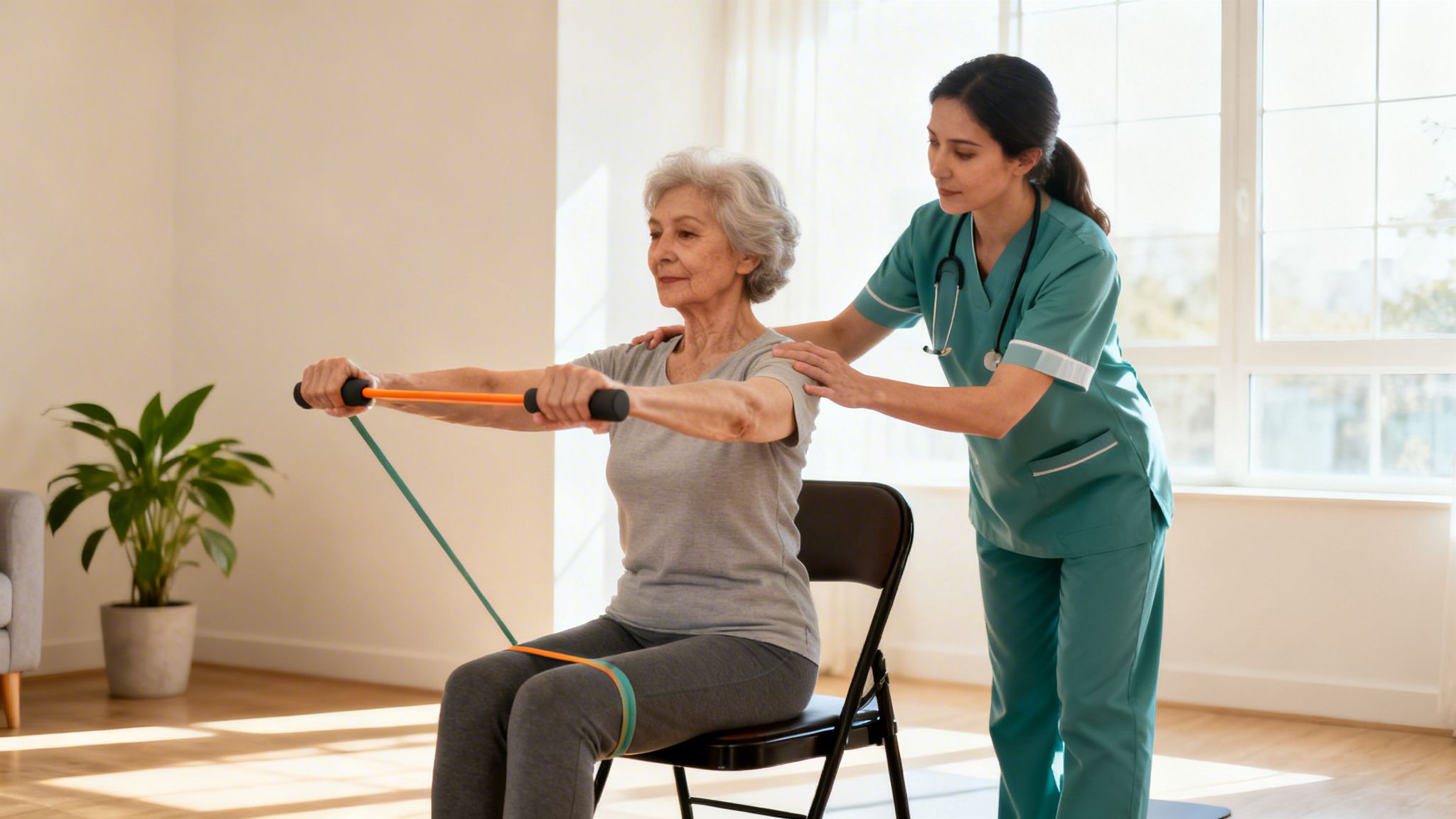
An active body is a more stable body. Even simple, gentle exercises performed right at home can make a huge difference in muscle strength, balance, and coordination, all of which directly lower fall risk. A caregiver can be there to facilitate these activities, providing safety oversight and a little encouragement.
Effective At-Home Exercises:
- Chair Yoga: This adapted form of yoga lets seniors perform poses while seated or using a chair for support. It’s fantastic for improving flexibility and core strength without the risk of standing balance poses.
- Tai Chi: Often called “meditation in motion,” Tai Chi uses slow, flowing movements that are excellent for improving balance and stability.
- Seated Leg Lifts: Simple leg extensions and lifts done from a sturdy chair help strengthen the quadriceps—the key muscles we all use for standing up and walking.
A fall, or even just the fear of one, can trap someone in a devastating cycle. The anxiety leads to inactivity, which causes muscle weakness, making another fall even more likely. Compassionate support and gentle, supervised movement are the keys to breaking that cycle and rebuilding confidence.
This is where multifactorial nursing interventions really shine. The 2022 World Falls Guidelines emphasize this exact approach, recommending individualized assessments followed by tailored actions like exercise programs. These multicomponent strategies don’t just prevent falls; they also improve overall physical function. For individuals with conditions like osteoporosis, strategies that enhance bone density are invaluable. Specific routines like Pilates and bone health for fall prevention can be a great addition to a strengthening program.
By weaving together medication management, safe mobility practices, and targeted exercises, we help seniors in the Arlington area not only avoid falls but also regain the physical strength and mental confidence to live a more active, independent life.
How Family Education And Communication Improve Safety
When it comes to preventing falls, one person can’t do it alone. The most effective safety plans are built on teamwork, with family members and a professional care team working together as true partners.
This is where clear communication and ongoing education become some of the most powerful nursing interventions for risk for falls. It’s all about making sure everyone is on the same page, armed with the right knowledge to protect your loved one.
A professional in-home caregiver doesn’t just work for your family; they work with you. This partnership starts by helping you understand the specific fall risks we identify in the initial assessment. Instead of just pointing out a problem, our goal is to explain the why behind each recommendation, empowering you with the same insights our care team uses.
Sharing Knowledge And Building Skills
One of the most valuable roles a trained caregiver plays is that of a coach. They can demonstrate safe practices right there in your loved one’s home, using their daily routines to make the lessons practical and easy to remember.
This kind of hands-on guidance often includes:
- Teaching Safe Transfer Techniques: A caregiver can physically show you the proper body mechanics for helping a senior move from a bed to a chair or into a car. This is crucial for reducing the risk of injury for everyone involved.
- Recognizing Subtle Changes: Professionals are trained to spot small shifts in a senior’s condition—things like a new hesitation when walking or a slight increase in dizziness—that might signal a growing risk. They then share these observations so the care plan can be adjusted quickly.
- Explaining What to Do After a Fall: Knowing how to respond calmly and correctly if a fall does happen is critical. Education should cover how to assess the situation without moving the person, when to call for help, and how to provide comfort and reassurance.
The best safety plans are living documents. They should be updated constantly through a steady flow of information between the caregiver, the family, and the agency. This is how care adapts in real-time to a senior’s changing needs.
Keeping Everyone Connected
Modern care relies on seamless communication to keep the entire support circle in the loop. Through tools like a shared family portal and regular check-ins from care managers, everyone stays updated on your loved one’s progress and any new concerns. This constant feedback loop prevents important details from falling through the cracks.
For instance, if a caregiver notices your mom seems particularly unsteady in the mornings, they can document it immediately. The agency can then follow up with you to explore if a recent medication change might be the cause. This collaborative approach turns simple observations into proactive safety measures.
The emotional toll of being a primary family caregiver can be immense, and having a professional support system is vital. You can learn more about how to identify the signs of caregiver burnout to better support yourself and your loved ones.
By actively involving the family, providing practical training, and maintaining open lines of communication, fall risk is managed not just by one person, but by a dedicated and connected team.
Even with the best proactive nursing interventions for risk for falls, families and caregivers need to know when a situation calls for a doctor’s help. Our in-home care team is trained to spot these red flags, but it’s crucial that every family member understands the signs, too.
Not every tumble results in a broken bone or an obvious injury. After any fall, even one that seems minor, it’s critical to check for specific signs right away. Look for clear issues like pain, swelling, or difficulty moving a limb. More importantly, you have to ask about head pain, dizziness, or any confusion—these could point to a concussion that needs immediate medical evaluation.
Spotting Underlying Medical Issues
Sometimes, a sudden increase in fall risk has nothing to do with the environment. It’s often a sign of a hidden health problem brewing under the surface. A sudden bout of dizziness, weakness, or confusion should never be brushed off as just a “bad day” for an older adult.
These symptoms can signal serious but common issues:
- Dehydration: It doesn’t take much. Not drinking enough fluids can quickly lead to low blood pressure, weakness, and dizziness, which dramatically increases the chance of a fall.
- Urinary Tract Infections (UTIs): In seniors, UTIs often show up without the classic symptoms. Instead, you might see sudden confusion, agitation, or unsteadiness.
- Medication Side Effects: A new prescription or even a change in dosage can throw a person’s system completely off balance. If falls or near-misses start happening right after a medication change, that’s a huge red flag to call the prescribing doctor.
When to Request a Therapy Referral
What if you notice a more gradual decline in your loved one’s strength, balance, or mobility? Don’t wait for a fall to take action. This is the time to bring in specialized help. A professional caregiver can document these subtle changes over time, giving the doctor concrete evidence to act on.
A referral for a physical or occupational therapy evaluation is one of the best proactive steps you can take. It’s all about rebuilding strength and, just as importantly, confidence. Physical therapy hones in on balance, gait, and leg strength, while occupational therapy helps seniors find safe ways to perform daily activities.
A coordinated team is always the strongest advocate for your loved one. An experienced caregiver from Caring Senior Service can go with you to doctor’s appointments, ready to share detailed observations from what’s happening at home. This gives the physician a complete, 360-degree view to make the best possible care decisions.
This collaborative approach is a core part of how we ensure safe transitions, especially when a senior is coming back home from the hospital. To see how we support families during this delicate time, you can learn more about our hospital-to-home discharge support.
Common Questions About Fall Prevention At Home
What Is The Single Most Important Intervention?
This is the question everyone asks, and the answer isn’t a single magic bullet. From my experience, the most impactful thing you can do is a multifactorial assessment that leads to a personalized care plan.
Why? Because falls almost never have just one cause. It’s usually a perfect storm of little things—a new medication, poor lighting in the hall, muscle weakness from being less active. A thorough assessment uncovers all those unique risks, allowing us to create a plan that tackles everything at once. This combined approach of environmental tweaks, strength exercises, and caregiver education is what really moves the needle.
How Can I Make My Parent’s Bathroom Safer?
The bathroom is priority number one. It’s one of the most hazardous rooms in the house, but a few key changes can make a world of difference.
Here’s what I always recommend starting with:
- Install grab bars—and I mean real, professionally installed ones—inside the shower and next to the toilet.
- Get a good non-slip bath mat for the tub or shower floor, and consider adding a shower chair or bench.
- Make sure the lighting is bright, especially for those middle-of-the-night trips.
- Add a raised toilet seat. This simple device can make sitting and standing so much easier and safer.
These modifications are small, but they address the biggest risks in the bathroom head-on.
A quick but critical note: A towel rack is not a grab bar. I’ve seen them get pulled right out of the wall. A real grab bar is anchored into the wall studs and is built to support a person’s full body weight. It provides true security.
What If My Parent Is Afraid Of Falling?
This is such a common and heartbreaking cycle. The fear of falling causes a person to become less active. That inactivity leads to weaker muscles and poorer balance, which, ironically, makes them more likely to fall.
The best way to break this cycle is to address the fear while gently and safely reintroducing activity. We start by removing the obvious hazards in the home, which immediately helps build confidence. Then, with a caregiver supervising, we can introduce simple balance and strength exercises, like standing up from a chair a few times or doing leg lifts while seated.
The goal is to build physical strength and mental confidence in tandem. We want to show them that movement can be safe and empowering again.
Would it help to see what an individualized at-home plan might look like for your dad—timing, safety tweaks, and caregiver match? Caring Senior Service of Arlington helps seniors across Northern Virginia remain safe, healthy, and at home. Call (571) 202‑6522 or visit us at 1950 Old Gallows Rd, Ste #550 for a free consult—our office coordinates scheduling 24/7.