

We spend a lot of time talking about heart health and staying strong as we age. But protecting how we think and remember (even make decisions)? That gets less attention…even though it determines whether we can manage our medications, keep appointments, cook safely, and have conversations that make life feel worth living.
You don’t need to overhaul your entire life to support your brain. Small routines, done most days, offer real protection over time. This article shares simple habits you can work into your day to help your mind stay clear and confident. Read on.
Understanding Cognitive Health
Cognitive health covers the mental skills we use constantly. Think memory, attention, problem-solving, language, and decision-making. These abilities change across a lifetime.
Many people notice slower recall as they get older. That’s normal. The brain needs to stay engaged and resilient.
Take it from Conrad Wang, Managing Director of EnableU. Having worked with PWDs and seniors, he believes consistent habits can help preserve both mental function and quality of life.
Wang says, “Cognitive health is closely tied to independence. When people can make decisions independently and manage daily routines confidently, they’re better able to live life on their own terms. Building healthy habits early gives your brain the support it needs to stay resilient…as you go older and older.”
The National Institute on Aging reports and records how cognitive health shifts with age. Not to mention the habits that can help protect it. This implies that the sooner you tend to your brain, the better it responds.
The Daily Routines for Cognitive Health
1. Mental exercises
Brains respond to challenges. Think of memory games that help seniors work their cognitive functions. Consider picking up a new language and tackling a crossword for mental exercise. By doing so, you’re creating fresh neural pathways.
It’s abundantly clear: learning keeps the mind flexible. One of the most rewarding habits you can adopt at any age.
A few ideas that fit easily into a day:
- Do a 10-minute puzzle after breakfast – crossword, sudoku, or a word game)
- Learn a new skill in small chunks – a language app lesson or a basic drawing tutorial)
- Write something – a few journal lines, a letter, or a story from your life for a grandchild)
- Teach someone else a skill you know – explaining ideas strengthens your own understanding
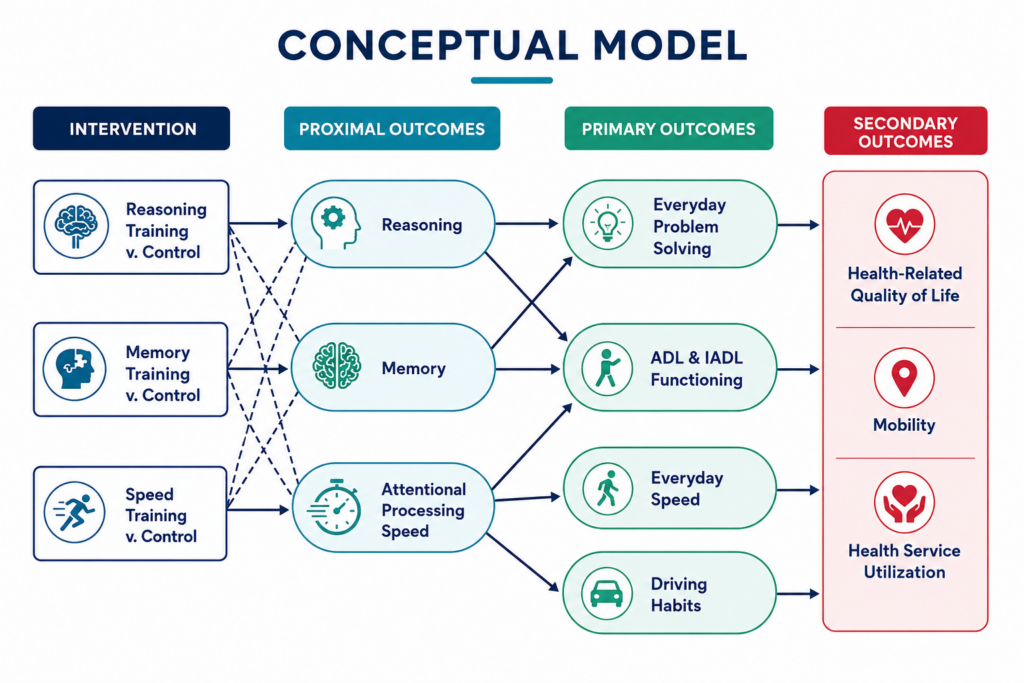
Structured “brain training” can offer short-term boosts to specific skills. The large ACTIVE trial found that targeted cognitive exercises improved certain abilities. They could help in some aspects of daily functioning in older adults. Take a glimpse at the conceptual model below:
2. Sleep and rest
Good sleep is when the brain clears waste. It’s when it consolidates memories and resets attention for tomorrow. That said, find out the reasons why seniors don’t sleep well at night and address them at all costs.
Quality sleep protects and repairs the aging brain. That’s why, as a senior, you should treat bedtime routines with the same care as diet and exercise.
Older adults generally do best with 7–8 hours of sleep. A consistent bedtime. A dark and quiet room. Limiting screens before bed. They can transform your rest. When you protect your sleep, you protect your ability to think clearly the next day.
Helpful habits:
- Keeping a consistent bedtime and wake time, even on weekends
- Dimming lights at night and getting sunlight in the morning to anchor your body clock
- Limiting screens for an hour before bed. Read or listen to calming music instead
- Avoiding large meals and caffeine late in the day
- Keeping the room cool, dark, and quiet
Research shows that sleep supports the brain’s glymphatic system, which helps clear metabolic waste. No wonder a solid night makes thinking feel crisp.
3. Proper nutrition
Food choices shape how we feel and think, today and years from now. Consider the best superfoods for seniors. Diets that support heart health (such as the Mediterranean or MIND diets) are linked to slower cognitive decline.
What’s good for your heart is good for your brain. Fatty fish rich in omega-3s, leafy greens, berries, and nuts all supply the nutrients your mind needs to stay sharp. Small swaps, like adding walnuts to breakfast or salmon to dinner twice a week, make a real difference over time.
Easy daily moves (based on WHO recommendations):
- Eat a variety of whole foods – including whole grains, legumes, fruits, vegetables, and lean proteins
- Fill your plate with naturals — with plenty of fruits and vegetables every day
- Choose healthy unsaturated fats – limit saturated and trans fats
- Keep added sugars low – below 10% of daily calories (ideally below 5%)
- Limit salt intake – to less than 5 g (1 teaspoon) per day
- Drink plenty of water – limit sugary drinks.
- Eat minimally processed foods – maintain a balanced diet.
The MIND diet combines parts of the Mediterranean and DASH diets. It’s been associated with a lower risk of Alzheimer’s disease. Even when followed moderately.
4. Social interaction
Conversation wakes up the brain. It asks us to listen, remember, find words, and empathize…all at once. That said, it’s best to help your seniors socialize and avoid isolation through conversation.
Conversation is a workout for the brain. Staying socially connected keeps our minds engaged and our spirits lifted. Whether through a phone call with a grandchild or a message to an old friend. Relationships give us purpose. And purpose keeps the mind alive.
One substantial touchpoint a day:
- A phone call with a friend or family member
- A short visit with a neighbor
- A community class, faith gathering, or library event
- A heartfelt message to someone you haven’t spoken to in a while
Meaningful human connection is critical to cognitive vitality. However, isolation is one of the most overlooked risks for older adults.
The problem? Social isolation and loneliness can raise risks for a range of health issues. Including cognitive decline. That’s why steady connections can be both protective and uplifting.
5. Physical activities
Movement improves blood flow and reduces inflammation. It encourages growth factors that support memory and learning. That’s why it’s essential to build a safe exercise routine for older people.
Every walk you take sends oxygen-rich blood straight to your brain. You don’t need an intense workout to see benefits. A daily stroll or some light stretching can improve focus and memory. Consistency matters more than intensity.
A simple routine might look like this:
- A 20–30 minute walk most days
- 5–10 minutes of balance work (think heel-to-toe walking, single-leg stands near a counter)
- Light strength twice a week (consider sit-to-stands from a chair, wall push-ups, gentle resistance bands)
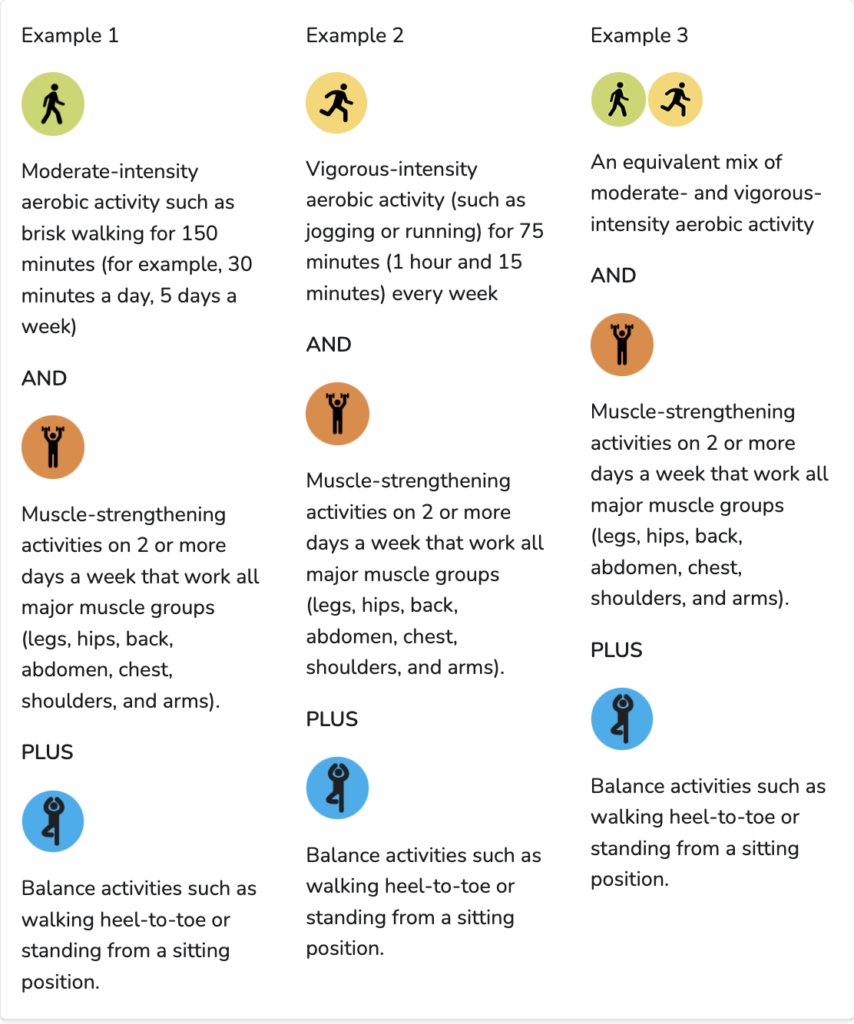
Older adults generally benefit from about 150 minutes of moderate activity each week. Plus balance and strength work, spread across most days. See CDC’s sample weekly schedules:
How To Create a Sustainable Routine
As a senior, it’s essential to create a sustainable routine for your cognitive health. Make new habits tiny and tie them to something you already do.
For example, brew your coffee, then do a crossword. Finish lunch, then call a friend. Put on walking shoes right after the weather report. That simple cue-action pairing keeps you from debating with yourself.
A few practical strategies:
- Starting with just one change — keeping it small (five minutes counts)
- Using habit stacking – “After I brush my teeth, I’ll stretch for two minutes”
- Tracking your streak on a calendar – Seeing a chain of X’s is surprisingly motivating
- Setting a “minimum dose” for tough days – A five-minute walk still counts
Lasting change comes from steady steps rather than sweeping overhauls. However, consider working with your healthcare provider. This is to address any underlying health concerns that may affect your cognitive function.
Ultimately, seeking professional guidance and support can help protect and boost your cognitive health…as you age!
Final Words
Protecting cognitive health doesn’t require perfection. It asks for a few smart choices and a willingness to show up most days.
That said, engage your mind with something that stretches you. Move your body in ways that feel manageable. Eat colorful, simple foods. Reach out to another human. Guard your sleep.
Ultimately, pick one habit today….and tomorrow, repeat it. Whether you seek home care to maintain your cognitive health or your loved one needs dementia care, Caring Senior Service can help. Find a Caring location near you!
About the Author
Adam Stratton leads Trustiq, a performance-driven marketing agency built on the belief that trust is the ultimate growth lever. A strategist at heart and operator by trade, he writes about brand psychology, digital performance, and scaling creative teams.