
As a physical therapist, I’ve worked with many seniors recovering from hip replacement surgery. I’ve seen firsthand how challenging the first weeks at home can be, but also how much progress is possible with the right support. A hip replacement is not just about replacing a joint; it’s about restoring independence, mobility, and quality of life.
More than 450,000 hip replacement surgeries are performed in the United States each year, and the majority of patients are seniors. While the hip replacement procedure often brings quick relief from long-term pain, recovery doesn’t end when you leave the hospital. What happens at home plays a huge role in determining how successful the outcome will be.
Here are my top recommendations for effective home care after a hip replacement.
1. Prepare the Home Before Surgery
Recovery actually starts before you even enter the hospital. Setting up the home environment in advance can prevent accidents and make life easier once you return.
Steps to take before surgery:
- Create a recovery zone: Choose a main living space on one floor with a comfortable chair, table, phone, and any needed supplies within easy reach.
- Rearrange furniture: Clear pathways so walkers or crutches can move freely.
- Install safety equipment: Grab bars in the bathroom, non-slip mats, and night lights in hallways.
- Plan meals ahead: Stock the freezer with healthy, ready-to-heat meals to reduce kitchen time during the first few weeks.
2. Stick With Physical Therapy
From a PT perspective, attending physical therapy appointments is a crucial part of recovery. Physical therapy helps seniors rebuild strength, mobility, flexibility, and confidence in their new joint.
Older adults should perform physical therapy exercises to:
- Restore balance and stability
- Prevent muscle weakness and stiffness
- Reduce risk of future falls or complications
- Learn safe techniques for standing, sitting, and climbing stairs
Seniors may attend outpatient sessions, receive home-based therapy, or even complete some therapy in an inpatient setting. Regardless of where it happens, the real difference comes from consistency.
Caregiver tip: Encourage your loved one to complete “homework” exercises daily. Even a few minutes of ankle pumps, leg lifts, or gentle walking can make a huge impact on long-term recovery after a hip replacement.
RELATED CONTENT: How Caregivers Can Help With Physical Therapy Exercises
3. Protect the Hip Joint & Surgical Site
Caring for the incision is critical. Follow your surgeon’s instructions for cleaning and bandaging, and watch for infection warning signs such as unusual redness, swelling, or drainage.
Beyond wound care, basic daily activities like bathing, dressing, and toileting may feel overwhelming. That’s where adaptive equipment comes in handy:
- Long-handled sponges or reachers
- Shower chairs and hand-held shower heads
- Raised toilet seats with grab bars
These tools allow seniors to complete personal care while minimizing the risk of bending too far or losing balance.
4. Keep Moving Safely
After surgery, it’s natural to feel nervous about moving, but inactivity can actually slow healing. Most surgeons encourage walking short distances soon after surgery, gradually increasing time and distance.
Here’s what I recommend:
- Avoid sitting for longer than 30–60 minutes at a time.
- Use walkers or crutches until cleared by your doctor.
- Avoid twisting or bending at the hip beyond 90 degrees.
- Slowly reintroduce stairs with support.
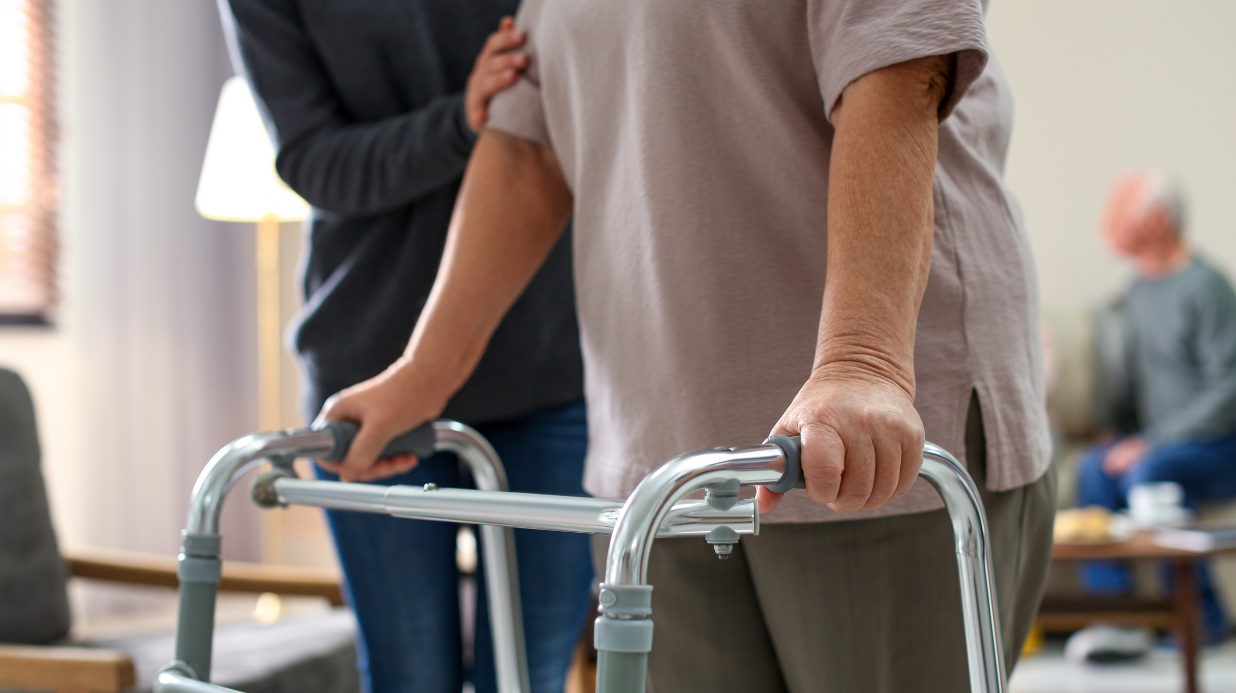
Caregiver perspective: At first, walk alongside your loved one. Offer encouragement, but allow them to move independently when safe. Building confidence is as important as rebuilding strength.
5. Consider Professional Caregiver Support
Family members often want to help, but recovery can be overwhelming. Professional caregivers can fill in the gaps and reduce stress for everyone.
A caregiver can assist with:
- Transportation home from the hospital and to follow-up visits
- Meal prep, grocery shopping, and light housekeeping
- Medication reminders and prescription pickups
- Mobility assistance and safe transfers in and out of bed or chairs
This type of support eases physical tasks and provides reassurance. Many of my patients said having a steady presence at home helped them feel more confident and less anxious during recovery.
6. Prevent Falls at All Costs
As a PT, I can’t stress this enough: a fall in the days after surgery can be devastating. Protecting against falls should be the top priority at home.
Here are some of my top fall prevention tips:
- Remove throw rugs and clutter from hallways.
- Add nightlights to bedrooms, hallways, and bathrooms.
- Wear supportive, non-slip footwear indoors.
- Keep essential items (phone, remote, books, glasses) within reach.
- Consider a fall-prevention program or home safety assessment.
At Caring Senior Service, we offer a free 43-step Home Safety Assessment to help identify risks and recommend solutions.
7. Stay on Top of Medications & Pain Management
Pain management is not just about comfort. It’s what makes therapy possible. If pain is under control, seniors are more likely to stay active and compliant with rehab exercises.
Here’s how family members can help:
- Keep a written schedule of medications, dosages, and times
- Use pill organizers or phone reminders to prevent missed doses
- Track pain levels daily to share at follow-up visits
8. Fuel the Body With Good Nutrition
Healing requires energy, protein, and hydration. Seniors recovering from surgery should prioritize nutrient-dense foods and adequate fluids.
Best foods for recovery:
- Lean proteins (chicken, fish, beans, eggs) for tissue repair
- Fruits and vegetables for vitamins and antioxidants
- Whole grains for steady energy
- Dairy or fortified alternatives for bone health
- Water, herbal tea, or broth to stay hydrated
Caregiver perspective: Small, frequent meals may be easier for seniors with reduced appetite after surgery. Keep water within reach at all times to encourage regular hydration.
9. Don’t Skip Follow-Up Appointments
These appointments allow the surgical team to check healing, adjust restrictions, and ensure the joint is functioning as expected. Patients may undergo X-rays or mobility assessments at these visits.
If transportation is difficult, arrange rides well in advance. Keep a written list of questions so nothing is forgotten in the doctor’s office.
RELATED CONTENT: Reasons You Shouldn’t Skip a Follow-Up Appointment
10. Support Emotional Well-Being
Recovery is emotional as well as physical. Many seniors feel frustrated, isolated, or discouraged in the weeks after surgery.
Ways to help:
- Encourage phone or video calls with family and friends.
- Celebrate small milestones, like walking without a walker.
- Provide reassurance that progress takes time.
- Watch for signs of depression, such as withdrawal or loss of interest.
A positive mindset makes therapy more effective and the recovery journey smoother.
Final Thoughts
Hip replacement surgery is one of the most successful orthopedic procedures, but recovery depends heavily on what happens at home in the months after surgery. From preparing the house in advance to sticking with therapy and protecting against falls, each step plays a role in restoring independence.
With a safe environment, caregiver assistance, and consistent follow-through, seniors can look forward to thriving after a hip replacement.
If your loved one needs support after a total hip replacement or other major surgery, our caregivers can help. Reach out to your local Caring team to learn more.