
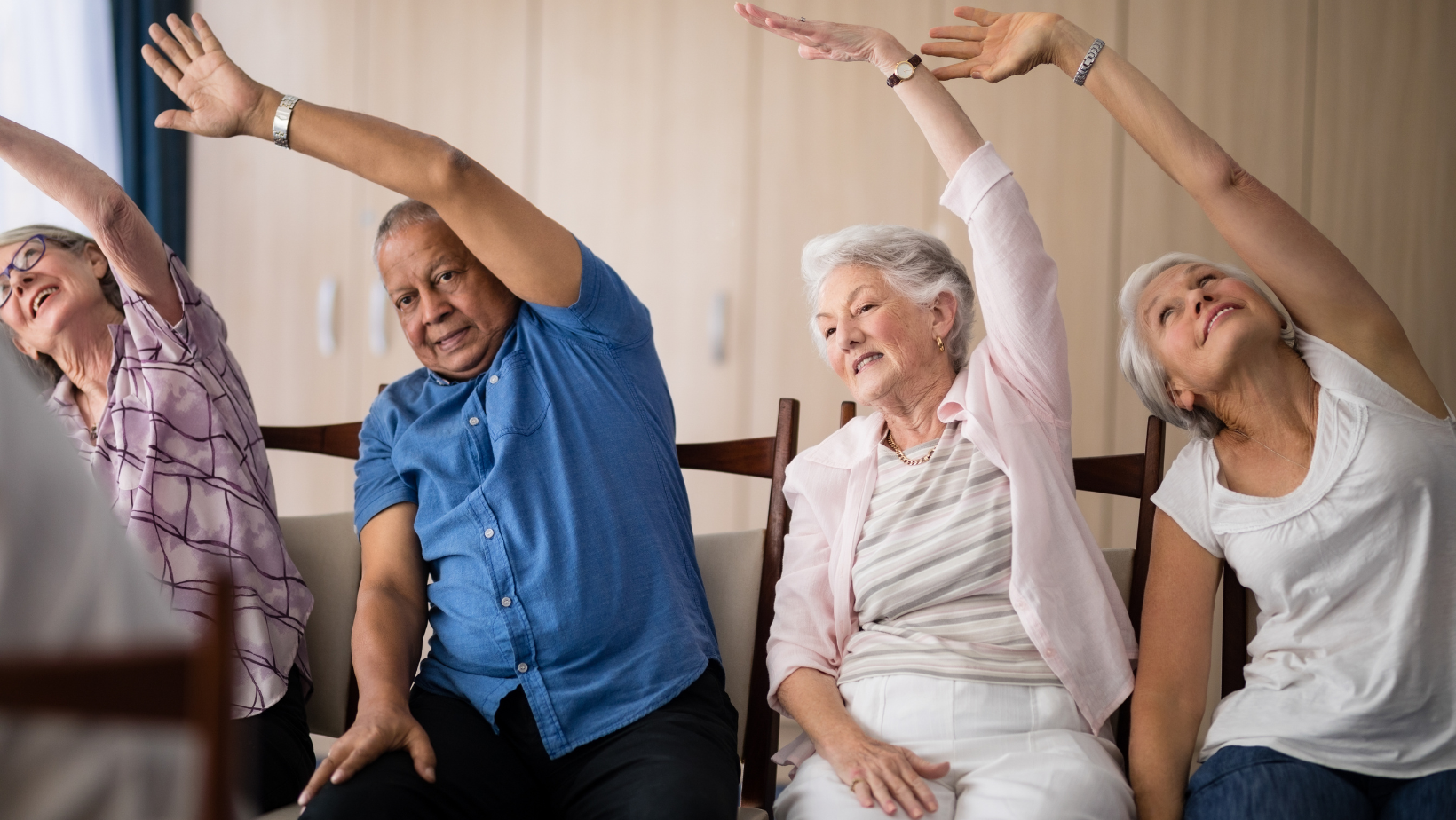
Regular exercise is one of the most powerful ways older adults can maintain strength, flexibility, and independence. But for many seniors, mobility challenges, joint pain, or balance issues can make traditional workouts difficult or even unsafe.
The good news? You don’t have to stand, bend, or move quickly to stay fit. Chair exercises offer a safe and accessible way to stay active, build strength, and improve overall well-being from the comfort of your chair. Seated exercises can be a great way for older adults with mobility issues to maintain physical activity.
As a physical therapist, I’ve seen firsthand how even small, consistent movements can make a tremendous difference. The following seated exercises are simple, low-impact, and can be done daily to help seniors maintain mobility and confidence.
Safety First: Setting Up for Success
Before beginning any new exercise routine for seniors, it’s always best to check with your doctor or physical therapist, especially if you have a chronic condition, balance issues, or joint pain.
When you start your routine, here are some tips to keep in mind:
- Choose a sturdy chair without wheels or armrests (if possible), and place it on a flat surface.
- Sit tall, with your feet flat on the floor and your shoulders relaxed.
- Move slowly, breathe deeply, and stop immediately if you experience pain, dizziness, or shortness of breath.
Warm Up Your Body
Every good workout starts with a warm-up. Warming up increases blood flow to your muscles, reduces stiffness, and lowers the risk of injury. Here are 2 simple moves to get started before moving to more intense exercise:
Seated Marches
Sit upright with your feet flat on the floor. Begin by lifting one knee toward your chest, then lower it and lift the other, as if you’re marching in place. Swing your arms gently for balance and coordination.
Tip: Lift your knees only as high as feels comfortable and focus on maintaining good posture. Perform the march for 30–60 seconds, rest, and repeat 2 or 3 times.
Arm Circles
Sit tall and extend your arms out to the sides at shoulder height. Slowly make small circles forward for 30 seconds, then reverse direction for another 30 seconds.
Tip: Keep your core engaged to support your back. This move strengthens your shoulders and improves joint mobility.
Once you’re warmed up, you’re ready for your main chair workout.
5 Best Chair Exercises for Seniors
1. Sit-to-Stands (Chair Squats)
This fall prevention exercise strengthens your legs, core, and glutes, which are key muscle groups for maintaining independence.
How to Do It:
- Sit toward the edge of your chair, feet hip-width apart, and toes pointing forward.
- Cross your arms over your chest or hold the armrests for support.
- Lean forward slightly, then press through your heels to stand up.
- Slowly lower yourself back down in a controlled motion.
Focus on keeping your weight in your heels and avoid using momentum. Start with 5–10 reps and gradually increase as your strength improves.
2. Seated Calf Raises
This simple move strengthens the calves and improves ankle flexibility, which are both important for walking and balance.
How to Do It:
- Sit with your feet flat on the floor, hip-width apart.
- Slowly lift your heels off the ground while keeping your toes planted.
- Hold for two seconds, then lower your heels back down.
Try raising one foot at a time to increase intensity. Aim for 10–15 repetitions per leg, or 10 with both feet together.
3. Seated Leg Lifts
Leg lifts target the hip flexors and core, muscles that tend to weaken with age but are essential for stability and mobility.
How to Do It:
- Sit tall and grip the sides of your chair for support.
- Straighten one leg out in front of you, keeping your toes pointed up.
- Hold for 3–5 seconds, then lower slowly.
- Switch legs and repeat.
To make this exercise harder, loop a resistance band around your ankles or thighs. Start with 8–10 lifts per leg.
4. Seated Arm Curls
Building upper body strength helps with daily activities like lifting groceries or getting out of a chair. You can use light dumbbells, resistance bands, or even water bottles.
How to Do It:
- Sit with your back straight and your arms at your sides, palms facing forward.
- Slowly bend your elbows, bringing the weights toward your shoulders.
- Lower back down with control.
Keep your elbows tucked close to your body and exhale as you lift. Aim for 10–15 curls, rest, and complete 2 sets.
5. Torso Twists
This movement helps strengthen your core and improve spinal flexibility, which is crucial for balance and posture.
How to Do It:
- Sit tall with your feet flat on the floor.
- Cross your arms over your chest or hold a small ball in front of you.
- Slowly rotate your torso to the right, keeping your hips facing forward.
- Return to the center, then twist to the left.
Move slowly and breathe deeply. Avoid over-rotating or leaning backward. Perform 10–15 twists on each side.
Bonus Move: Seated Overhead Press
If you have good shoulder mobility, add this bonus move to work your upper arms and back.
How to Do It:
- Sit upright with weights in hand, elbows bent at 90 degrees.
- Press the weights overhead until your arms are straight.
- Slowly lower back down.
Keep your core tight to protect your back and avoid locking your elbows. Perform 8–10 reps.
Cool Down & Stretch
After completing your chair workout, take a few minutes to stretch your muscles and cool down.
- Neck stretch: Gently tilt your head from side to side, holding each position for 10 seconds.
- Shoulder rolls: Slowly roll your shoulders forward and backward.
- Ankle circles: Lift one foot and rotate your ankle in small circles to release tension.
Finish with a few deep breaths to help your body relax and recover.
The Benefits of Chair Exercises for Seniors
Seated exercises are more than just gentle movement. They can truly enhance quality of life. Consistent practice can help:
- Strengthen muscles and joints
- Improve balance and coordination
- Boost cardiovascular health
- Support mental well-being
- Reduce the risk of falls
Even just 10–15 minutes a day can lead to noticeable improvements in strength and mobility.
If you or your aging loved one needs encouragement or help staying active, in-home caregivers can make all the difference. At Caring Senior Service, our trained caregivers can assist with safe mobility exercises, stretching routines, and daily activities that promote confidence and independence. Reach out to your local office to learn how we can help.